TL;DR
The short version
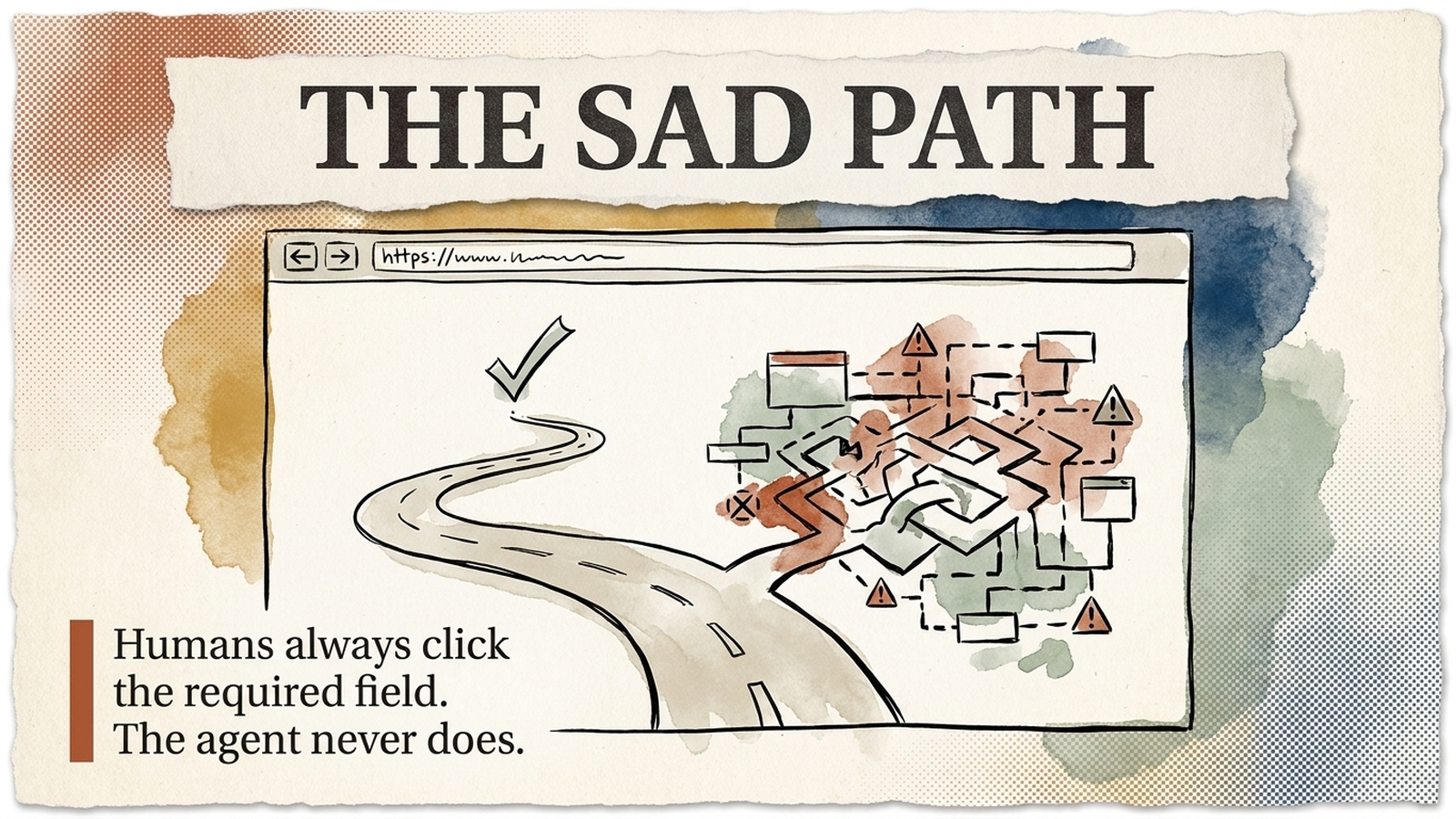
For a year the story was "no UI is the next UI" — agents would reach software through APIs and MCP, so a polished interface was wasted effort. Computer use flips that.
On How I AI, Claire Vo's hands-on review of GPT-6 Astra lands on two operator shifts: an agent can now drive real UIs for you, so a good interface is worth building again — and tasks that stalled for months cross from impossible to one-shot, raising the ceiling on what one person can build.
Built on Claire Vo's 3 Sep 2026 How I AI review. Pricing and benchmark figures are OpenAI's launch claims; time-saving numbers are the reviewer's demo anecdotes — not independently verified.
The bet everyone made against the UI
The consensus was clean: agents would reach software through CLIs and MCP servers, not by clicking. So the UI was a human affordance on its way out — build the API, skip the buttons.
Claire Vo's review of GPT-6 Astra pokes a hole in that. Her headline isn't the benchmark scores. It's that computer use finally works well enough to delegate the clicking — and that changes what's worth building.
UI's back, baby. Like SaaS, this might be your savior because humans really do like a button. And now that you can get AI to click buttons for you and use a UI for you, you sort of don't have to think about these CLIs and MCPs.
Claire Vo, How I AI
If an agent can operate a UI, the interface stops being a liability. It becomes something both a person and an agent can use.
What "delegate the clicking" looks like
The demos are the argument. Astra drove a node-based CRM workflow builder — creating nodes, wiring routing logic, drafting per-lead emails — with no hands on the keyboard. It navigated a chaotic node-based image tool to generate podcast thumbnails an artist normally makes by hand. It used Figma to assemble those thumbnails when the designer stepped into a meeting.
These aren't API calls. They're an agent operating the same messy GUIs a person uses, on software with no clean integration to reach. That's the point: computer use covers the long tail of tools that will never ship an MCP server.
The ambition ceiling moved
The second shift is quieter and bigger. Some tasks don't get faster with a better model — they cross from impossible to possible.
Claire had spent six months trying to build one feature: ingest messy product data from several tools, dedupe it into insights, and generate a self-updating wiki verified against external sources. She threw every model at it. The architecture was clear; the output quality never held. Astra one-shot the hard version.
That's the tell. It wasn't that she couldn't specify the task — prior models produced poor results no matter how well she specified. When that barrier drops, the question stops being "how do I get this done faster" and becomes "what was I not even attempting?"
Her framing: website vibe coding is over — everyone can do that now — so aim higher. 3D games, desktop apps, hardware. She built a 90s AIM-style Mac app wrapping her Codex threads and cracked a locked Bluetooth device she'd been stuck on for a year.
What to take from this
Two moves, one caution.
Move one: put browser use on your QA. It's the highest-leverage, lowest-risk use in the whole review — an agent doing the click-through testing your team keeps skipping.
Move two: re-open the projects you shelved as "the model can't do this well enough." Some changed category. The pattern to look for is the six-month-stuck feature — clear architecture, bad output, repeatedly. Those are worth re-attempting first.
The caution: this is an enthusiast review with early access, and it shows the wins, not the failure rate. Pricing ($10 and $50 per million input/output tokens) and the "state of the art on everything" claim are OpenAI's own. Computer use is also slow and can misclick — which is why the cases that land are tedious-but-tolerant tasks like QA and asset generation, not latency-critical work. Treat the one-shot successes as curated highlights, then find where it breaks on your own tasks.