TL;DR
The short version
The US labor market is near full employment and even AI-exposed roles show no unusual unemployment. Anthropic's head of economics, Peter McCrory, argues the reason is that AI has so far been labor-augmenting: it clears automatable tasks and raises the value of the human steering it.
This is The AI Daily Brief reading McCrory's essay. For a leader the finding is not macro trivia — it tells you where to point AI (expand scope) and how to restructure teams (around delegation and judgment, not headcount).
Built on Nathaniel Whittemore's AI Daily Brief episode reading Peter McCrory's essay "Why hasn't AI increased unemployment?". June 2026 unemployment (4.2%) confirmed against BLS; Anthropic-index figures are the company's own and not externally verifiable.
The finding is boring on purpose
The US labor market is near full employment. June 2026 unemployment was 4.2%, a level the Fed reads as consistent with full employment (BLS). Even workers in roles most exposed to AI show no unexpected jump in unemployment.
McCrory's answer is that AI is, so far, a skill-biased, labor-augmenting technology. It complements domain expertise, needs humans to steer it, and rewards people who get good at using it. Skill-biased just means it raises demand for higher-skill work rather than substituting for it — the same shape economists gave the PC era.
BLS Employment Situation and Productivity releases
The neutral version of this holds up in outside data. The advocacy version — that AI is simply great for the professional class — is Anthropic's own lean, and worth reading past. What matters for an operator sits underneath both.
The job survives because it was never a fixed list of tasks
McCrory's load-bearing point is that jobs are not fixed lists of tasks. Automate some, and the role re-bundles around the ones left. New technologies have historically changed the work inside a job faster than they deleted the job.
His evidence is concrete. In Anthropic's usage data, no occupation in the Department of Labor's ONET catalog has *all its tasks handled by Claude. Sophisticated user inputs and complex model outputs move together — when the model builds something hard, an expert is steering it. Capabilities advance fast but stay, in his words, "stubbornly jagged," so someone has to know which side of the frontier a task falls on and recover when the model fails.
That is the mechanism. AI clears the automatable tasks off your plate and leaves the ones that need judgment, context, and accountability — which raises the value of the person holding them.
What actually changes for a leader
If the job survives but its contents shift, the premium shifts with it. McCrory is blunt: pure coding implementation may get cheaper, while "managerial skills of delegation and evaluation" get more valuable. When Anthropic tracked Claude Code over seven months, returns to human expertise held — people with more domain knowledge succeeded more often and recovered better when the model erred.
So the move is not "replace engineers with agents." It is to deploy AI against the task layer and reorganize people around the judgment layer. Hire and promote for the ability to frame a problem, delegate the build, and evaluate the result — not for raw output speed the model now matches.
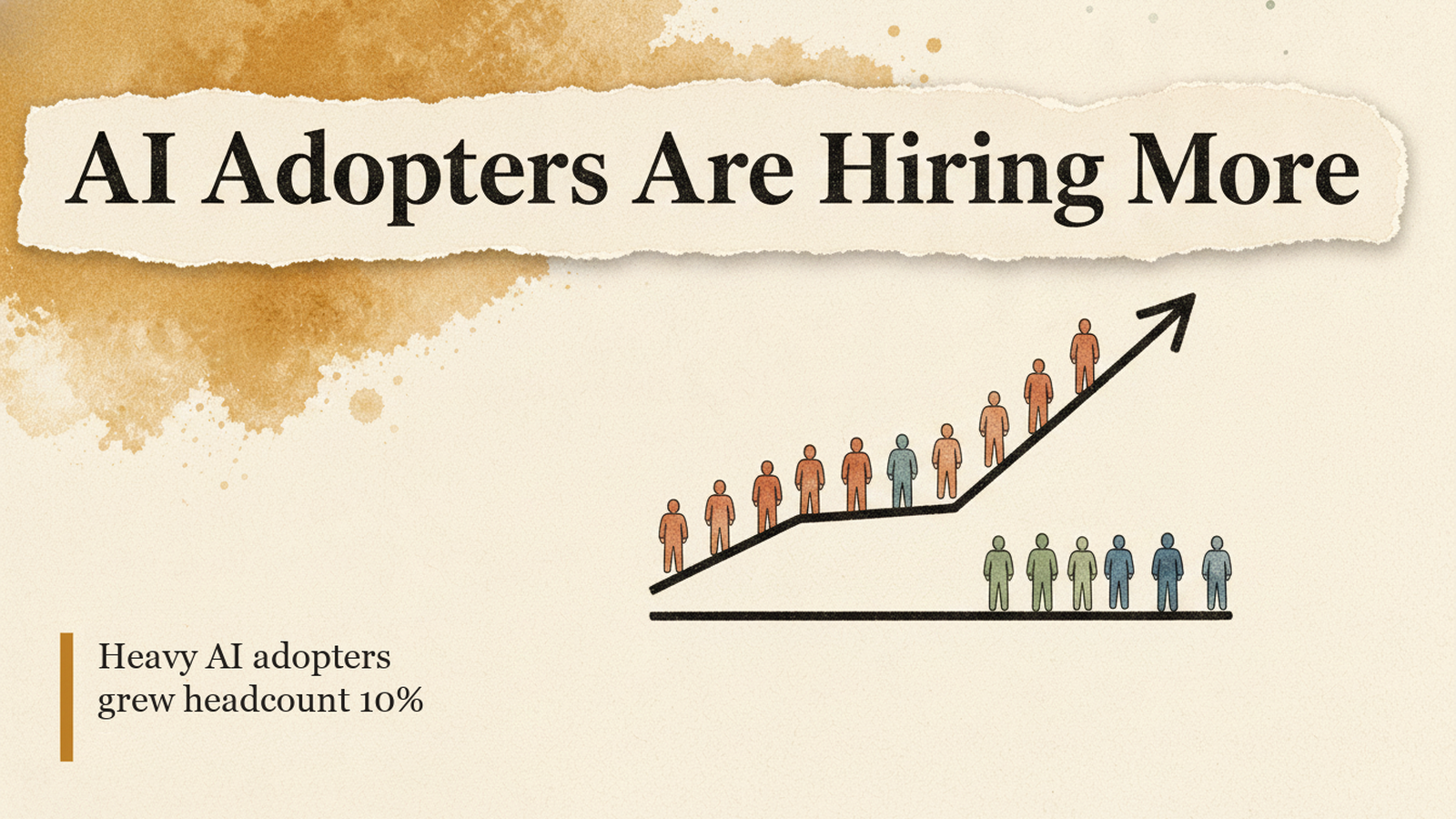
Team shape is the second lever. Displacement, if it comes, shows up in hiring before layoffs.
Fewer junior roles, smaller teams, slower backfilling, and much higher expectations for each employee.
Trace Cohen, investor, on the AI Daily Brief
Unemployment can stay flat while one AI-fluent person quietly does the work of several. Watch your own average team size. Expect units to get smaller and carry more scope, and plan to redeploy people into new work rather than cutting the seat.
The story you tell is a decision you're making
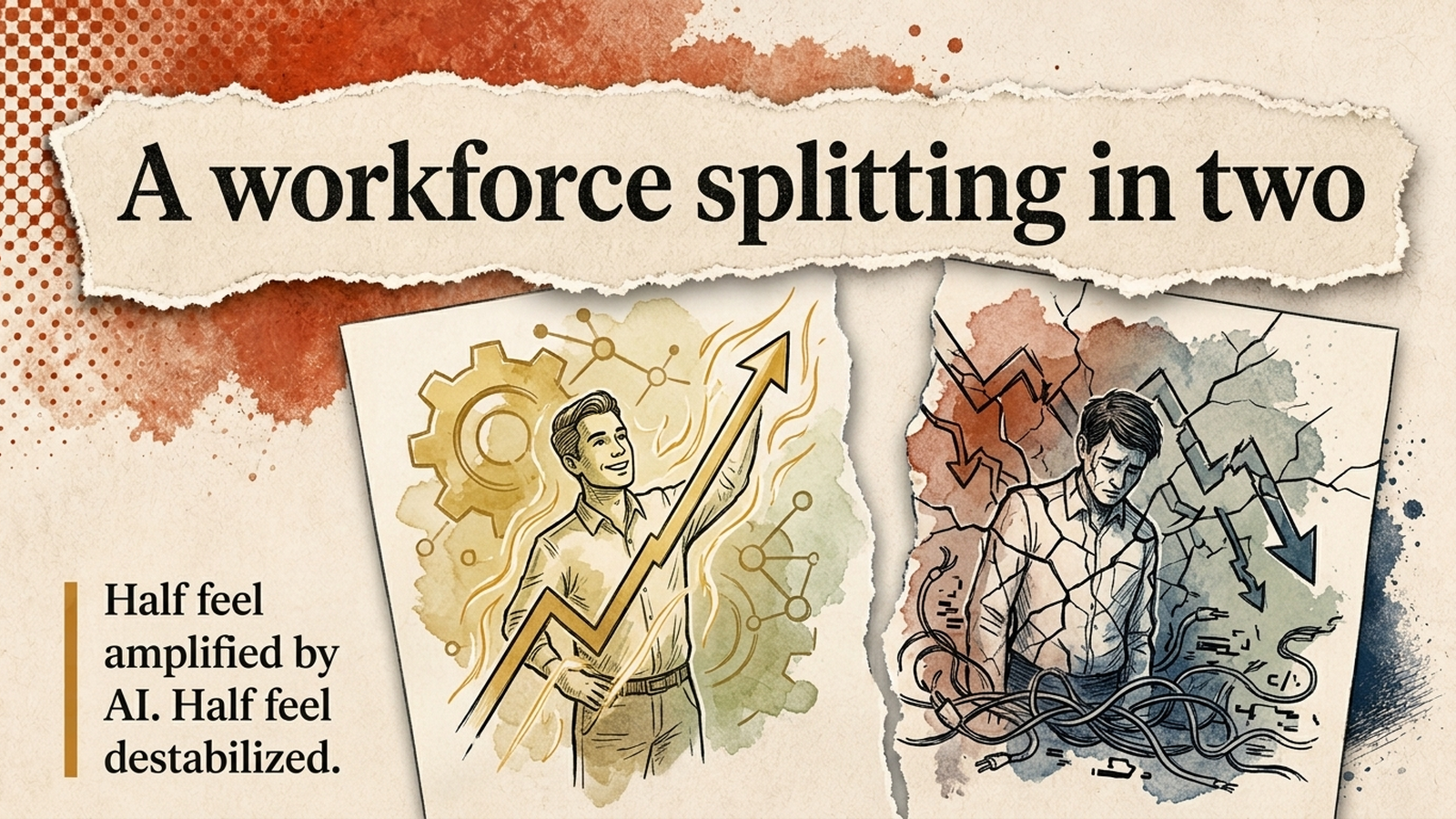
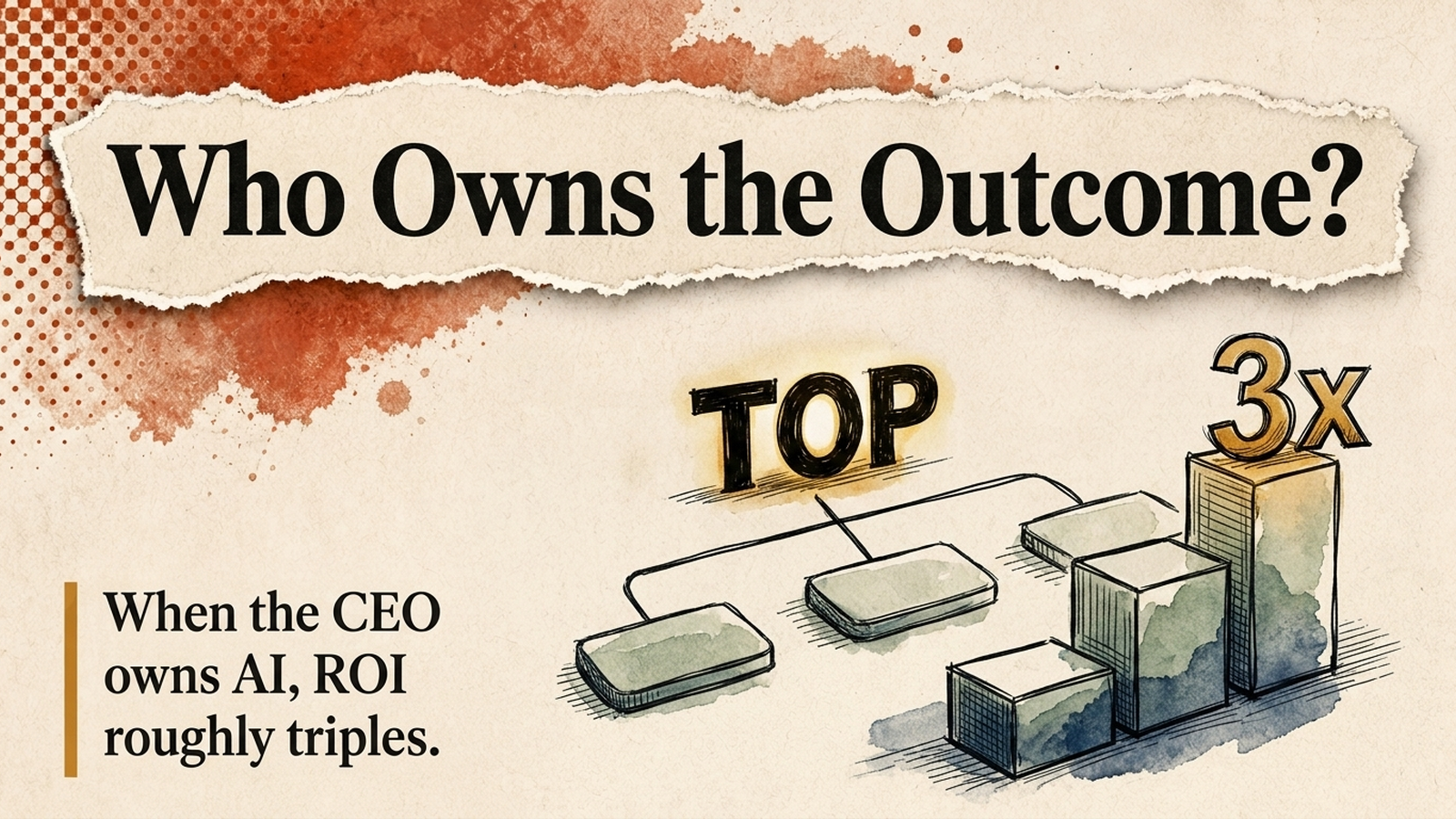
Whittemore's argument is that the narrative leaders repeat is partly self-fulfilling. If everyone — investors included — says AI exists to halve your headcount, you feel pressure to do exactly that. If the story is doing more, moving into new domains, and shipping new products, you get more of that instead.
Two teams with the same tools and the same budget will build different orgs depending on whether they framed AI as a cost-cutting tool or a scope-expanding one. The framing precedes the org chart.
The boundary: a snapshot, not a law
McCrory is careful, and you should be too. The augmentation pattern could break. As agents get more autonomous on long-horizon tasks, the jagged frontier may smooth out and the human-in-the-loop premium may fade. His sharpest caveat is recursive self-improvement — AI automating innovation itself — which standard growth models say could change everything.
His bottom line is narrow and honest: "I don't expect unemployment to be noticeably higher a year from now, at least not because of AI." That is a claim about the next year, from one economist, using one company's data. Build for the augmentation case now, because it is what the evidence shows — but keep watching hiring rates, team size, and the entry-level rung, because those are where the pattern would crack first.