TL;DR
The short version
Reddit built its own prototyping harness so designers and PMs can vibe-code inside the real design system, with reviewers seeing their own Reddit data. The route to production is separate and slower on purpose: a PRD, a design-system MCP, and a draft PR that engineers can still reject.
Blair Metcalf reports about 700 prototypes and 100% adoption across Reddit's UX and product org, over 150 people. The part most teams can copy is smaller: hide the mechanics, keep the product decisions visible, and give the agent a map of the design system that a person can inspect.
Built on Claire Vo's How I AI interview with Blair Metcalf (26 October 2026) and the ChatPRD companion write-up. Code Connect context from Figma's docs. Adoption and prototype counts are Metcalf's own; the episode's alternate title says "100s" of users, on air it was 150+.
Hide the mechanics, keep the decisions
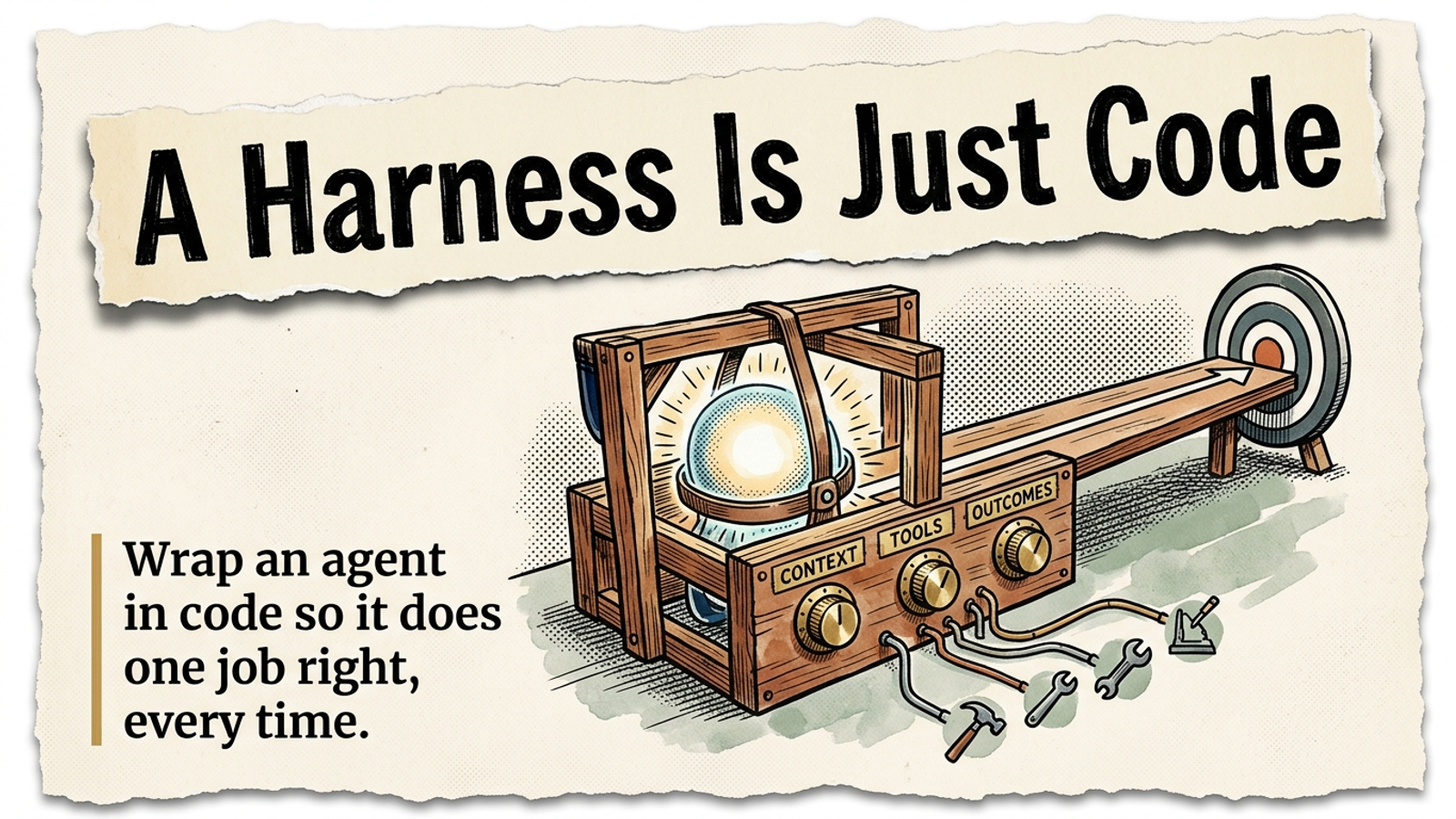
Blair Metcalf, principal UX engineer at Reddit, showed Claire Vo the harness his team built, called Reddit Proto. A harness here means the code and context wrapped around an AI coding tool so it starts in the right place. Metcalf's version "keeps all the designers and product managers on rails."
It starts with a desktop app. You name a project, it clones the code and loads a starter app with Reddit's components, UX patterns and example features. Nobody has to think about branches or running things locally.
What the builder does see are product controls. They can switch features on and off, change device and theme, view the app as a moderator or another persona, and lock navigation. That last one exists because "some stakeholders click too much," and a prototype is only useful if the review stays on the decision being made.
Real data changes the review
The unusual part is the data. Reddit Proto can show a reviewer their own signed-in Reddit account inside a design that hasn't shipped. Metcalf's reason is that Reddit is personalised.
If designers are mocking everything in Figma and then they show that to leadership, leadership's going to look at that and be like, 'What? This isn't relevant to me.'
Blair Metcalf, How I AI
His demo was a search prototype. He wrote two annotations on the screen, asking for relevant type-aheads and trending communities from signed-in data, sent them to Cursor, and "it vibe coded it on the spot." Each annotation carries the code location, the component and the request, so the AI gets a precise edit instead of a guess.
Metcalf describes the payoff as "instant alignment." Leaders click through real components and real results, so reviews stop stalling on mock details. That is his account, not a measured cycle time. The companion write-up adds a caution: realistic enough to judge is not the same as ready to ship, and putting live data in prototypes needs access controls the episode doesn't show.
700 prototypes and some surprising builders
Prototypes deploy to an internal Kubernetes host Metcalf calls "basically like an internal Vercel." They are public inside Reddit by default and shared by link or QR code. There are about 700, which is already too many for a flat list, so the team is building a searchable console. Private prototypes, live comments and rebuilds triggered by comments are still on the to-do list.
Metcalf reports 100% adoption across UX and product, a near-even mix of designers and PMs, over 150 people. (The episode's alternate title says "100s"; on air it was 150+.) Some of the best prototypers turned out to be a visual designer and an animator. Metcalf's explanation: "these people are like great directors." They hold a lot of context, describe it well, and aren't afraid to fail.
Production still runs through a PRD
Prototype code does not go straight to production. Metcalf calls that handoff "the big puzzle piece." The route he showed starts from a high-fidelity Figma frame and turns it into what Reddit calls a feature capsule. The Figma MCP reads the frame and Reddit's own MCP maps it to production components. Out comes a PRD with the user goal, acceptance criteria and Figma links. A person approves it before Cursor writes any code.
The code goes into a sibling repo "to keep prod clean," then a draft PR is sent for review that "may or may not go through." Vo, who calls herself "a PRD girl," asked whether the document matters. Metcalf said it is "the perfect handoff" because engineering already worked from it.
Check the map the agent reads
Behind the MCP is what Vo called a Rosetta Stone: a visual map of every token, component, surface and user journey in Reddit Product Language. It shows one token across Figma, iOS and two code repos, and flags where its values differ by platform. Reddit links design and code with Figma Code Connect, which passes those mappings to AI agents through Figma's MCP server.
The map exists because earlier attempts left the team unsure what was actually in the harness. Seeing that an avatar has these colours, on these surfaces, in these flows let them confirm the agent had all the parts. Then: "You start with a map and then you try, fail, iterate and you refine the MCP through feedback," including PRs that fail CI.