TL;DR
The short version
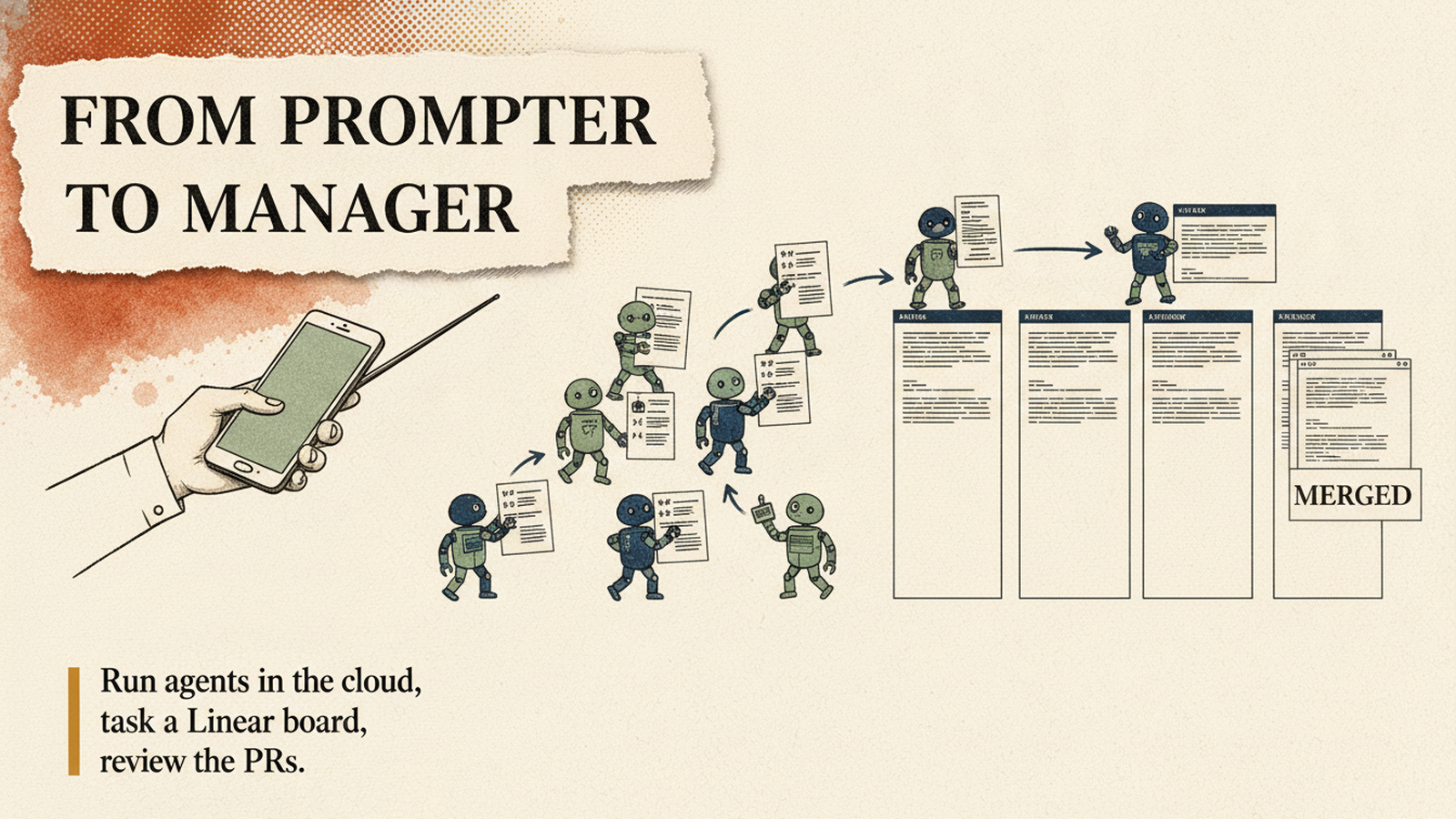
The new agentic coding tools aren't a smarter search box. They're a delegation layer: speak one goal and the system spins up and coordinates several background agents that see your screen, use your browser, ship sites, and edit video. The value isn't in better prompts — it's in handing tedious work over wholesale and forgetting about it.
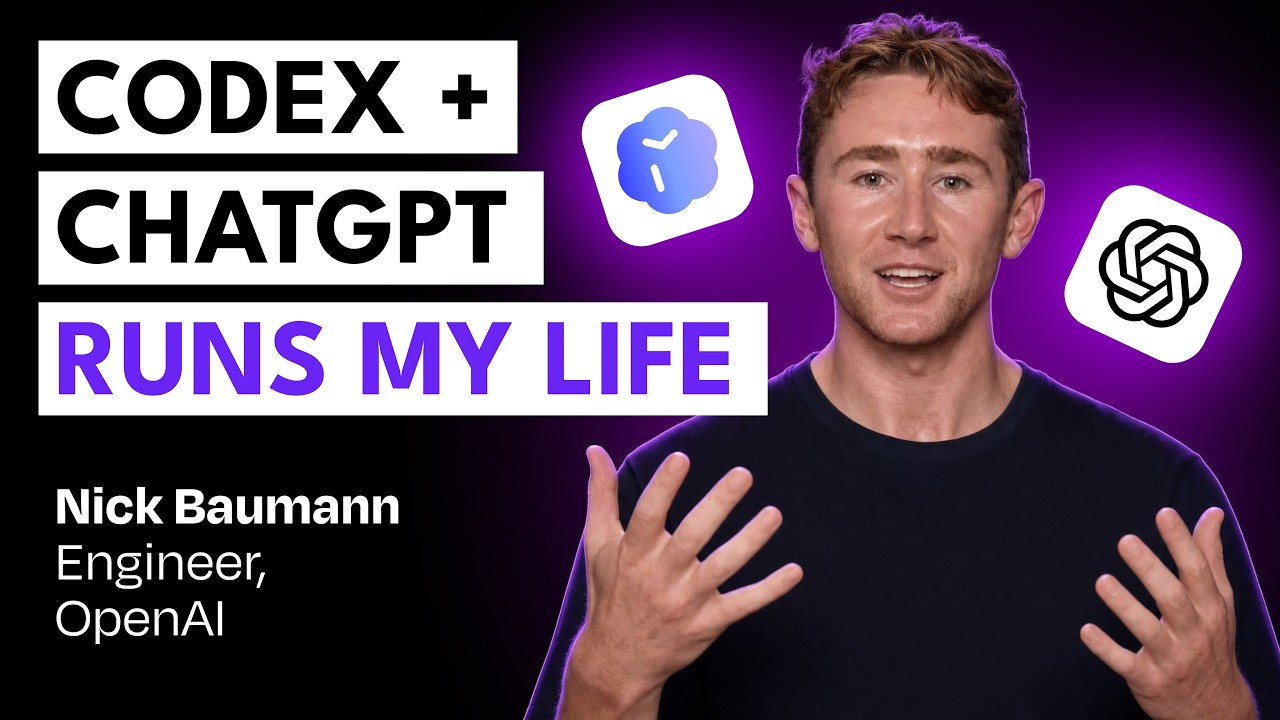
On How I AI, OpenAI engineer Nick Baumann ran Codex and ChatGPT Work by voice — booking travel, filing an expense report, and building a branded site as parallel background tasks he muted and forgot. Treat the specific tools as examples, not endorsements: it's an OpenAI employee demoing OpenAI products. Steal the operating pattern underneath.
Built on Nick Baumann (OpenAI, DX team) with Claire Vo on How I AI.
The bottleneck moved from capability to delegation
Most teams still use these tools like a smarter search box: one prompt, one answer, repeat. Baumann uses voice as an orchestration layer instead. One spoken command spins up and manages several agent threads, each doing real work in the background [12:36].
The enabling detail is boring and under-used: threads can create other threads, message existing ones, fork, and read their own memory [04:52]. Baumann says he found it by accident when an agent announced it was kicking off a new thread. Most people never do. That's the real gap — not what the tools can do, but whether anyone knows to delegate that way.
It's fully able to delegate and manage these [...] five, six threads on its own.
Nick Baumann, How I AI
For a leader, the question stops being "what should I prompt?" and becomes "what can I hand off and stop watching?"
Route the tedium — and its judgment — first
Baumann's sharpest instinct is refusing to touch tedium at all. Redacting confidential frames from a video by hand, he says, is a non-starter — he leaves it to the app [29:59].
Watch what he offloads. Not just the work — the judgment around the work. Which takes are bad. How to keep an output genuine without leaking information. Even the discomfort of reviewing his own footage: "I like to offload the critique of myself [...] off to another model" [30:31].
The pattern for your team: when you catch someone doing high-volume, low-joy judgment work — culling, formatting, sanitizing — that's the first thing to route to an agent, not the last.
Freeze the messy thread into a reusable tool
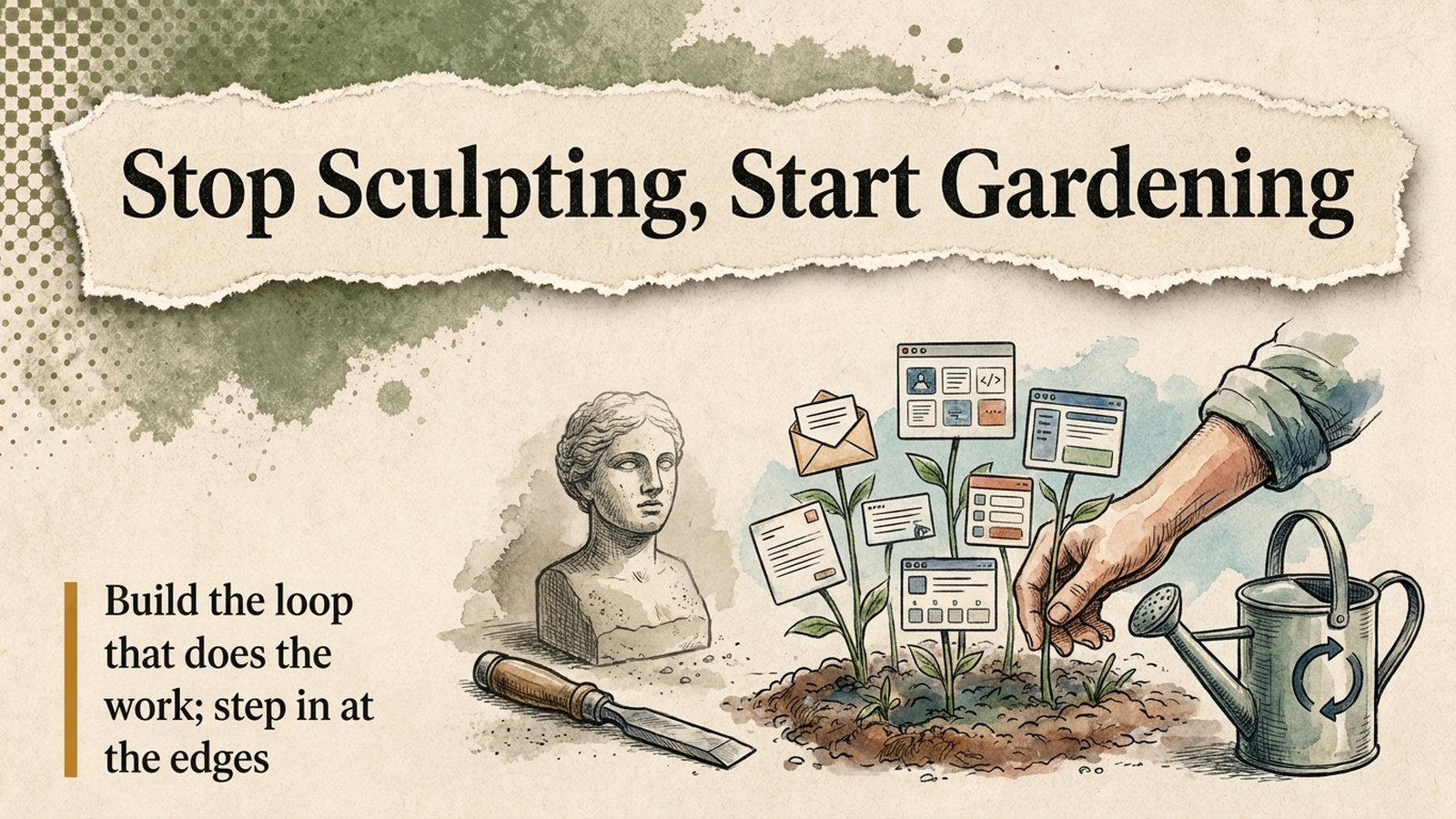
Here's the move that compounds. After hand-steering a video workflow through one long, messy thread — formats, caption rules, safe zones — Baumann used the in-app plugin-creator to turn that accumulated steering into a reusable plugin, so he "more reliably gets the happy path" [26:38].
This is the leadership version of writing a runbook, except the runbook executes itself. Don't just get a good result from a long back-and-forth and move on.
Ship the internal tool without the infrastructure
Baumann built and deployed a live, branded website during the conversation — with a database, file storage, and access control — using ChatGPT Sites, from mobile [16:28].
Know the boundary before you copy it. Sites runs on a SQLite-style database (D1) and object storage (R2), gated public or by specific email. It explicitly does not support Postgres, persistent server processes, WebSockets, or scheduled workers. It's for lightweight internal tools and front-ends, not your production backend. Inside that box, standing up a dashboard or internal portal drops to the cost of a prompt.
The paired low-effort play: always-on monitors. A twice-a-day agent watching email and finances is how non-engineers get their first agentic moment — a package alert, a weird charge — the "foot in the door" for the rest of a team [38:19].
Read past the demo
This was an OpenAI employee demoing OpenAI products between two AI-tool ad reads, and every feature worked on the first try because it was staged to. Cost, failure modes, and the moments the demo broke got a passing mention at best.
So steal the operating pattern, not the product list: delegate goals instead of prompting tasks, route tedium and its judgment to the model first, and capture your best steering as reusable tools. One prediction worth filing — Baumann and Vo both bet that latency, not raw intelligence, decides whether people actually adopt these workflows [13:42]. If a spinner kills a habit, the fastest agent wins.