TL;DR
The short version
Every consumer-tech wave starts with deeply technical founders and turns toward product geniuses as the underlying tech matures. AI still looks like early Google — OpenAI is a research lab that accidentally built the biggest consumer product of all time. The slider is about to move.
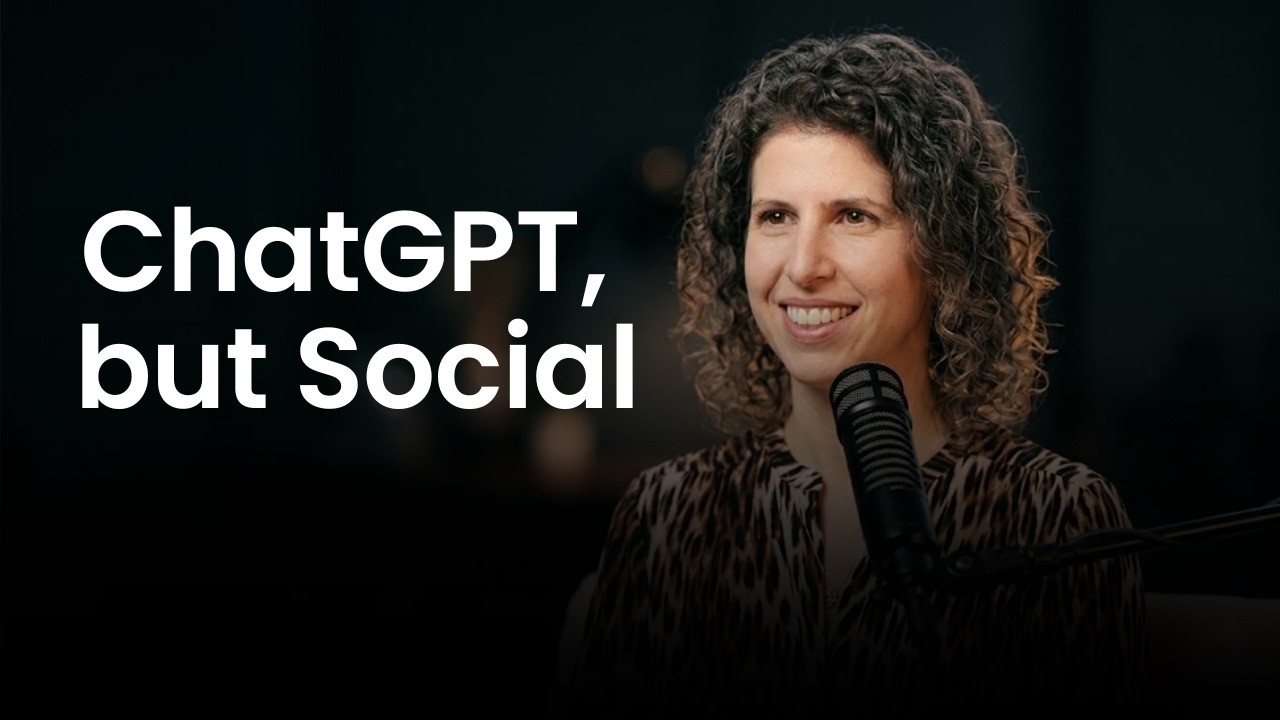
The next breakout consumer AI product will be social — a trusted, status-driven community layer on top of today's single-player chatbots — because base models are finally good enough for product-native founders, not only technical ones, to win. The bet is Benchmark's Sarah Tavel, on Every's AI & I.
Built on the "Best of the Pod" episode of AI & I with Dan Shipper and Sarah Tavel (General Partner, Benchmark; ex-Pinterest). Guest identity and Eugene Wei's "Status as a Service" verified; Tavel's slider percentages and user counts are her own illustrations, not measured figures.
Today's AI is stuck in single-player mode
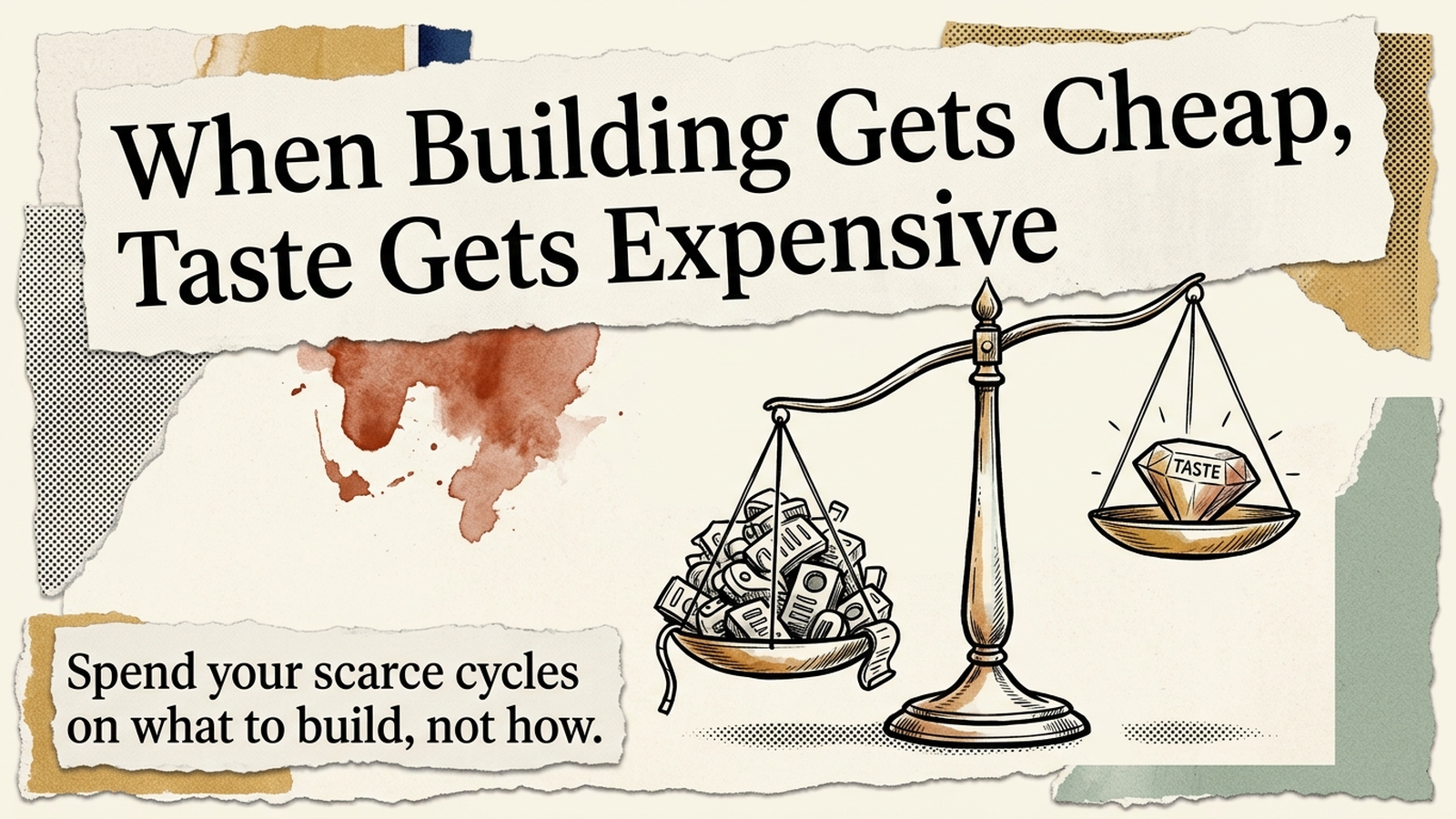
Tavel has a simple slider. At the start of a paradigm, deeply technical founders win because they build what nobody else can. As the tech matures, the edge slides to whoever builds the best experience — Pinterest, Snap, Instagram, run by product geniuses who weren't technical at all. AI is early, so it looks like Google again.
Her sharpest claim: ChatGPT is a power-user product most people never actually learn to use. "Most people use ChatGPT like they would use Google." They never touch custom instructions, projects, or personas — the tweaks that produce step-function jumps in what the tool gives back.
The waste is that all of us re-solve the same problems in private. You hunt for a good prompt, land on a Reddit thread, copy-paste it. The knowledge exists; there's just no place built to share it.
The opening is a multiplayer layer, and status is the engine
The gap she keeps circling is the network effect: someone will build a UGC community where the people who are really good make the tool easier for everyone else. Follow the person whose prompts you trust, apply their work to your own profile, and the tool stops being a blank text box.
Custom GPTs [...] feels criminal to me. It's clearly made by a team that is unbelievably capable but isn't social.
Sarah Tavel, Benchmark [17:49]
That only works if the community has a reason to keep contributing. Here she borrows Eugene Wei's "Status as a Service" — social products run on a north star where participants chase status: followers, authority, reputation. The unsolved problem is trust: looking at a custom GPT, you see 3,000 people used it but not their prompt, their documents, or their edits. No visibility, no trust; no trust, no reason to pick one creator over another. Whoever cracks that visibility problem gets the network.
The "worky" bucket is taken. The "personal" one is open.
Tavel splits AI use into two buckets. ChatGPT and Claude are "worky." The personal bucket is wide open: AI friends, health and quantified-self, recipes — places where a social-native team that understands community could win. Her prediction runs far: we'll each have AI friends, and "you're also kind of going to be the average of the five AIs you spend the most time with."
A personal, trusted, social product could even cannibalize ChatGPT — put your blood tests, your supplements, your kids' details into the community-built version, and the general chatbot becomes the fallback.
Why she might be wrong
To her credit, Tavel argues the other side. Incumbent gravity is real: habit, ecosystem, pricing, and memory lock-in — "it knows who I am and all my experiences." To seed a prompt-sharing community you need existing power users to share on a new platform instead of the one they already live in, and that may be hard to create. She flags herself as possibly "tilting at windmills."
For an operator, the takeaway isn't "go build a prompt social network." It's the diagnostic.