TL;DR
The short version
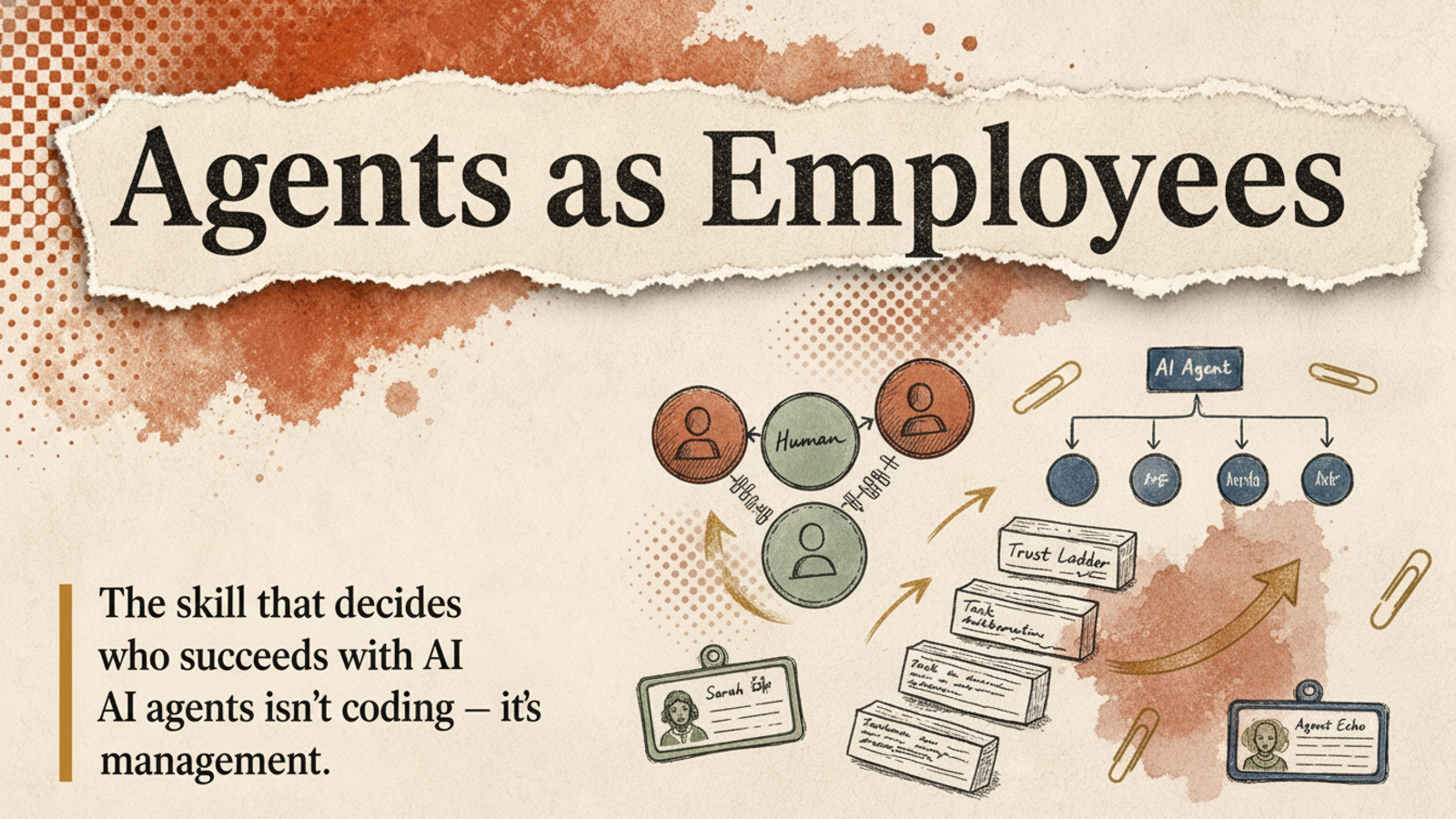
Getting value from AI is no longer about picking the right model or writing the perfect prompt. It's about managing an agent like a team member — setting its permissions, delegating real work, and checking its output with judgment.
Ethan Mollick's latest "opinionated guide to which AI to use" reads like a model ranking, but the real point — which The AI Daily Brief drew out — is that AI has split into two ways of working, and most people are still stuck in the old one.
Built on Ethan Mollick's guide at oneusefulthing.org and The AI Daily Brief's 2026-07-27 episode.
Two ways to use AI, and only one of them is new
The old way is chat: you ask, it answers, you ask again. For low-stakes questions — a recipe, a rough draft of a letter — any model does fine, including the free ones. Mollick's advice there is essentially don't overthink it.
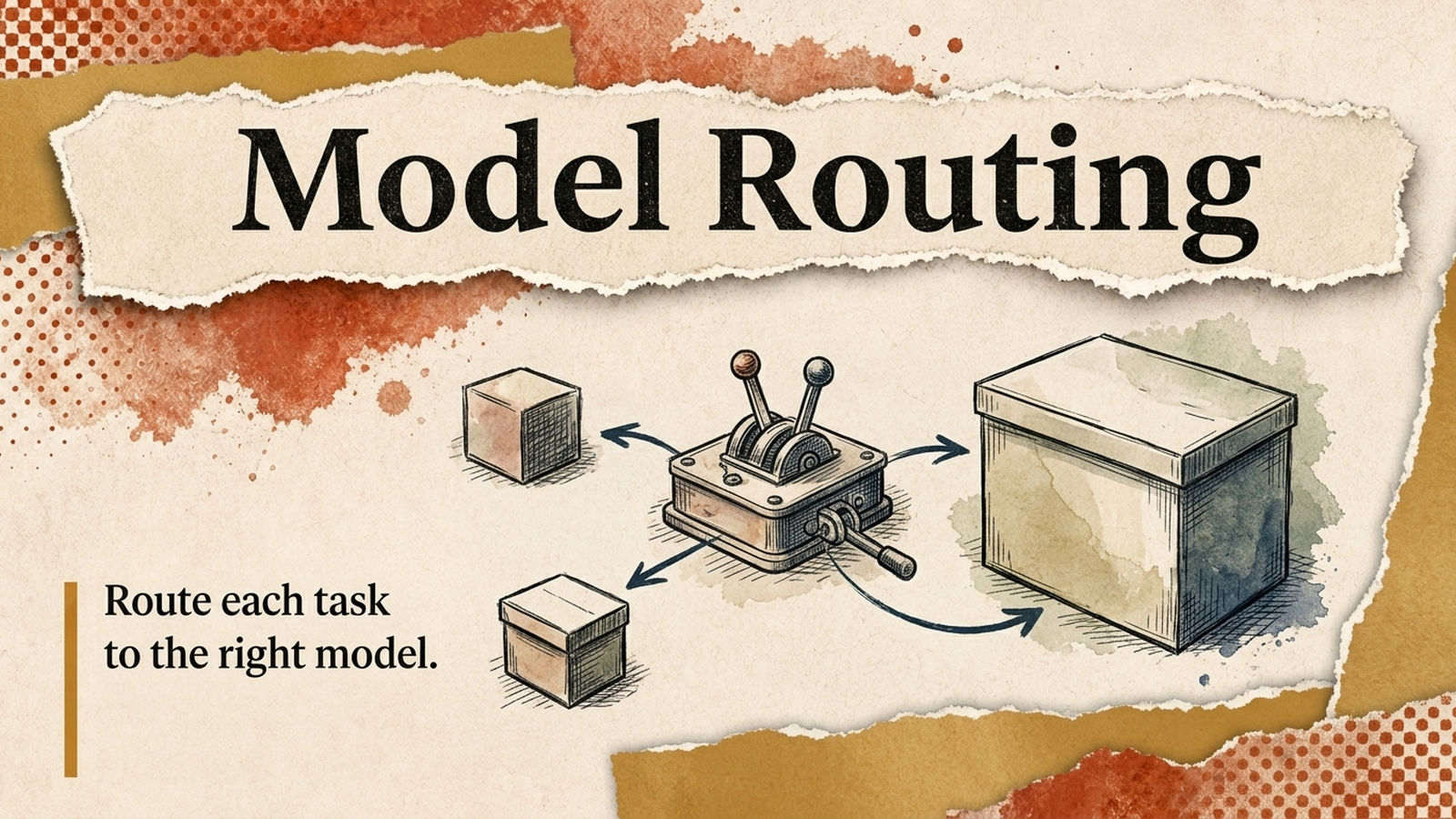
The new way is agentic. You give the AI a set of tools and it plans and acts on its own, doing what Mollick calls the equivalent of many hours of human work in one pass. His framing: an agentic system "gives an AI a computer to use." For that work he says there are really only two serious choices — ChatGPT or Claude — with Google's Gemini "officially out of the rankings."
That's the whole model-selection question, more or less settled in two sentences. Which is the tell: the choice of model is no longer where the leverage is.
Permissions are the decision that actually costs you
Here's the moment worth stealing. Mollick told both ChatGPT and Claude to connect to his Gmail and prep for an MBA seminar. Both worked for about ten minutes, did web research, built teaching materials, and drafted a reply to a colleague — a couple of hours of work by hand.
The difference: Claude prepared a draft and stopped. ChatGPT sent the email. Not because one is smarter — because Mollick had previously granted ChatGPT permission to send on his behalf, and Claude was set to ask first.
Figures from Mollick's guide, verified against oneusefulthing.org
That is the whole game for anyone deploying these systems at work. Both platforms let you decide whether the agent must check with you before it acts. Mollick's rule is blunt: leave everything on "ask for approval first" until you trust the system and understand how it fails. For an operator, permission scope is a risk dial — set it too loose and the agent's speed becomes your liability.
Delegating means you're now a manager
The other shift is what you do with the output. Mollick handed a full, professionally edited book PDF to the AI and asked it to check everything. It worked for 30 minutes, chased down 195 references, and returned pages of accurate notes. Impressive — but also "incredibly nitpicky," flagging problems that weren't problems. He rejected those with his own judgment.
Working with these systems is more like managing than it is chatting. You can almost think of the AI agents as a team you delegate work to.
Nathaniel Whittemore, The AI Daily Brief — quoting Ethan Mollick
You delegate to a fast, capable, occasionally over-eager team member, then you edit. The bottleneck moves from can the AI do it to can you direct and review it well. That's a leadership skill, not a prompting trick — and it's the one that removes you as the bottleneck instead of making you the person who does everything the agent can't yet be trusted to do alone.
The real gap is between capability and use
The AI Daily Brief ties this to what it calls the capability overhang — the gap between what AI can do and what we actually use it for. The claim: almost everyone has one, including researchers inside the labs. The tools race ahead; adoption and skill lag behind.
To close it, AI DB launched a free program, Summer Adventure, with 22 hands-on projects graded from beginner "quick trips" to ambitious "expeditions" like building an AI-staffed microbusiness. Worth knowing: it's genuinely free, but also the top of a funnel into paid enterprise training — take the framing on its merits and the sales motion with clear eyes.
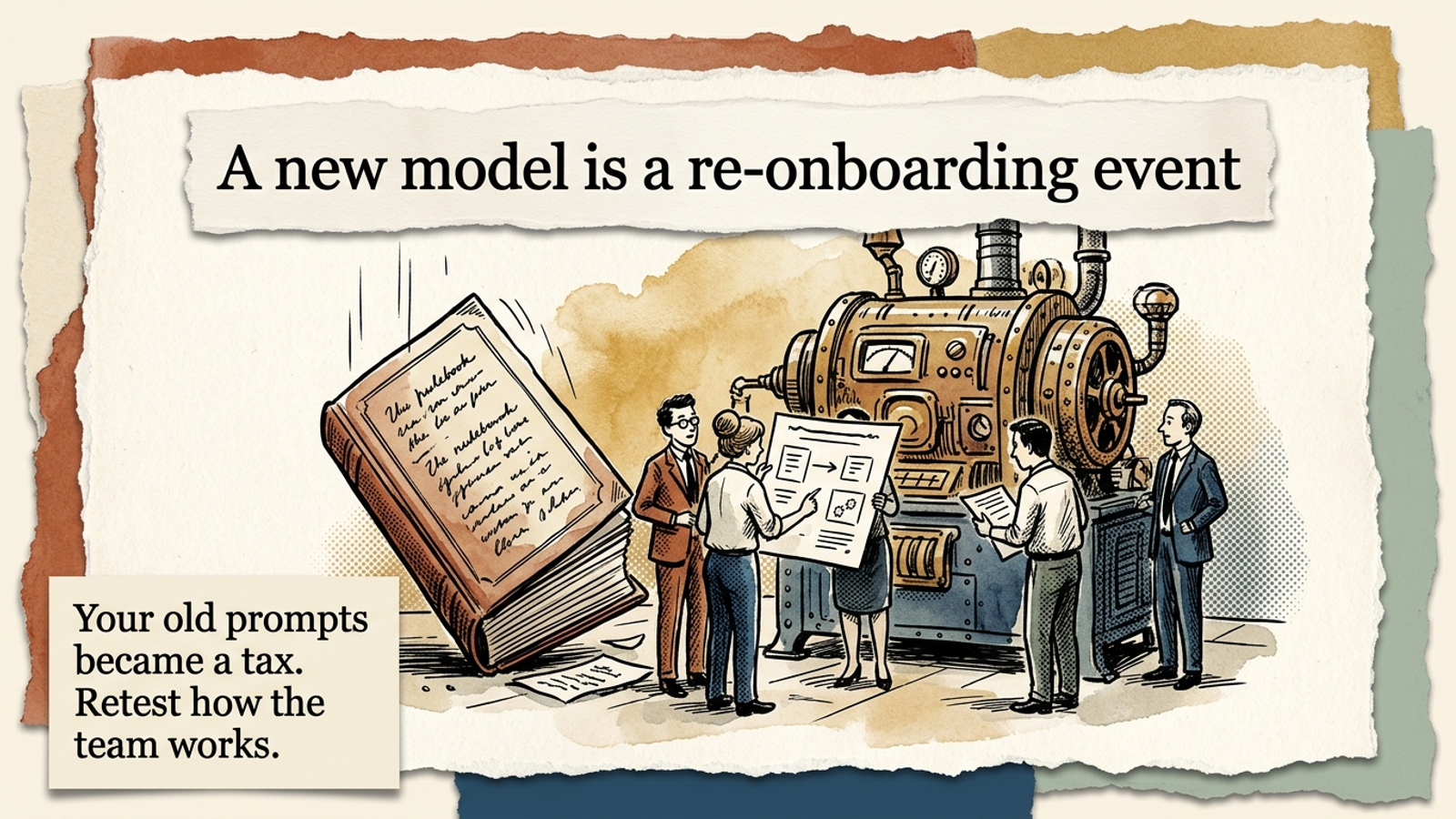
The framing holds regardless. If you lead a team, the model you pick barely matters now. What matters is whether you and your people have rebuilt the habit — from writing prompts to managing agents, setting permissions, and reviewing work you didn't do yourself. That's the summer project.