TL;DR
The short version
A financial research firm used Claude to design proteins against scorpion toxins because running the experiment had become cheaper than finding a clear expert answer. AI is starting to change what work a firm can take on, not just how fast it does the old work. The physical world still sets the pace.
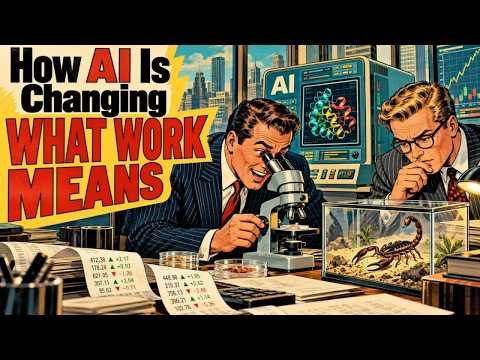
On The AI Daily Brief, Nathaniel Whittemore uses Citrini Research's experiment with Anthropic to ask three questions: will AI labs do the science themselves, will cures change how people feel about AI, and what happens when firms can do "orthogonal work".
Built on Nathaniel Whittemore's episode (22 October 2026). Figures checked against Anthropic's write-up and Citrini Research's report.
A newsletter tried drug discovery
Citrini Research writes about thematic equity investing. Looking for opportunities outside crowded AI-infrastructure trades, it landed on life sciences, which had been "a graveyard for returns." The question was whether AI drug discovery was real.
Asking experts didn't settle it. Citrini expected to hear everything from "AI has not created a single important drug" to "AI will cure all disease in the next five years." So it decided: "We needed to try it for ourselves."
Working with Anthropic, from Anthropic's offices, the team gave Claude a roughly 35-page prompt. Over 64 hours, Claude spawned more than 300 sub-agents and generated 318,484 protein designs. It picked 180 for testing, and the team added 31 more. Two contract labs tested all 211. Seventeen met the criteria for binding one of four scorpion neurotoxins.
Anthropic and Citrini Research, October 2026
The budget was $200,000. Lab work came to just under $150,000 and compute to $49,997, per Citrini.
It is not an antivenom
The limits matter as much as the result. Anthropic says it has not confirmed that these binders neutralise venom in cells, "so we do not claim to have produced an antivenom." An attempt to design one molecule that binds all five target toxins failed.
Critics quoted in the episode point out that toxin-binding proteins aren't new. The hard part is neutralisation, then animal studies, then a drug. Citrini says it still wants to run the neutralisation tests.
Our virtual biologist may have compressed a year's worth of work into a couple days, but biology works at the speed of life.
Citrini Research
Design took days. DNA synthesis, protein production and binding tests took weeks, and any real treatment would take years. The bottleneck has moved, not gone.
Why the labs care
Scorpions sting 1.2 million people or more a year and kill more than 3,250, mostly children with little access to care. Treatments are expensive to make and unlikely to pay back. Whittemore's view is that this is where AI has leverage: diseases that markets ignored because discovery cost too much.
The big labs are taking different routes into biology. OpenAI bought Orchestra Bio, whose agents run drug-development operations, and folded it into its Rosalind life-sciences product for pharma customers. Anthropic runs its own wet lab and co-ran this experiment.
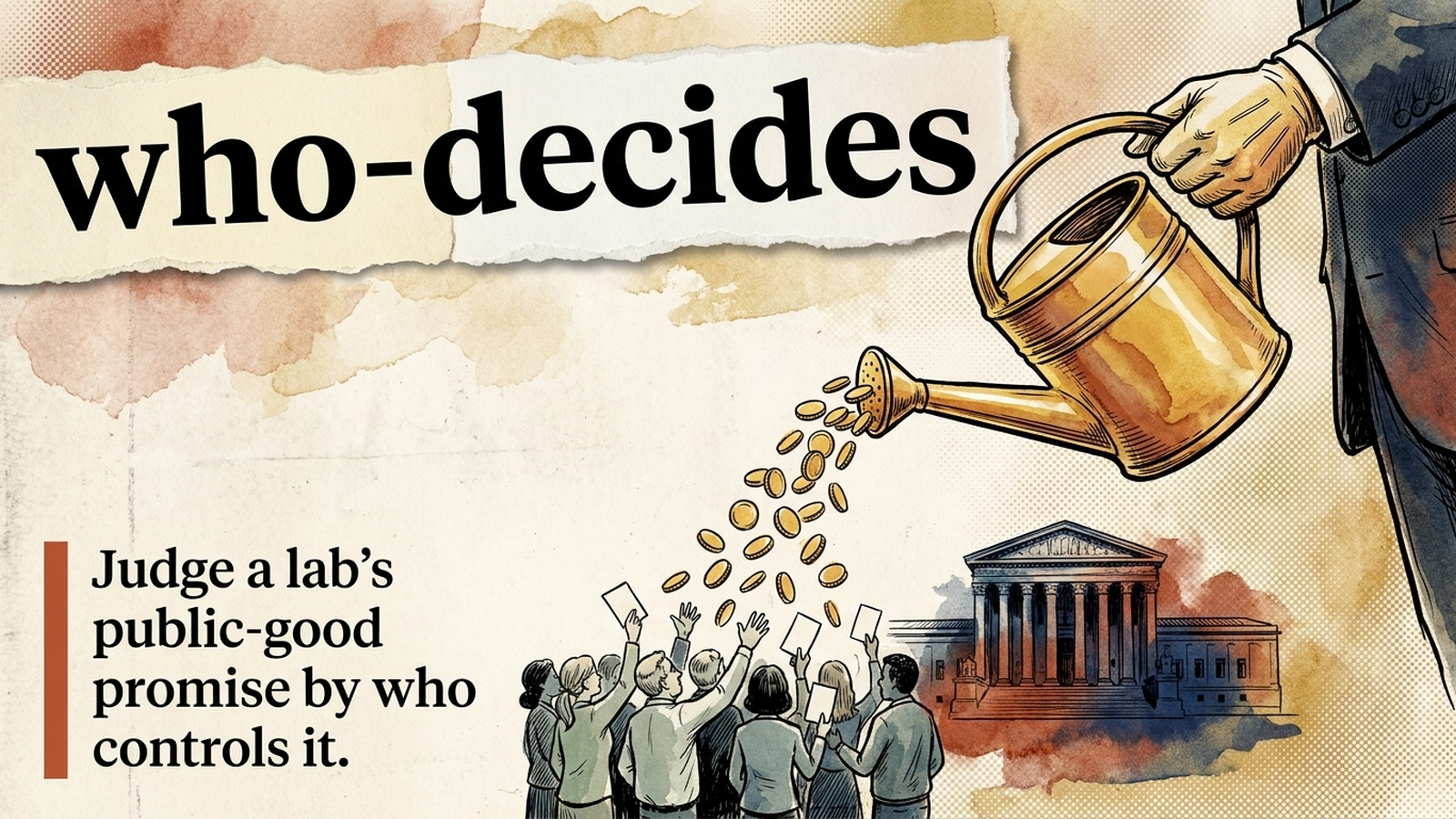
Whittemore doesn't think either route means labs will swallow whole industries at once. Bringing a drug to patients involves too many other people and institutions. He also doubts cures will fix AI's public image. Accelerated discoveries will probably just become normal. As Will Manidis put it, anyone who thinks curing cancer will turn sentiment around "should look at opinion polling on Big Pharma."
Orthogonal work
Whittemore's main point is about what work means. Citrini didn't become a biotech firm, and says so. It did its normal job, finding undervalued sectors, and for once it could run the experiment instead of asking around. The output fed back into its research: Citrini's post ends in a life-sciences stock thesis.
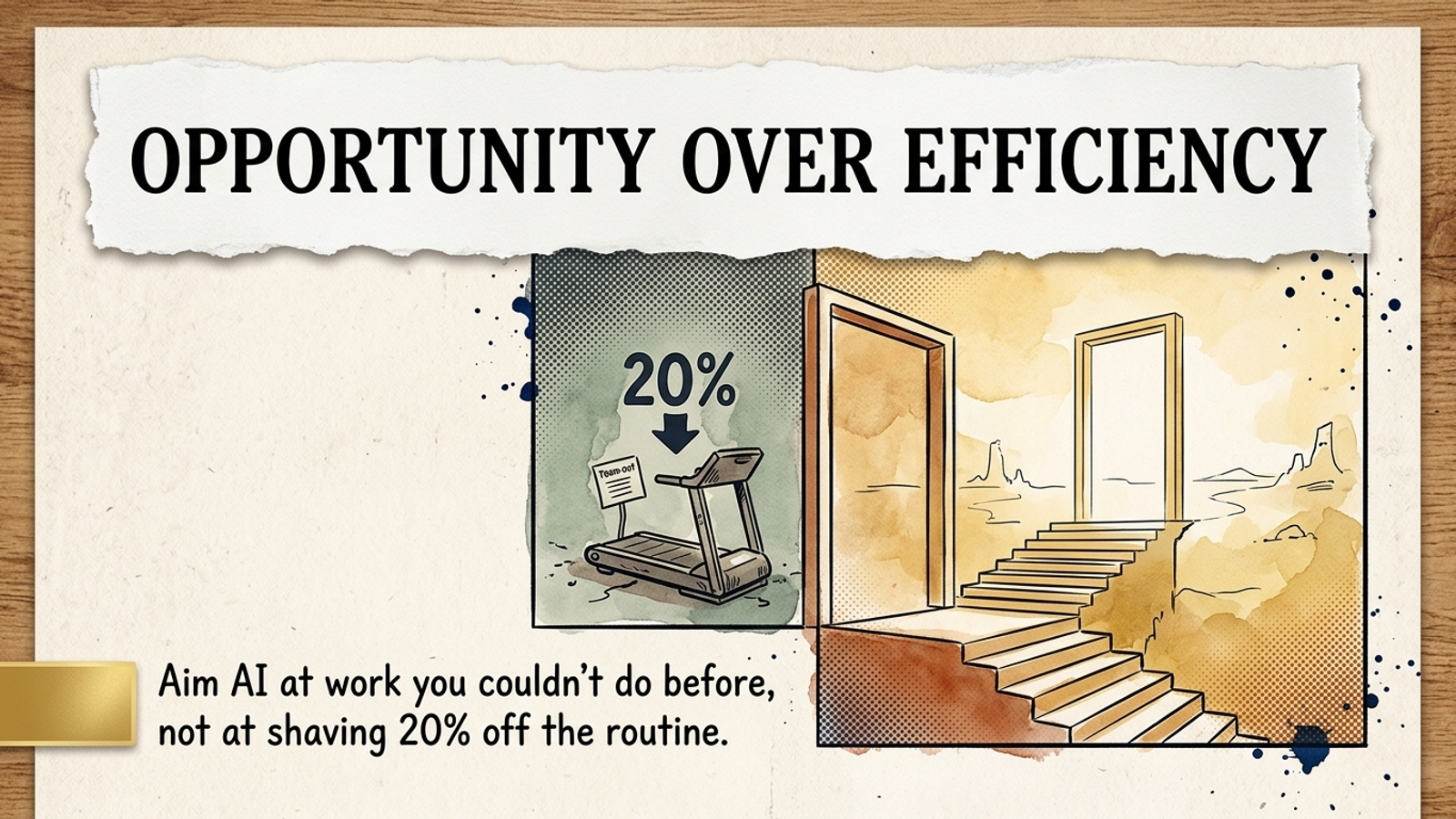
He calls this orthogonal work: things a person or firm couldn't do before that make its core work better. It fits his distinction between efficiency technology and opportunity technology: one speeds up existing tasks, the other opens new ones.
Read it with the incentives in view. Citrini is an investment newsletter with a stock view to sell. Anthropic co-ran the experiment and benefits from the story. The 17 binders are real and the data is public. The antivenom isn't, yet.