TL;DR
The short version
"Graph engineering" is the newest layer in a five-rung ladder of AI work: prompt to context to harness to loop to graph. Each rung zooms out one level. The prompt controls one call, context controls what the model knows, the harness controls what it can do, the loop controls how one agent iterates, and the graph controls how a whole organization of agents coordinates.
You don't need to go build a multi-agent org today. You need the mental model — because as models get more capable, the leverage keeps moving outward, and Nathaniel Whittemore argues designing agentic systems is becoming a basic work primitive. A loop is how one agent does its job; a graph is how an organization of them works.
Built on "What the Heck is Graph Engineering?" by Nathaniel Whittemore on The AI Daily Brief, which situates the term against Peter Steinberger's July tweet and quotes from Shubham Saboo and others.
The five-rung ladder, each zooming out one level
The lineage of "blank engineering" terms is really one story: as models got more capable, the point of leverage moved outward. Prompt engineering (2023-24) optimized the ask. Context engineering (2025) made sure the model had the right knowledge around the prompt. Harness engineering (2026) shaped the environment — tools, permissions, skills files. Loop engineering designed the iteration. Graph engineering designs the organization.
New terms don't retire old ones — each becomes the substrate for the next. As Whittemore puts it, "the harness became a new context for that context engineering." The prompt still matters; it's just one call inside a loop that's one node inside a graph.
For a software developer, each rung is a literal engineering task: designing context budgets, building better harnesses, wiring graphs of nodes and edges. For everyone else, it's a mindset for how you organize information and agents around the model. That split — literal discipline versus organizing frame — recurs at every rung, and it's why the concept matters even if you never write a line of orchestration code.
Loop versus graph, precisely
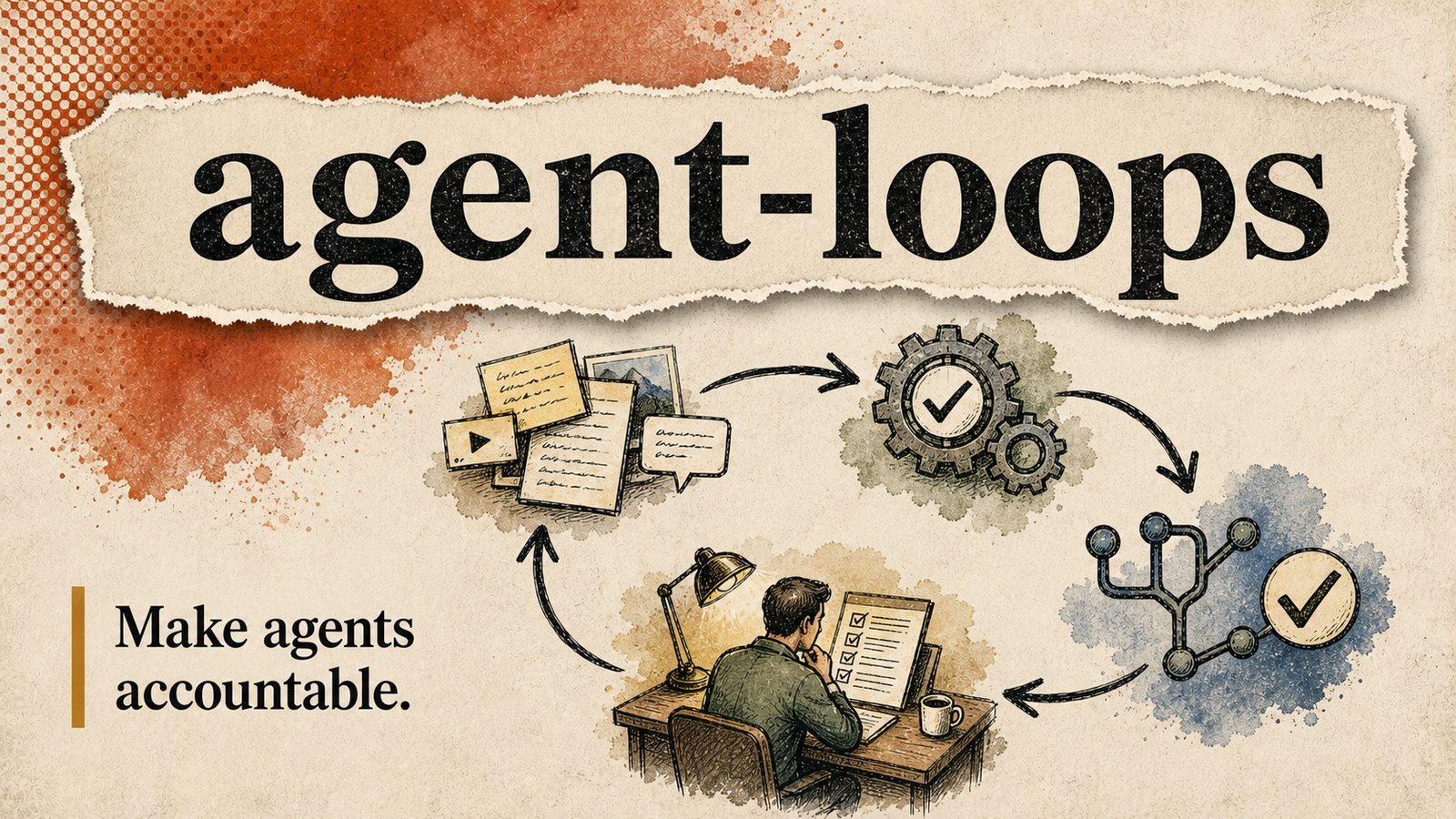
A loop is an autonomous cycle for a single agent: trigger, act, verify, repeat until a stop condition. Every guardrail — max iterations, token budget — applies to that one run. It's the agent's behavioral contract with itself.
A graph is an organization of agents. Each node runs its own loop. Edges define which handoffs are allowed, what state travels between them, and what happens on failure — retry, fallback, or alert upstream. The graph specifies who exists, what each node owns, and how work moves: sequential, parallel, or conditional.
Loops made agent behavior programmable; graphs make agent organizations programmable.
Shubham Saboo
So the question isn't loop or graph — it's how many loops, and how they're wired. Stay with one loop when the job has a clear finish line, genuinely sequential steps, and one context window can hold the whole domain. Reach for a graph when work splits into specialties with handoffs, when parallelism pays, when different steps want different models or tools, and when you want resilience — one node failing shouldn't take down the rest.
Org graphs versus work graphs
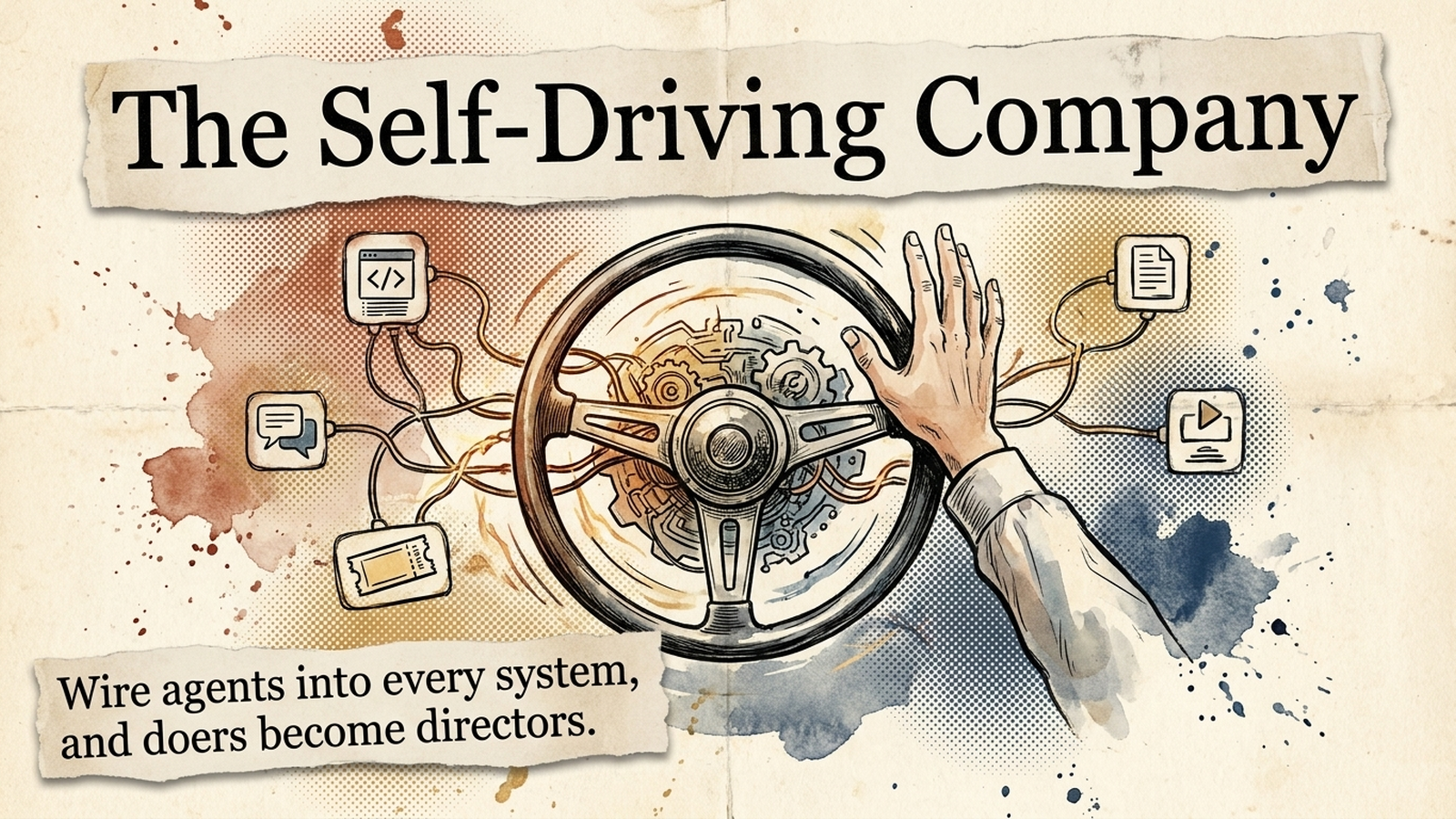
Two shapes do very different jobs. An org graph is stable infrastructure: long-lived agents, each owning a domain, with preserved memory and relationships that don't change unless you change them. It suits recurring pipelines — research to production to editing to publishing to insights to posting. It's the wiring of a self-driving company.
A work graph is ephemeral: task nodes that exist only while the work does, dynamic edges that split or merge, tasks that vanish when evidence makes them unnecessary or spawn when new complexity appears. It's what a single ambitious task spins up and tears down.
A graph is a work-flow, not an org chart
Nufar Gaspar's sharpest framing, from an AI Daily Brief webinar on agentic loops: the org chart diagrams authority, not how work gets done. A graph diagrams the flow — nodes are agents or tasks, edges are information moving between them, and a loop is just a node pointing at itself.
The org chart is the diagram of the authority. It's not and never was a diagram of how work gets done.
Nufar Gaspar
This is where knowledge workers out-design engineers: they already know how work actually flows through their function. And what changed in 2026 isn't the graph — computer science has drawn work this way for fifty years. What changed is the node. A node used to be a single fragile model call; now it's a whole agent reliable enough to be a building block. AI made the drawing operational: you can sketch a work graph on a whiteboard and have it run.
When to fan out, and how to wire it
Don't reach for multiple agents by default. Gaspar's signals for splitting one loop into many: self-verification is unreliable (a model tends to agree with itself), one agent is wearing too many hats and overflowing its context, the work genuinely parallelizes, a single goal card is secretly hiding two jobs, or quality has flatlined. Absent a signal, stay with one loop.
Once you fan out, six habits keep the graph honest: match the model to the node, pass only the relevant context — the "contract" — between nodes, spend tokens where verification pays, verify early, keep a human at the right gate, and don't just copy the human process, because human limits aren't the agent's limits.
The load-bearing habit is cross-model verification: use a different model, with fresh context, as the referee. Models tend to favor their own output — a documented self-preference bias. The nuance worth keeping is that much of that preference is legitimate; stronger models really are better, so the harmful bias mostly shows up when the judge itself is wrong.
Why it matters even if you never wire a node
The operator takeaway isn't "go build an agent org." It's learn to think in systems terms — the same way understanding a loop's architecture makes you better at automating chunks of your own work. "Designing agentic systems is, I believe, a new work primitive, and something which we will increasingly be called upon to do," Whittemore says.
The shift is already showing up in default tools. In the same week, Claude Code made auto mode the default: the agent runs a task to completion and prompts only for the extremely significant — irreversible, destructive, or out-of-environment changes. The evidence for trusting the system over the step is strong, from an Anthropic study of 1,053 paid testers:
Anthropic study of 1,053 paid testers, confirmed by TechCrunch. Human catch rates fell to ~5% after 50+ prior prompts; auto mode held steady.
That's the loop-to-graph shift in miniature: moving from approving every step to designing systems you trust to run. The discourse itself started tongue-in-cheek — Steinberger's July 17 tweet, "Are we still talking loops or did we shift to graphs yet?" — but the underlying move is real. The leverage is in the architecture, not the wording.