TL;DR
The short version
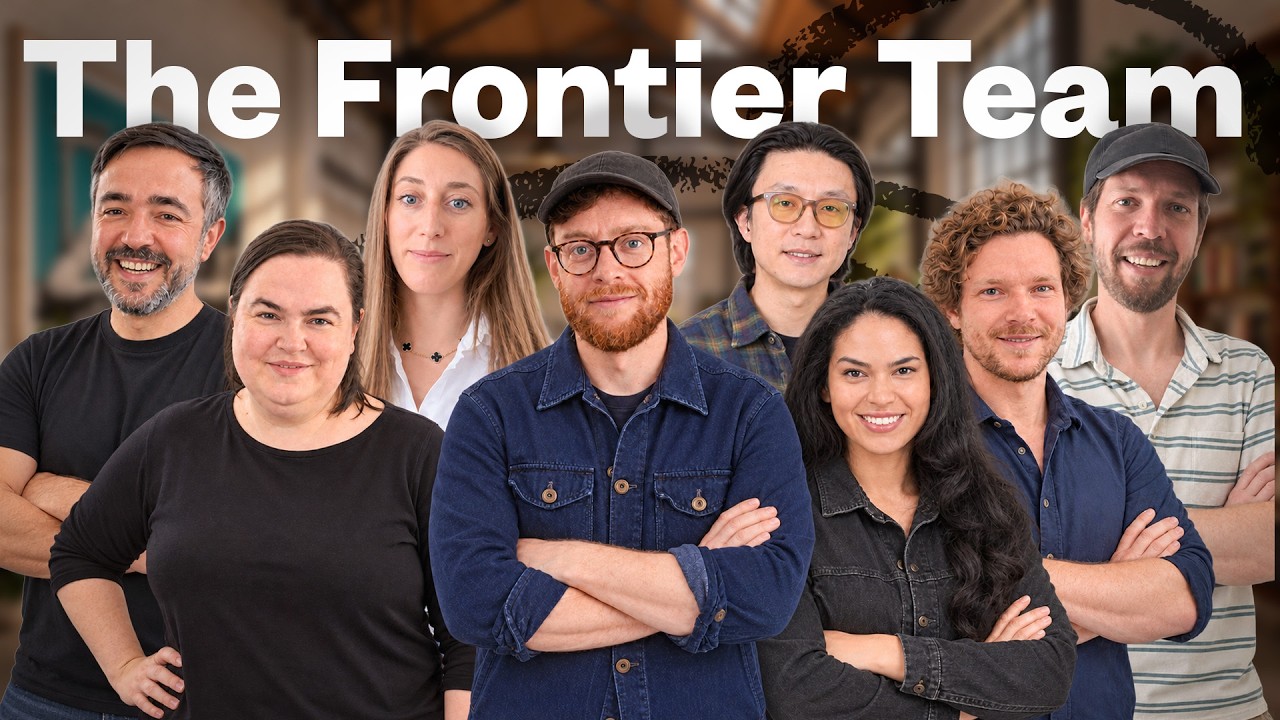
Every keeps up with AI by giving a small "frontier team" permission to experiment full-time, pairing fast builders with people who make things maintainable. The job isn't the experiments. It's getting a few of them adopted without burying everyone else in noise.
On Every's AI & I, Dan Shipper and Natalia Quintero walk through the team member by member: personal benchmarks, a token-spend dashboard, tools built for one person's workflow, and the architect who turns prototypes into something that lasts.
Built on Dan Shipper and Natalia Quintero's episode (Every, 21 October 2026). Roles checked against Every's team page. Outcomes are Every's own account.
Separate exploring from executing
Every worker now faces the same choice. Do you get your work done, or do you keep up with AI and work out what each new tool means for that work? Dan Shipper describes the trap plainly: ignore the frontier and you'll be fine "until you get disrupted," or chase it and "never build anything that lasts."
Every's answer, now a couple of months old, is to split the two. The frontier team takes the people who love trying everything new and lets them run experiments. At the low end, an experiment becomes a post or a video. At the high end, it gets pushed into Every's products and consulting. The rest of the company doesn't have to watch every model release.
Shipper says the main effect is calm. Everyone else can trust that when something important changes, someone will notice and they'll be able to handle it. Nobody has to feel "frazzled and distracted all the time."
Pair pirates with architects
Shipper describes two personalities. Pirates, like him, "try like a billion things in the space of a couple days," messily. Architects take the mess and compress it into something that can be maintained.
Jannik Jung, an engineer on the team, is the architect. He took over Shipper's prototypes, including the editor Proof, and made them production-ready. AI is good at "bringing something to life" for a demo, he says. Making it reliable still takes someone who knows how to structure code, choose libraries and deploy it.
Turn vibes into something you can check
Each member works a different edge. Mike Taylor, who gave himself the title head of evals, turns the team's gut feel about models into numbers. He builds personal benchmarks: "a small set of your own real work saved so that AI models can run on it again." A score is a count of yeses.
Arielle Shipper, head of operations, calls herself the "frontier wrangler." Her job is to map the experiments into themes the business can use. She also built a dashboard of token spend by person, tool, model and type of work, so the team can ask of any experiment whether it was worth it.
Others build tools fitted to one person's workflow. Senior editor Jack Cheng made a browser with no tabs and an editing pane that works with any model. Staff writer Katie Parrott added an audience file to her Compound Writing plugin, next to her voice and style guides. Kieran Klaassen re-runs the same ambitious build, a music-production app, on every new model to find where it now fails.
Protect everyone else's attention
The failure the team keeps naming isn't too few experiments. It's too many reaching other people. Taylor's advice cuts both ways. Give AI far more of your context, such as Slack, email and meeting notes, because it's now good at picking out what matters. Then remember that more output from you means more for colleagues to read.
It's your job now to protect other people's context.
Mike Taylor, AI & I
He admits he's accused of saturating the company's channels. Making his work easy to digest, like the explainer video Claude cut from his Slack messages and meeting notes, is now part of his job. Klaassen's closing rule for anyone on a frontier team sets the bar: "If you do a 100 experiments and don't let it land and don't integrate it, it doesn't work."
The boundary: this is Every describing its own team, with its own products in the demos and no outcome data yet. The structure is easy to copy. The proof is whether, six months from now, more of the experiments live in the products than in the Slack channel.