TL;DR
The short version
Fiona Fung's teams at Anthropic ship roughly eight times more code per quarter than they used to. The headline is the speed; the lesson is what the leader's job became once writing code stopped being the hard part.
Verification is the new bottleneck. The answers are concrete: manage through a Claude Code session wired into every repo, automate the morning review with async routines, put "what good looks like" in the repo, pair high agency with high accountability, and keep every manager shipping as a part-time IC. From Fiona Fung's conversation with Lenny Rachitsky.
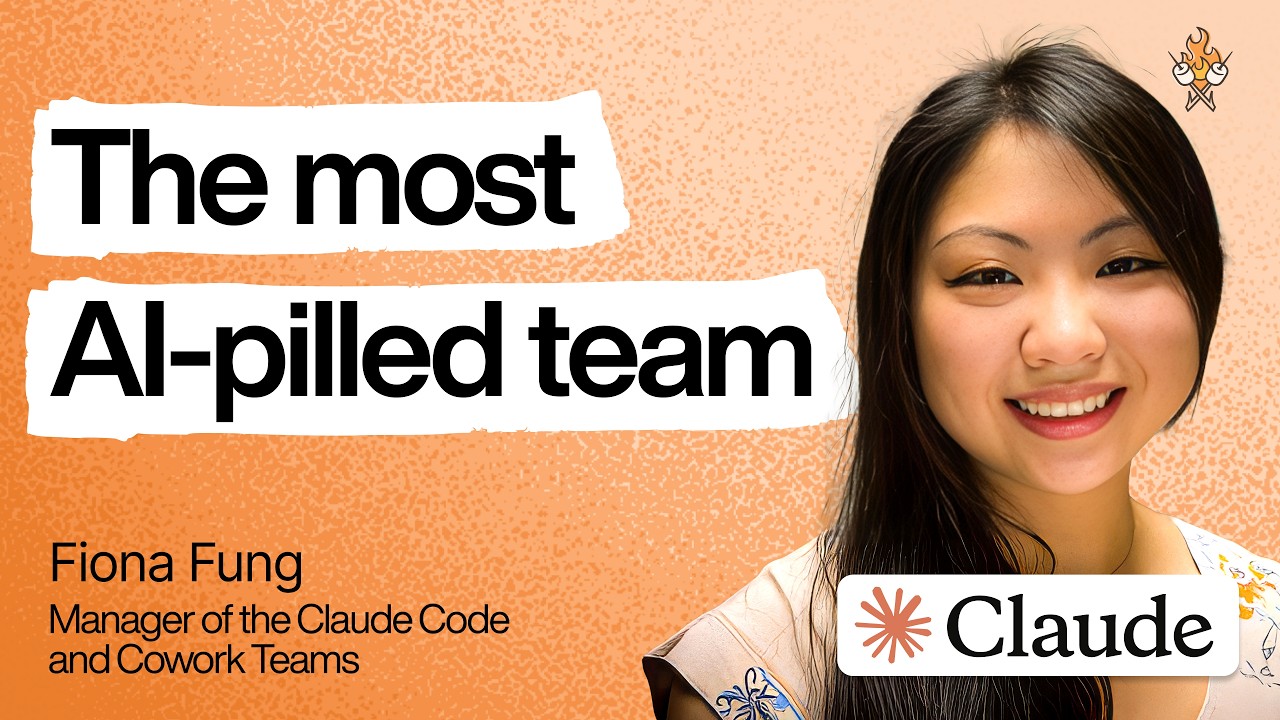
Built on Fiona Fung's appearance on Lenny's Podcast (21 Jun 2026). Fung leads the Claude Code and Cowork teams at Anthropic.
The bottleneck moved, so the job moved
Fiona Fung leads the Claude Code and Cowork teams at Anthropic. Before that she built TypeScript and Visual Studio at Microsoft and Facebook Marketplace at Meta. Her one-line summary of the shift: "Coding is no longer the bottleneck. It's lifted the ceiling of what anyone is able to do."
When the typing gets cheap, the scarce work is everything around it. More code ships, and more kinds of people ship it — on her team, designers and PMs check in code too. So the leader's question stops being "how do we write this faster" and becomes "how does everyone stay confident this is right." Verification is the new constraint.
That reframes management. The job is no longer assigning work and reviewing it by hand. It's building the system that lets a flood of work stay trustworthy.
Manage through the tool, not around it
Fung runs a Claude Code session wired into every repo, plus Slack and the team's metrics. It gives her full visibility into what's shipping. Once a month she does a "look back" session with each person — not to generate PRs, but to ask how things landed in market, what broke, where the gaps are.
The daily version is automated. She set up a routine that reads the feedback channels overnight, pulls out themes, and drafts PRs she can review with her morning coffee. The abstraction keeps climbing: first you prompt an agent, then you kick off agents async, then you write the routine that spawns the agents for you.
Her rule for what an agent can validate against: put "what good looks like" in the repo. Specs and quality frameworks, checked in and kept current, give Claude code review something concrete to enforce. It's test-driven development without the broccoli-first tax — the test the human used to dread writing is now generated for free.
Frameworks that travel
Three of her operating frameworks are worth stealing wholesale.
High agency, high accountability. The team prizes agency — freedom to cook, in her words. But it's paired one-to-one with accountability: what's the hypothesis of the problem you're solving? Freedom without a stated bet is just motion.
Bad vs. sad. Instead of drowning in dashboards, each team classifies quality failures as bad (irrecoverable — a crash, lost work) or sad (recoverable friction — a flicker). Each team sets its own thresholds, and stacked sads are treated as trending toward bad. It turns a wall of metrics into a decision.
Make new mistakes. Aiming for zero mistakes means you're too cautious. The bar is learning: just don't repeat the old ones.
On measurement, she's blunt that lines of code and token spend measure activity, not value — "don't forsake motion for progress." She'd rather take a listening tour with senior engineers than stare at a productivity dashboard, and she trusts the anecdote over the data. A research trip to Chile, not a metric, revealed that slow LTE was killing the Marketplace feed.
The part nobody automated
Two human problems got harder, not easier.
The work got lonely. Solo-with-your-agent flow replaced people building side by side, so the team added pairwise programming lunches and hackathons — partly because everyone uses Claude Code so differently that watching a colleague is the fastest way to learn.
And the leader stopped writing code, which she treats as a risk. Every manager on her team starts as an individual contributor and stays one part-time — a player-coach who keeps shipping. Not for the output, but to stay in the product daily and hold the quality bar by feel. Fung went from running a 500-person org at Meta to fixing her own first bug at Anthropic, asking Claude to help her write the manual test plan so she'd trust the change.
The throughput is the headline. The job underneath it — verify well, kill the processes that no longer serve you, stay close enough to the product to feel it — is the part worth copying.