TL;DR
The short version
On The Diary Of A CEO (12 Aug 2024), Codie Sanchez argues freedom comes through ownership — so front-load apprenticeship in your 20s, treat money as a tool, and buy simple cash-flowing gateway businesses (often with seller financing) while aging owners exit, rather than waiting for permission or chasing status startups.
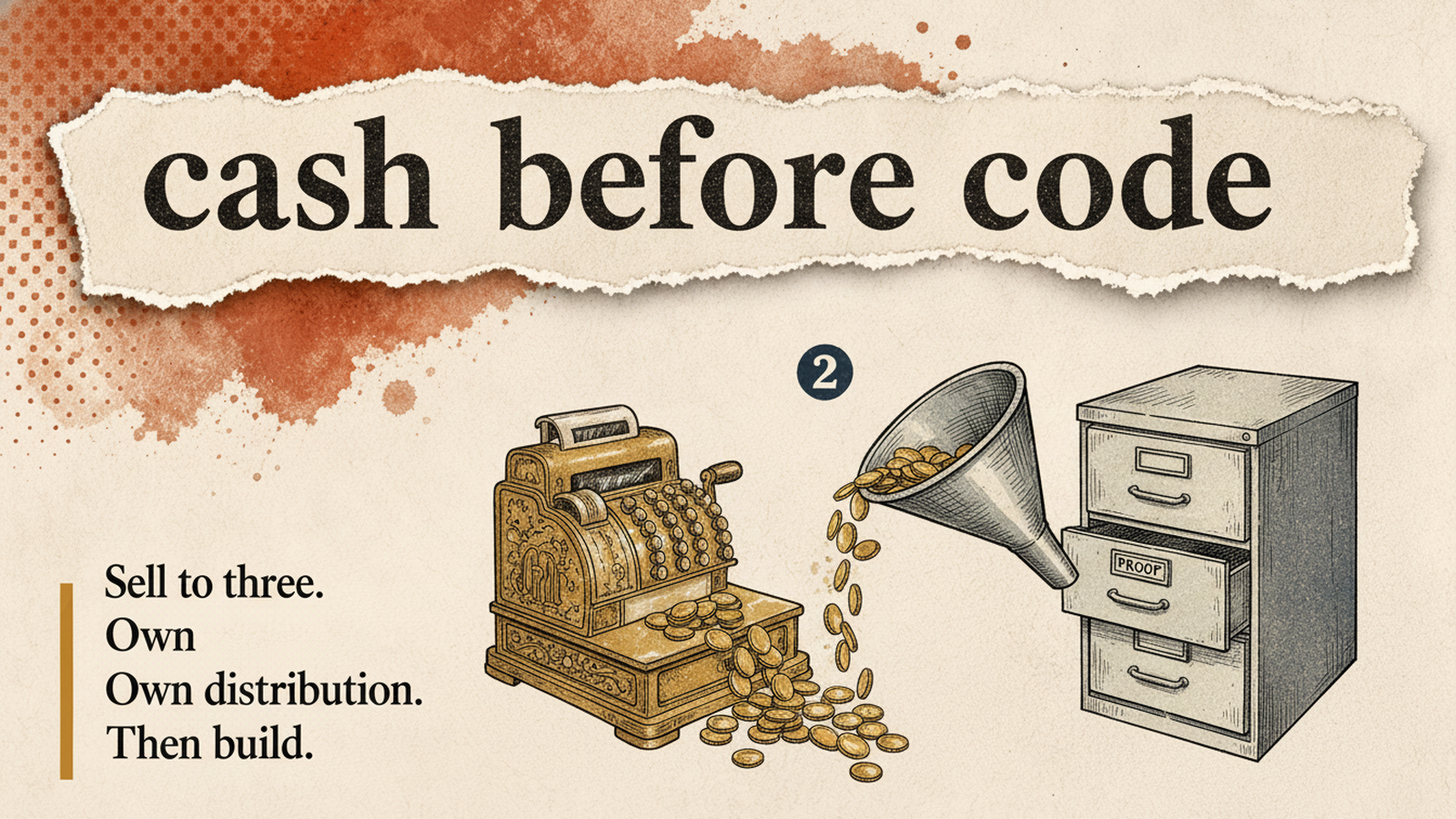
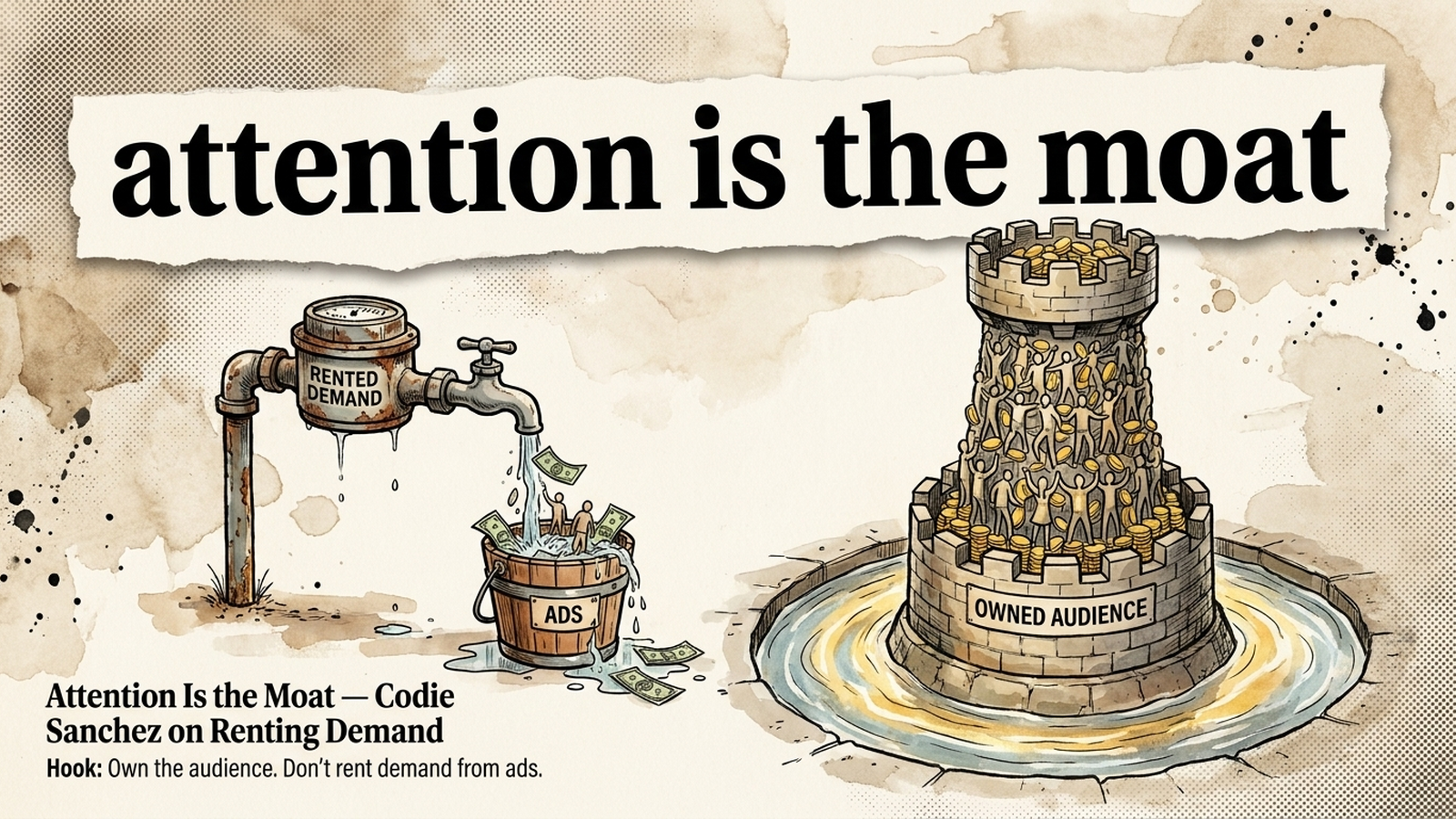
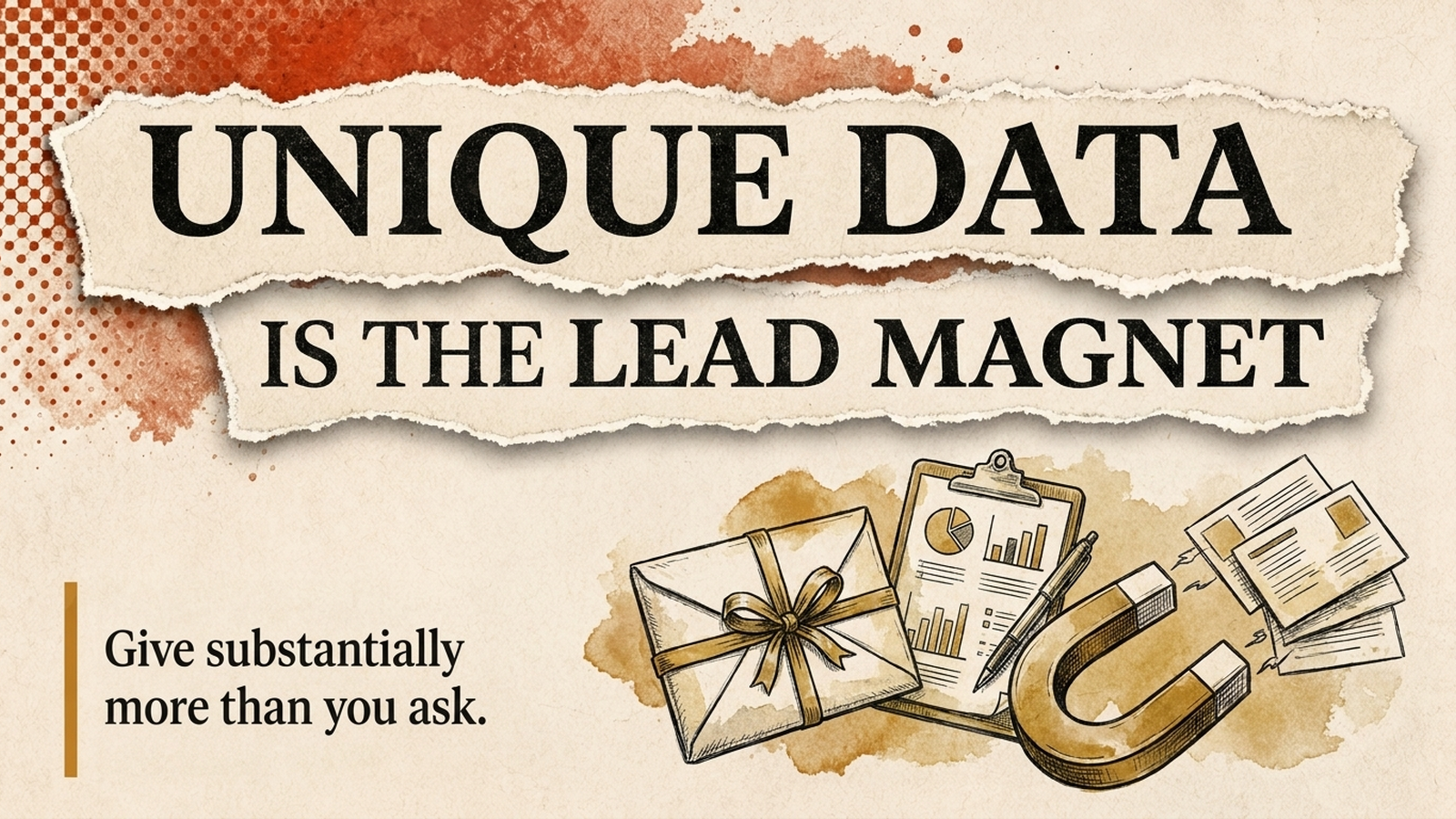
Verified framing used here: Chetty connectedness predicts ~20% higher adult income (not ~35%); ~52% of U.S. employer firms are owned by people 55+; historical Bizcomps data supports ~60% seller-financed SMB deals; score product on referrals, reviews, and retention before buying more leads. Companions: Cash Before Code, Attention Is the Moat, Unique Data Is the Lead Magnet.
Guest: Codie Sanchez (Contrarian Thinking). Host: Steven Bartlett. Primary: DOAC YouTube. Corrections: Chetty / Opportunity Insights, Gallup / Census ABS, Exit Planning Institute, Bizcomps. Lean note: she sells courses, community, Main Street Millionaire, and deal tooling — treat plugs as vendor-aligned.
Ownership is the point
On The Diary Of A CEO (12 Aug 2024), Codie Sanchez told Steven Bartlett that institutions and media have lost trust — so stop waiting for permission and start owning. Her core line is blunt: the only durable way to direct your own life is owning assets and businesses. Employees and permission-seekers stay at someone else's helm.
The only way to have freedom is through ownership and the world doesn't want to give it to you.
Codie Sanchez · The Diary Of A CEO
She is the founder of Contrarian Thinking and author of Main Street Millionaire. Treat the pitch as vendor-aligned — she sells courses, community, and deal tooling — while the operating ideas still stand on their own.
This ownership frame pairs with her later distribution notes: Cash Before Code, Attention Is the Moat, and Unique Data Is the Lead Magnet.
Front-load the apprenticeship
Her advice for people starting from scratch is not "found a startup at 22." It is: learn harder than you earn while young. Attach to a successful local operator — not a celebrity influencer via cold DM — and soak up how money and decisions actually work.
Proximity matters. Sanchez cites economic interconnectedness research as proof that contact with richer people compounds. The primary evidence is Chetty et al. (Nature 2022): closing the high-SES friendship gap for low-SES kids predicts roughly ~20% higher adult incomes on average — directionally supportive of "proximity compounds," not the ~35% figure sometimes repeated on air.
Chetty et al. Nature 2022; Bizcomps 1995–2009; Census ABS via Gallup
Money, in her framing, is a tool for saying no and helping more people — not a moral stain. Negative emotional attachment to money, she argues, repels the leverage you need to own.
Buy gateway businesses, not status
The acquisition path she sells is deliberately boring: laundromats, car washes, trade services, senior care — businesses simple enough to explain to a grandmother. She calls them gateway drug businesses: training wheels that teach P&Ls before harder games.
A gateway drug business is a business that is so simple that you can explain it to your grandmother [...] and also you can probably run it even if you've never run a business before.
Codie Sanchez · The Diary Of A CEO
Cash is not a hard prerequisite. Historical Bizcomps data supports ~60% of small-business sales using some seller financing — the seller takes payment from future profits over years. Sweat equity and operator partnerships fill gaps when you lack a down payment.
The timing argument is demographic. Roughly ~52% of U.S. employer firms are owned by people 55+ (Census ABS via Gallup) — not strictly "boomers own half," but close enough that succession pressure is real. Exit Planning Institute data puts roughly ~68% of owners without a documented exit plan. Many of those firms will never sell cleanly (~70% of businesses taken to market fail to sell, as industry rule of thumb) — which is why patient buyers and apprentices matter more than viral "millions for sale" headlines.
Product before funnel
Sanchez closes the wealth playbook with a product rule: you rarely have a leads problem; you have a product problem. Score the business on three Rs — referrals, reviews, retention. If those are weak, more top-of-funnel spend just funds a leaky bucket.
- Referrals — do customers send you the next customer?
- Reviews — is public proof accumulating without you begging for it?
- Retention — do people stay long enough that growth compounds?
Upfront product pain beats lifelong marketing spend. That same sequencing shows up in her distribution work: fix what people keep and recommend before you buy attention — the rent-vs-own test in Attention Is the Moat.