TL;DR
The short version
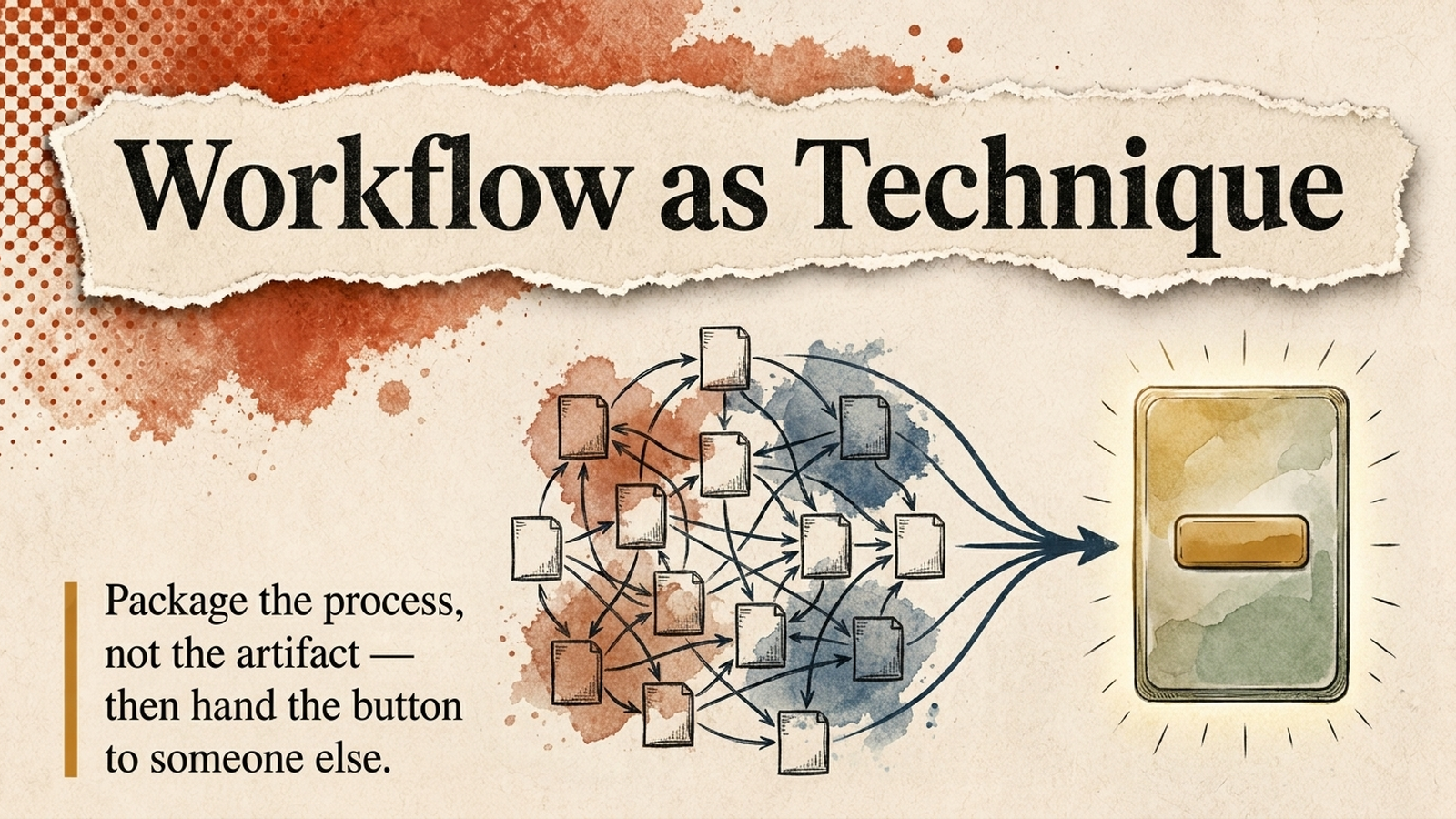
Most AI-for-PM advice helps you write a better spec or run faster research. That was never the hard part. The hard part is coordination overhead — the endless Slack tasks, meeting action items, and holding a chaotic day in your head.
A product manager at Melio rebuilt his workflow around Claude Cowork to attack exactly that. The productivity claims are his own from a live demo — treat them as direction, not benchmark. The design choices are the part worth copying: a system that rewrites its own instructions and connects to everything you touch.
Built on How I AI with Daniel Bloom (PM, Melio), hosted by Claire Vo, 31 Aug 2026.
The bottleneck isn't specs
Most AI-for-PM advice targets the wrong job. It helps you write a better spec or run faster research — useful, but that was never the hard part. The hard part is the overhead: remembering the tasks that surface in Slack, tracking action items from back-to-back meetings, and holding the whole chaotic day in your head while trying to do one hour of deep work.
There's this beautiful clean organized world that's in our weekly priority, and then there's reality — this chaos of Slack and meetings and urgent priorities and executive asks.
Daniel Bloom, PM at Melio
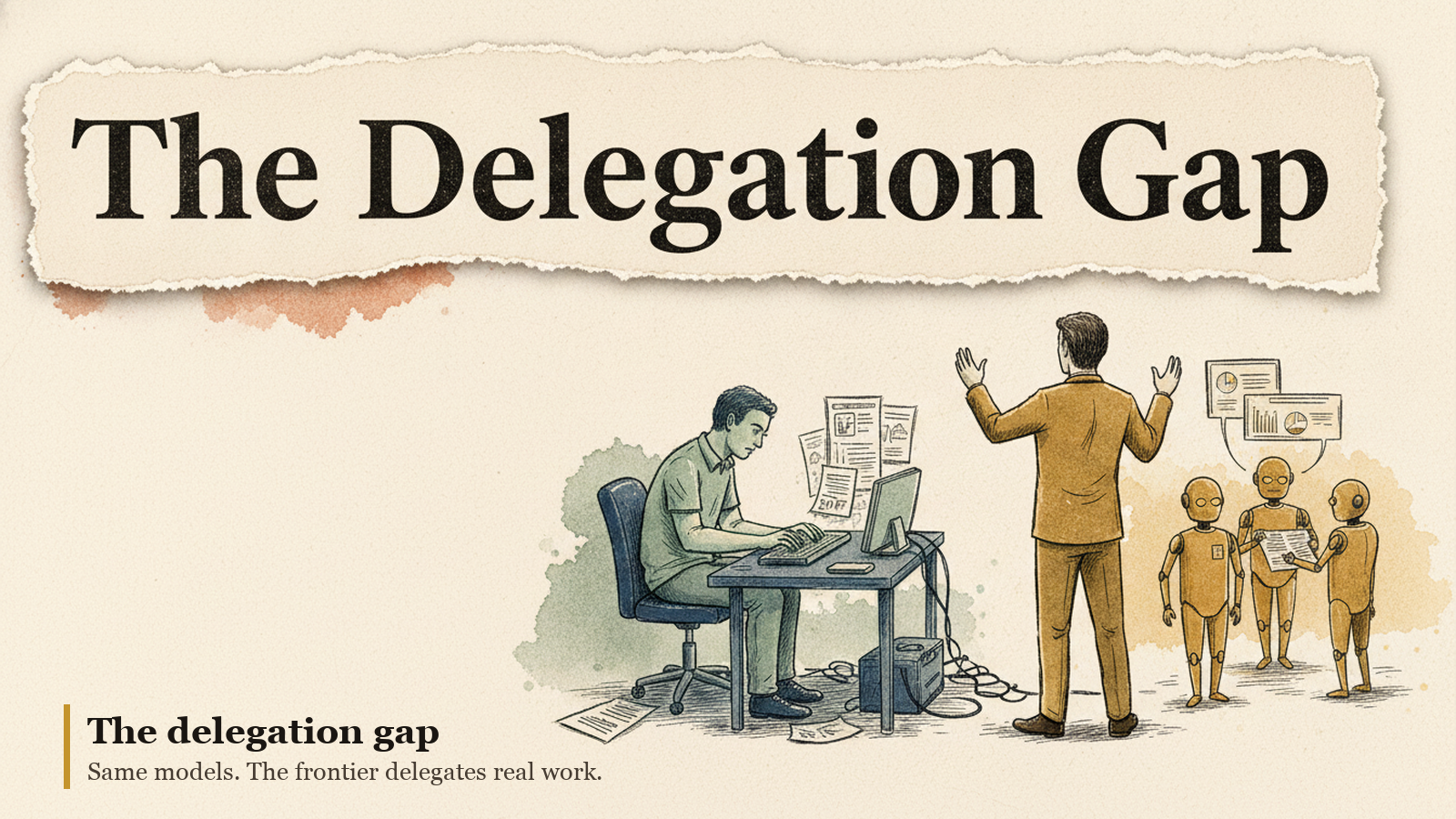
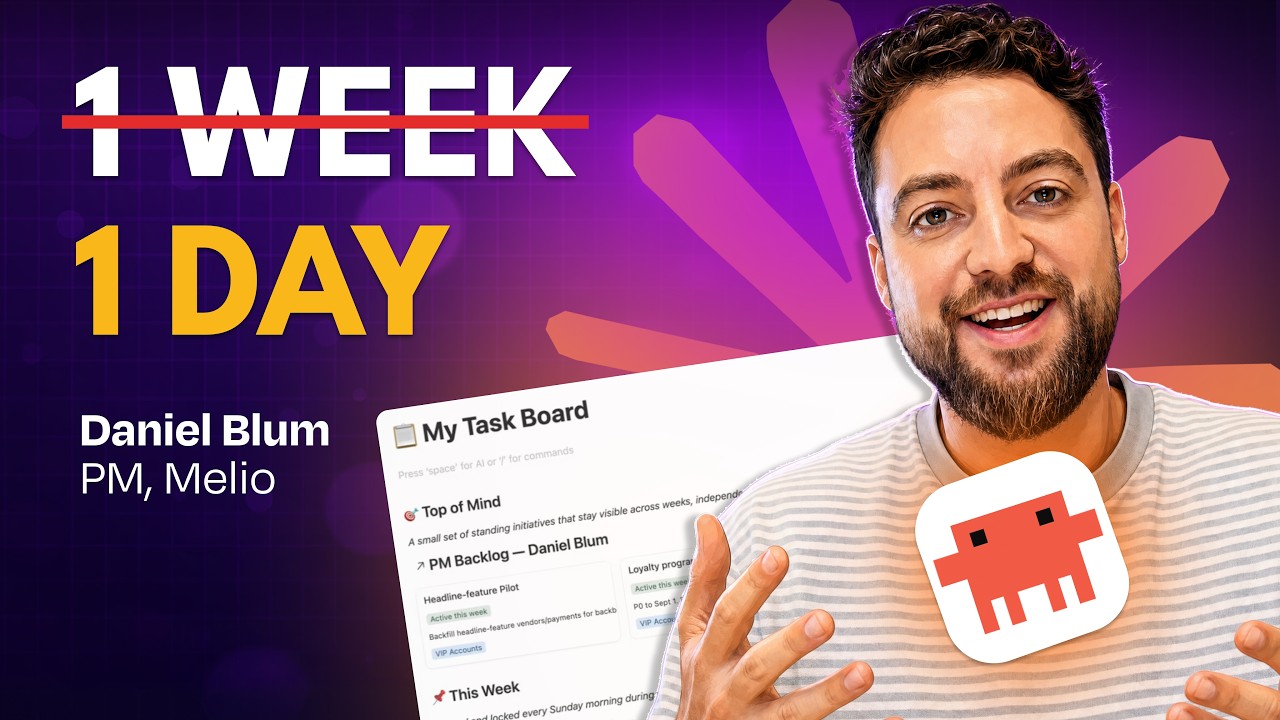
That gap is what Daniel Bloom set out to close on Claire Vo's How I AI. His claim is big, with a caveat: he says he now does in a day what used to take a week, and manages 70–80% of his at-computer time through Claude Cowork alone. Those are his own numbers from a demo, not measured results — a direction, not a benchmark. The parts worth copying are the design decisions underneath.
Two principles that outlast the tool
Bloom is blunt that the tool isn't the point — Cowork worked for him, but he says another harness could too. What makes a system powerful comes down to two rules.
It can rewrite its own core files. The instruction files that tell the agent how to work aren't frozen; the system edits them over time, so it keeps improving instead of decaying. It connects to as much of your ecosystem as possible through connectors and MCP — the open standard that lets an assistant plug into Slack, calendar, and your docs through one interface.
Neither principle is about model quality. Both are about architecture. That's the operator's takeaway: you're not picking a smarter model, you're building a context layer that survives contact with your real week.
The system: read-only board, two automations, self-improving loops
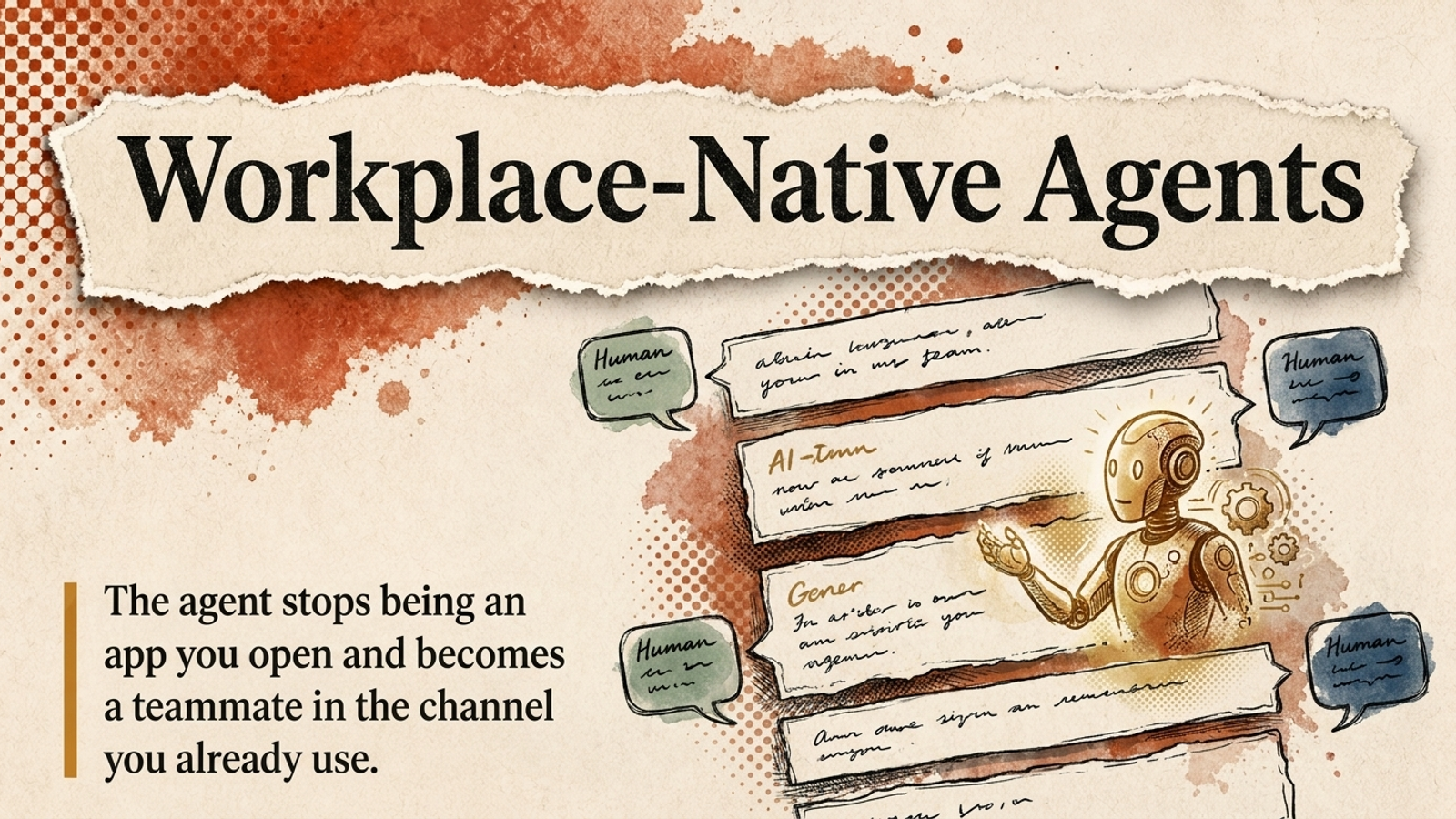
The visible surface is a Notion board with three sections — top of mind, this week, and inbox. Bloom barely touches it. Notion is read-only for him; Claude builds and maintains it. He looks at it for focus; the agent does the filing.
Two scheduled tasks run the rhythm. A Sunday weekly prep pulls Notion, calendar, Slack, and Granola meeting transcripts, then recommends what to focus on and walks him through meeting prep. A daily morning brief catches him up on yesterday's meetings and their action items. The sharpest move sits inside that brief: when Claude hits a term it doesn't recognize — his example is "settlement cap," an internal payments concept — it stops and asks him to define it, then saves the answer to context. Your company's vocabulary isn't in the training data. This is how you get it in without a documentation project.
Then there are the loops that improve the system weekly: one compares the drafts Claude wrote against what Bloom actually sent and learns from the gap; another watches for things he does repeatedly and proposes turning them into reusable skills; a third surfaces the top frictions his skill files logged that week. Claude helps him improve the system, so he doesn't have to schedule the maintenance himself.
The honest part: it compounds slowly
This is where Bloom is more credible than the average productivity thread. Early ROI looks bad. For the first few weeks the system doesn't know your business logic, so it's frictionful, you distrust it, and you double-check everything. The payoff arrives only after two unglamorous habits: contextualizing ruthlessly — he seeded his context files with links, decks, and hours of dictation — and centralizing work in one place so nothing loses context.
There's a team cost too. When PMs tried to install an earlier terminal-based version, it took around three days of setup before anyone was productive. Melio's answer was a "workstation" onboarding plugin that connects tools, maps colleagues and reporting lines, and captures your writing voice — trading raw power for adoption. That trade is the real lesson for rolling this out past one enthusiast: the most capable setup loses to the one people will actually start.
What to copy
You don't need Bloom's exact stack. You need three moves.
Start there, expect a slow month, and let the context compound.