TL;DR
The short version
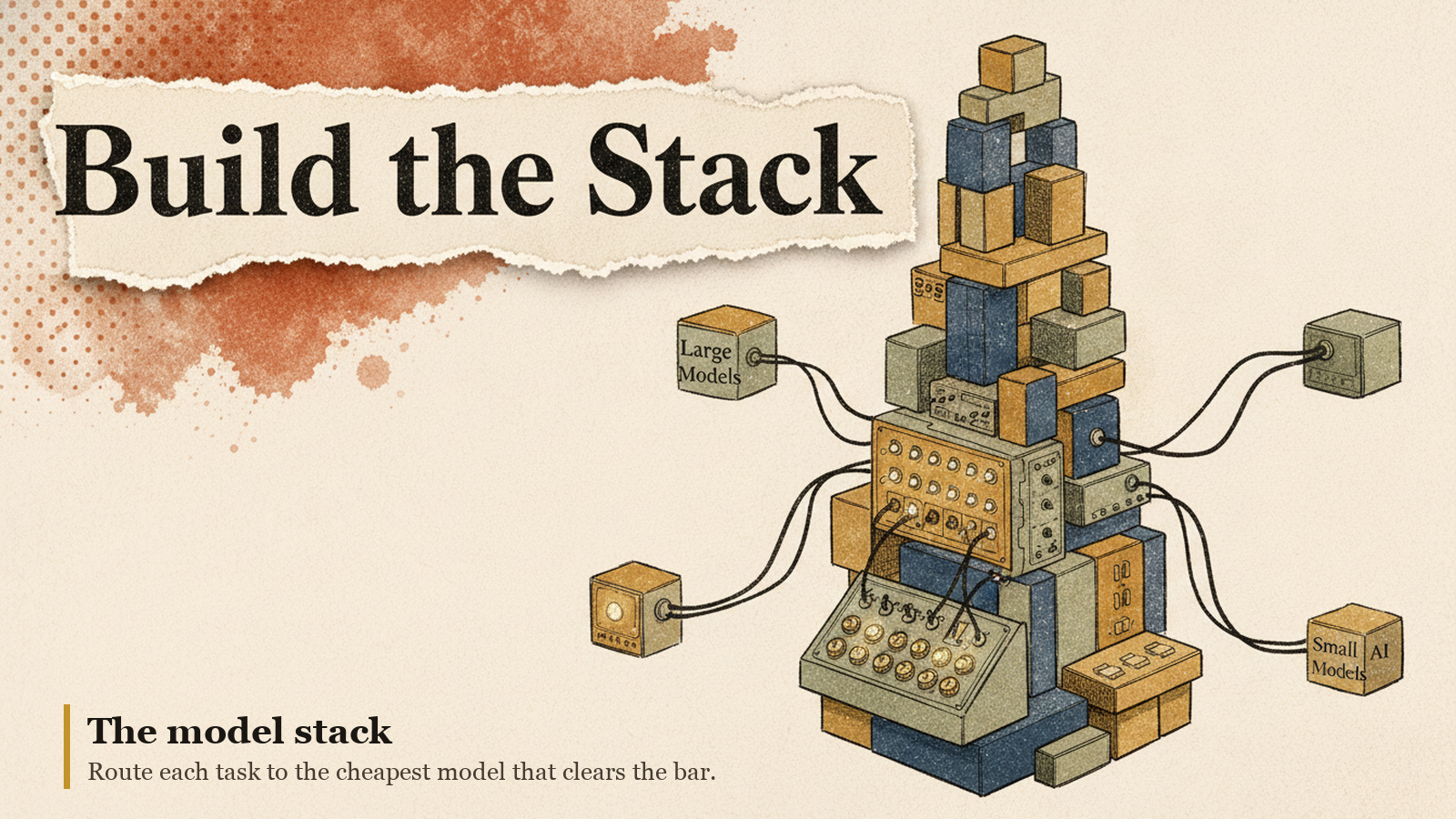
September's rush of new models makes the point plainly: your job is no longer to find the single best model, but to match models and harnesses to specific work on cost, speed, and — increasingly — how much you trust the vendor with your data.
Nathaniel Whittemore's AI Daily Brief walks through September's model flood — Fable 5.1, GPT-6 Astra, Gemini 3.8 Flash and more — and lands on one operating shift: match models and their harnesses to specific work on cost, speed, and vendor trust.
Built on The AI Daily Brief with Nathaniel Whittemore.
The unit of decision changed
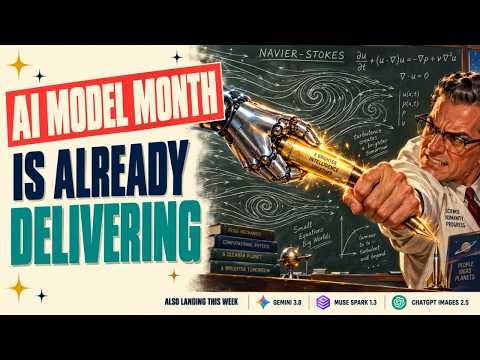
For two years the move was simple: find the best model, standardize on it, move on. September broke that habit. In about nine days the field shipped Fable 5.1, GPT-6 Astra, Google's Gemini 3.8 Flash, Meta's Muse Spark 1.3, and ChatGPT Images 2.5. Google alone put out its third Flash update in six weeks.
The point of that pile-up isn't that any one model won. It's that "which model" is now the wrong question. The better question is which model, in which harness — the agent scaffolding like Codex or Open Code that wraps a raw model and decides how far it can actually get. A model that looks mid-tier in one harness can be your best option in another. The decision moved down a level, and most teams haven't followed it there.
Speed became a real axis
The old instinct was to treat speed as a consolation prize for weaker models. That's now a live tradeoff. In one head-to-head build, Opus 5 produced the better result, but Gemini 3.8 Flash finished 39 times faster — 37 seconds against 24 minutes. As the tester put it, "At what point does speed matter more than the last bit of quality?"
For a lot of work, the honest answer is: sooner than you'd admit. If a task is cheap and fast enough to run 39 times, iteration beats polish. The operating lesson is to sort your workload before you sort your models: which jobs need one careful pass, and which reward volume and throwaway drafts? Assign the model to the job, not the other way around.
Opus 5 won, but Gemini 3.8 Flash was 39x faster. At what point does speed matter more than the last bit of quality?
Pepe, on a head-to-head build
One caveat travels with the speed story. SemiAnalysis flagged Gemini 3.8 Flash and Muse Spark 1.3 as "two of the most clearly benchmaxed models we've seen" — near the frontier on the public Terminal Bench 2.1, but collapsing on the two-week-old TB 4.0 (Flash fell to 19.1%). Public benchmarks rot once labs can buy training data that mimics them. Trust your own evals on your own tasks over any leaderboard.
Cheap models can bill you in data
Muse Spark 1.3 is the tempting case: Artificial Analysis put it near Opus-5 coding quality at roughly a quarter of the cost. But the discounted "contributor" tier on Open Code is discounted for a reason — Meta may train on your inputs and outputs. The low price is partly paid in data.
That's not a footnote. It's the same fault line that ran through the month's biggest story. OpenAI claimed its internal model solved the Navier-Stokes problem — one of seven Millennium Prize problems set in 2000, only one of which had been solved in the 26 years since. The claim was quickly overshadowed by a credit fight: a mathematician said he and an Anthropic collaborator had been working the same niche method inside Codex for a year. Former DeepMind researcher Susan Zhang named the part that matters for the rest of us: "Can these labs see all your work and scoop you when the stakes are high enough?"
Vendor trust is now an operator decision
As AI tools get woven into proprietary work, "can I trust this vendor" stops being a philosophical question and becomes a procurement one. The month gave two concrete prompts.
First, data. Whatever OpenAI's Navier-Stokes account turns out to be — Mark Chen insists no human or agent saw the collaborators' data, and that using de-identified usage data is standard across every lab — the episode is a reminder to know your data terms before you paste anything sensitive into a shared harness.
Second, what you actually get. A class action now alleges Anthropic's Claude Max tiers ($100/mo for "5x," $200/mo for "20x," against a ~$20 Pro plan) deliver far less than the advertised multiples once weekly caps are counted. Whether or not it goes anywhere, it signals the scrutiny top labs will face as their subscriptions become something workers feel they need to stay employable.
What to actually do
Three moves fall out of the month, and none of them require waiting for the next release.
Build a short menu, not a single default: one high-quality model for careful passes, one fast-and-cheap one for iteration, chosen per task. Keep your own evals on your real work, because leaderboards are increasingly gamed. And read the data terms of any cheap or free tier before it touches proprietary material — the discount and the data policy are usually the same decision.
The models will keep coming. The advantage now is in how deliberately you route work across them.