TL;DR
The short version
Managing agents is a new knowledge-work primitive — closer to management training than software training — and the workforce can't yet do it. That gap is load-bearing on the macro economy.
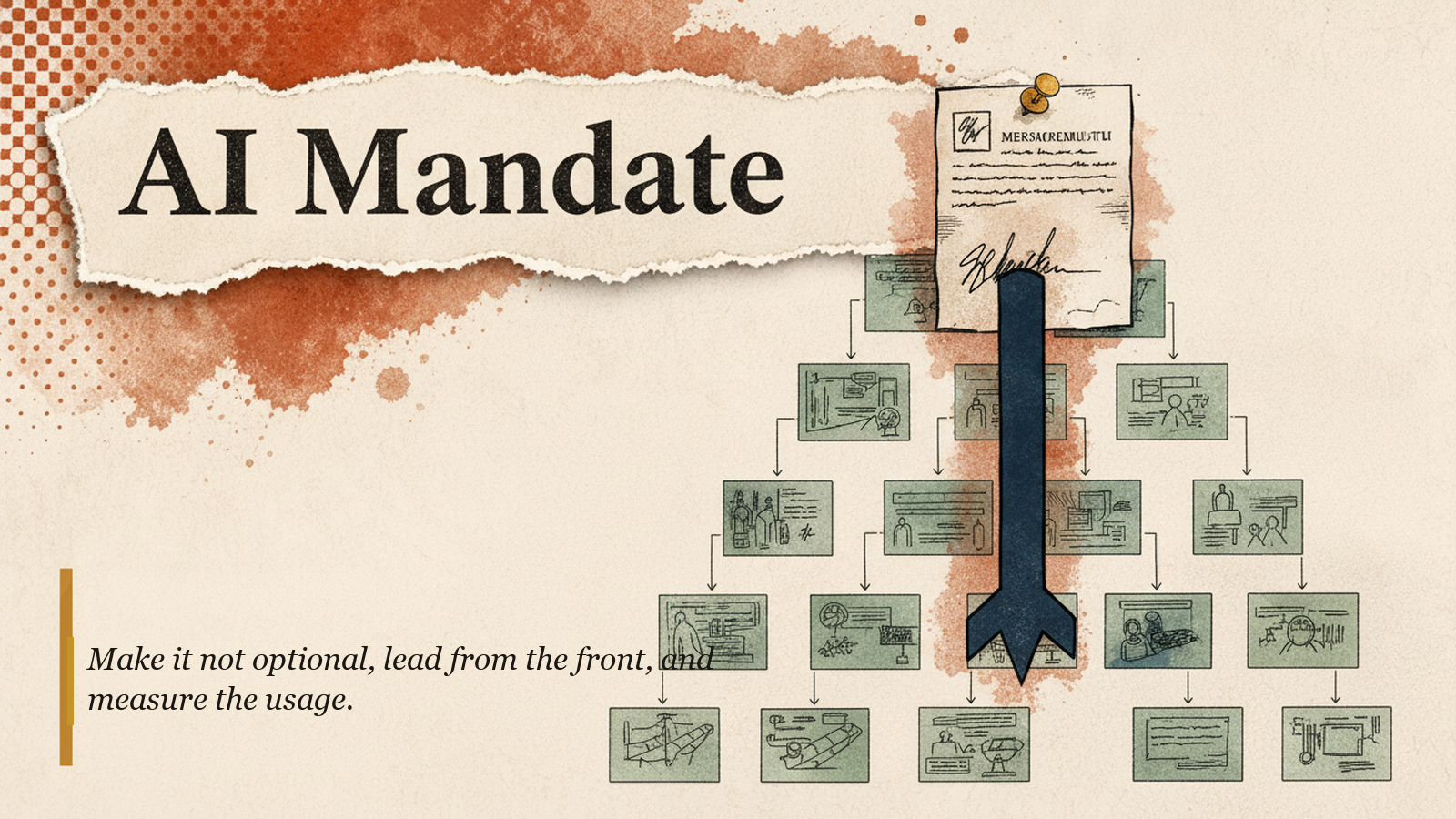
The one move that grows token use without busting caps is mass, high-quality training that drags every worker from assisted to agentic AI. Will England's Walleye mandate is the pattern at firm scale: mandate the proficiency, then measure the usage.
Built on Nathaniel Whittemore's The AI Daily Brief and Will England (Walleye Capital) on Every. Whittemore sells AI training and England is an Every client — treat conclusions as advocacy, the macro stats as solid.
Managing agents is a new work primitive, not a tool skill
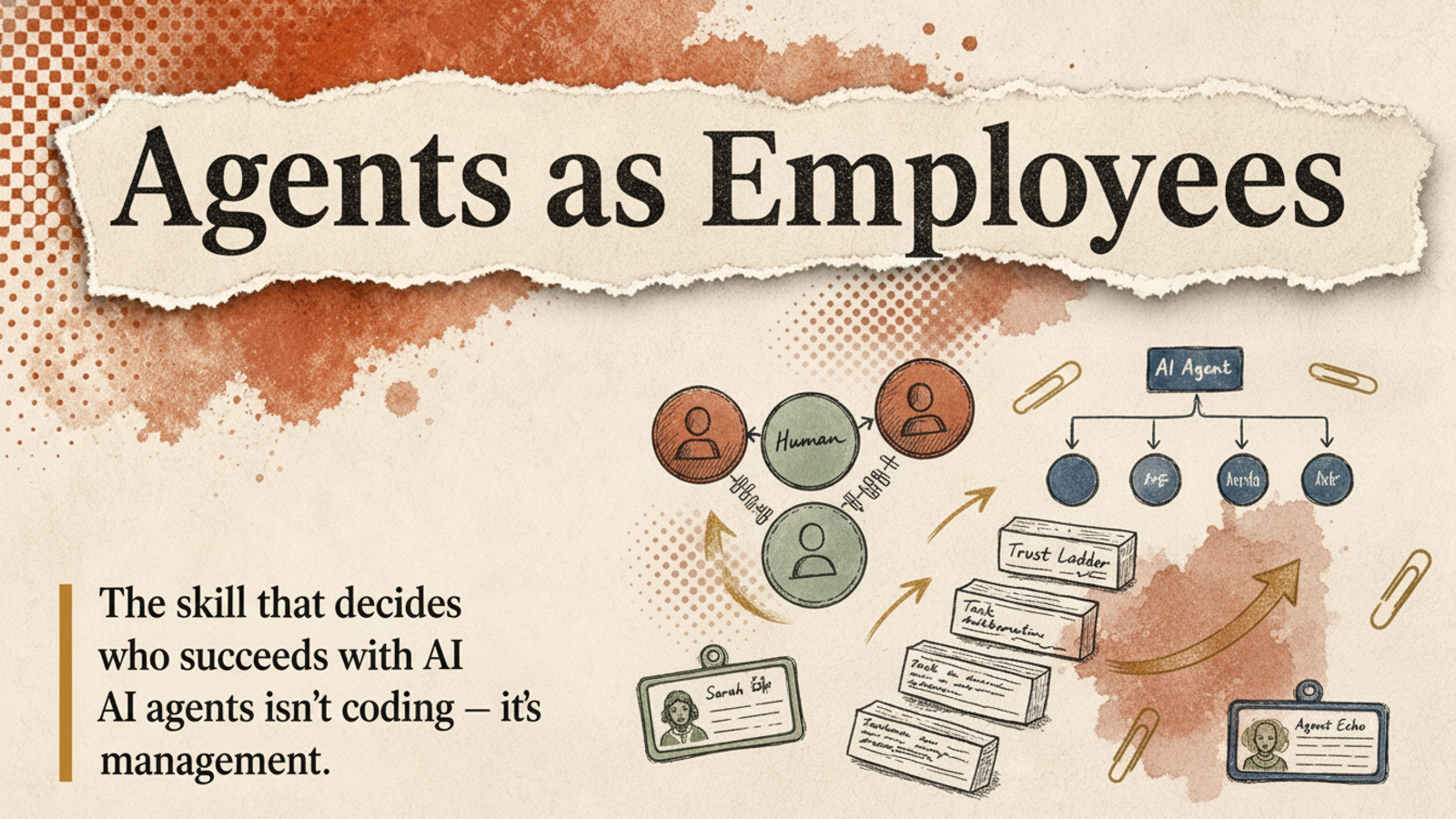
The skill being taught isn't "how to use the app" — it's delegation, spec-writing, review, and judgment over autonomous workers.
Managing agents is a new knowledge work primitive that every single knowledge worker in the future will need to be skilled in. This is a lot closer to management training than it is to software training.
Nathaniel Whittemore
The bottleneck on AI value isn't model capability, it's workforce fluency — and almost nobody is closing it systematically. EY's Work Reimagined survey: only 28% of orgs have positioned employees for transformative AI impact.
Training is the resolution to the caps-vs-token-growth collision
Labs need infinite token growth to justify capex; CFOs are clamping spend (Uber capped per-employee AI at $1,500/month per tool after blowing its 2026 budget in four months). The one move that serves both sides: train every worker to use agents well enough that the spend pays for itself.
Caps don't just limit spend — they shape what gets attempted, steering people toward predictable returns and away from the open-ended experiments that create new value. Training is how you keep exploration funded when the budget says exploit.
Density is the operator lever — the Walleye case
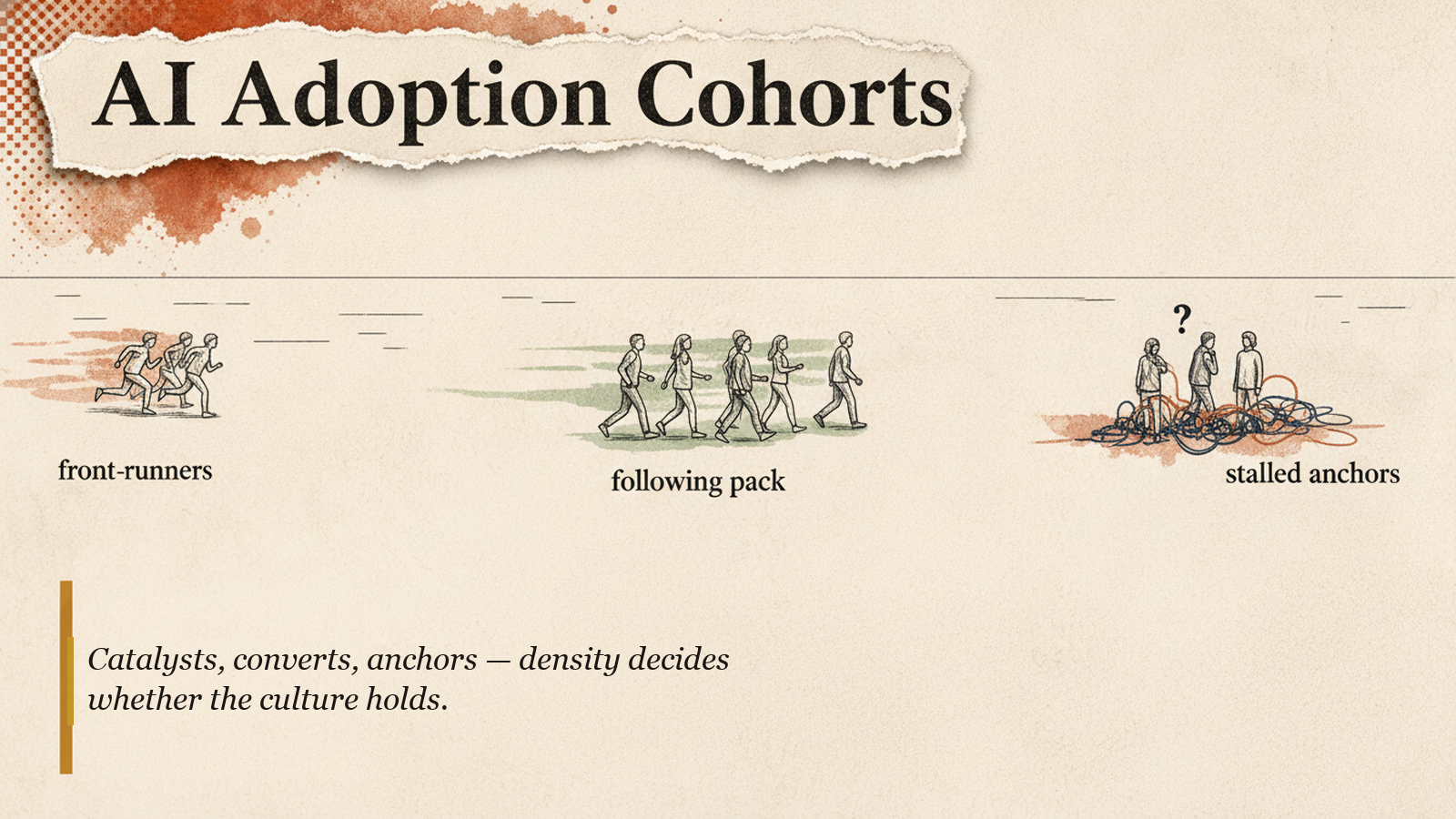
Fluency training only moves the needle if it crosses a critical mass; a minority operating the old way undermines the shift. The companies winning impose hard constraints, not soft nudges, and measure ground-level usage, not what department heads report.
Will England required all ~400 employees at his ~$10B hedge fund to reach "a base case level proficiency in AI tools" and tracks weekly usage rates rather than staged productivity metrics — while calling firm-wide productivity numbers "kind of nonsense in a real company." The mandate sets the floor, fluency work gets people there, and usage telemetry tells you if it took.