TL;DR
The short version
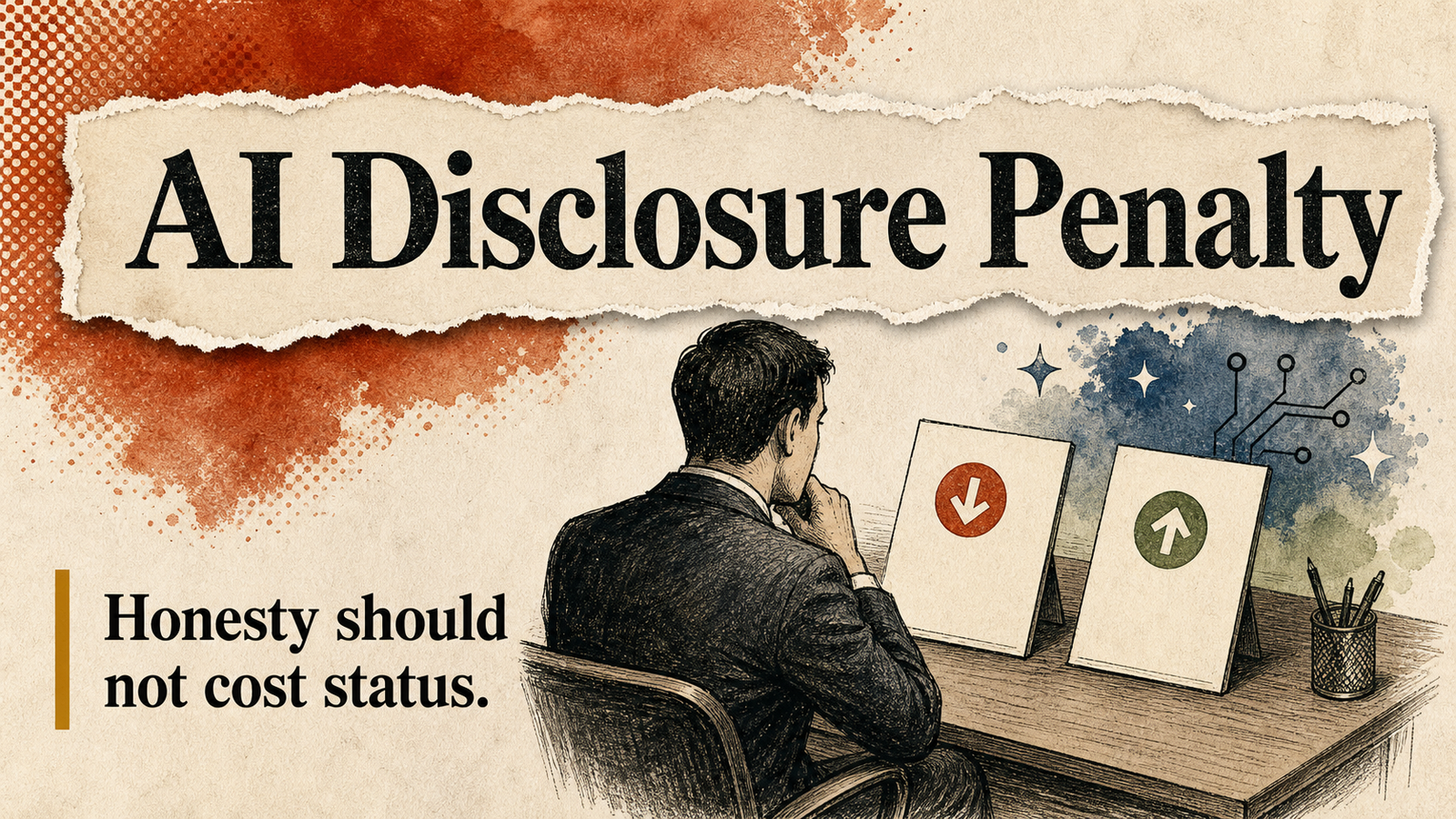
AI-assisted writing just stopped being a scandal. When hedge-fund legend Stanley Druckenmiller's Wall Street Journal op-ed got flagged as AI-written, he said "of course I used AI" and the paper's opinion editor backed him. The purity test — did a human type this? — is dying.
The quality test isn't. Cheaper drafting raises the burden on outputs, not lowers it, and readers still read visible laziness in the prose as laziness in the argument. The skill now is matching how much you lean on AI to what each format can absorb — and never letting it do the thinking. Built from The AI Daily Brief.
Built from Nathaniel Whittemore's "5 Rules for AI Writing" on The AI Daily Brief.
The scandal that wasn't
Stanley Druckenmiller — a hedge fund manager whose fund posted zero losing years from 1981 to 2010 — published a Wall Street Journal op-ed attacking the Treasury Secretary. An AI detector flagged the piece as machine-written, and the expected scandal arrived on cue.
Then it collapsed. Druckenmiller didn't apologize.
Of course I used AI. I write everything using AI now for the same reason I use a calculator when I do math problems.
Stanley Druckenmiller (as read on The AI Daily Brief)
The Wall Street Journal's opinion editor defended publishing it. The AI Daily Brief reads this as a marker: the purity test is dying, and in two years the disclosure fight will look quaint. That's the easy half. The part operators miss is what replaces it.
The quality bar goes up, not down
Cheaper drafting doesn't lower the standard. It raises it. As Whittemore put it, "the increased easiness of the inputs of writing will increase the burden on the outputs of writing even more." When anyone can generate a polished-looking memo in seconds, a polished-looking memo is worth nothing. What stays scarce is saying the right thing.
Druckenmiller wasn't mocked for using AI. He was mocked because the AI-isms were obvious and fixable — the "it's not X, it's Y" construction, the padding, the self-congratulation. Visible laziness in the prose read as laziness in the argument. "Laziness in work comes across as laziness in work. There are no shortcuts ultimately for doing things well."
Different writing, different rules
The mistake is asking "can AI write this?" It almost always can. The useful question is how much AI a given format absorbs before it costs you.
- Emails, notes, summaries: lean all the way in. The reader wants the information, not your voice.
- LinkedIn posts, internal updates: AI drafts, you edit for voice and cut the tells. Medium stakes.
- Strategy memos, marketing copy, op-eds: traps. These formats are the thinking. Outsource the draft and you outsource the argument.
The risk scales with how much the format is meant to carry your judgment rather than move information.
Two rules that catch most of the damage
Longer is not better. First-wave AI writing was defined by endlessly long documents. The value was never volume. Pascal apologized for writing a long letter because he hadn't the time to make it shorter — brevity is the harder, more expensive output. AI makes length free, which makes length worthless.
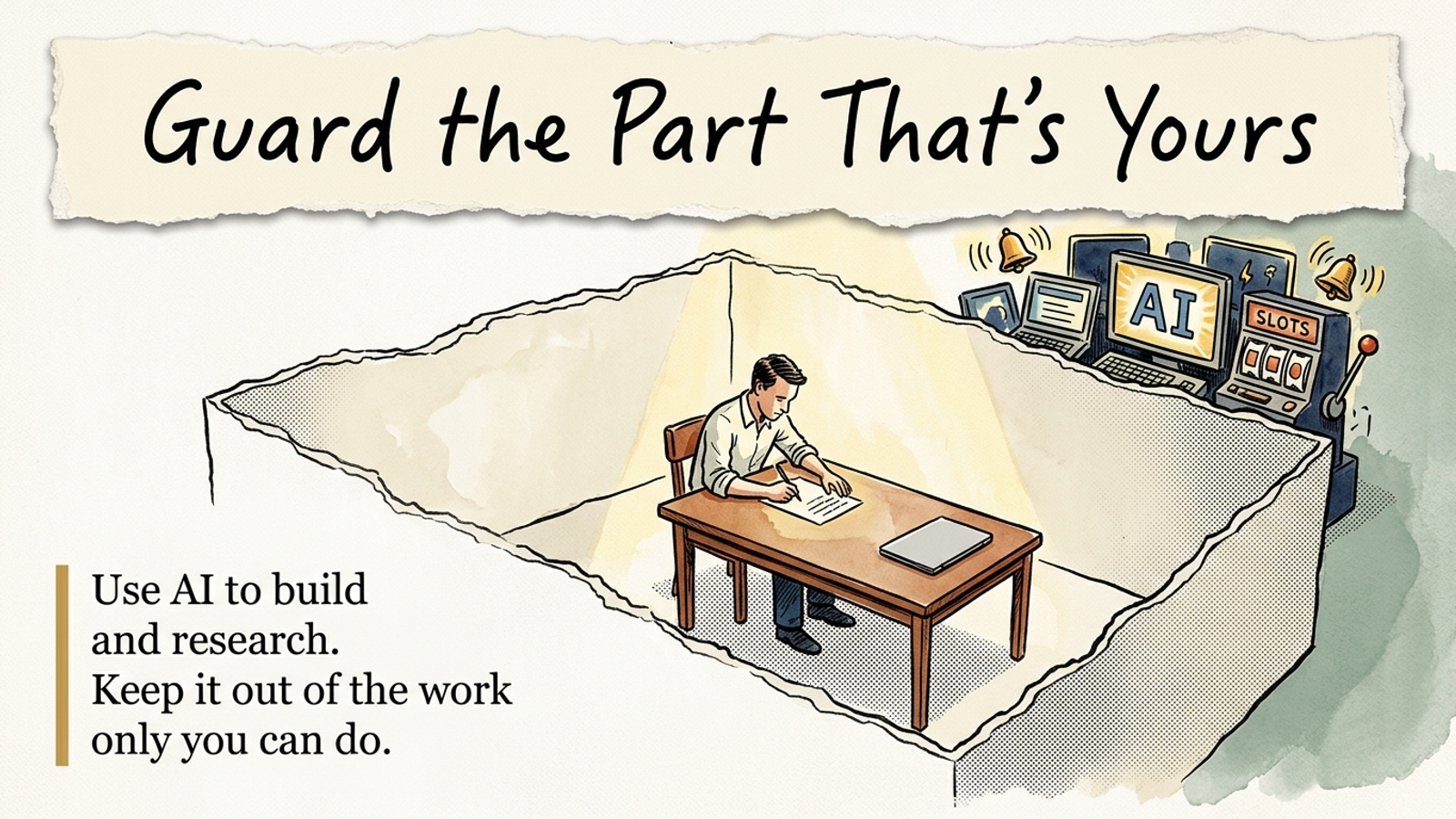
Writing is thinking. The words are the visible layer; the argument underneath is the point. Skip the drafting with AI and you risk skipping the thinking that drafting forces. Do the thinking first, then let AI render it. Balaji Srinivasan's frame fits: AI "doesn't do end to end, it does middle to middle; the new bottlenecks are prompting and verifying." The human work moves to the ends — deciding what to say, and checking that it is true and yours.