TL;DR
The short version
More than half of US workers now use AI on the job — Gallup put it at 52% in mid-May, the first time past the halfway mark. The debate about whether people use AI is over. The open question is how well.
On that question, the surveys stop agreeing with the headlines. Value is obvious but ROI lags, the heaviest users hide their AI use, and the jobs panic barely shows up in the data. The one number that captures it all: the median company spends $11.38 per employee per month on AI, and the top 1% spend about $7,500. Built on The AI Daily Brief's survey round-up.
Built on The AI Daily Brief's “41 Stats About AI Adoption” (Nathaniel Whittemore, 10 Aug 2026). Gallup's 52% and Anthropic overtaking OpenAI on Ramp were independently confirmed; the rest are single-source survey figures relayed by the host.
Adoption crossed 50%, so the question changed
More than half of US workers now use AI on the job. Gallup put it at 52% in mid-May — the first time past the halfway mark, up from 27% two years ago. That number should settle a debate. The question is no longer whether people use AI. It's how well.
And on that question, the surveys stop agreeing with the headlines.
Value is obvious. ROI isn't.
Almost everyone sees AI working. Domino Data Lab found 93% of enterprises reporting improved production capability — but 57% of them said the ROI still doesn't outpace the spend. KPMG's global pulse is starker: only 7% of leaders report established ROI, even as the share saying AI delivers meaningful value jumped 12 points in a quarter to 76%.
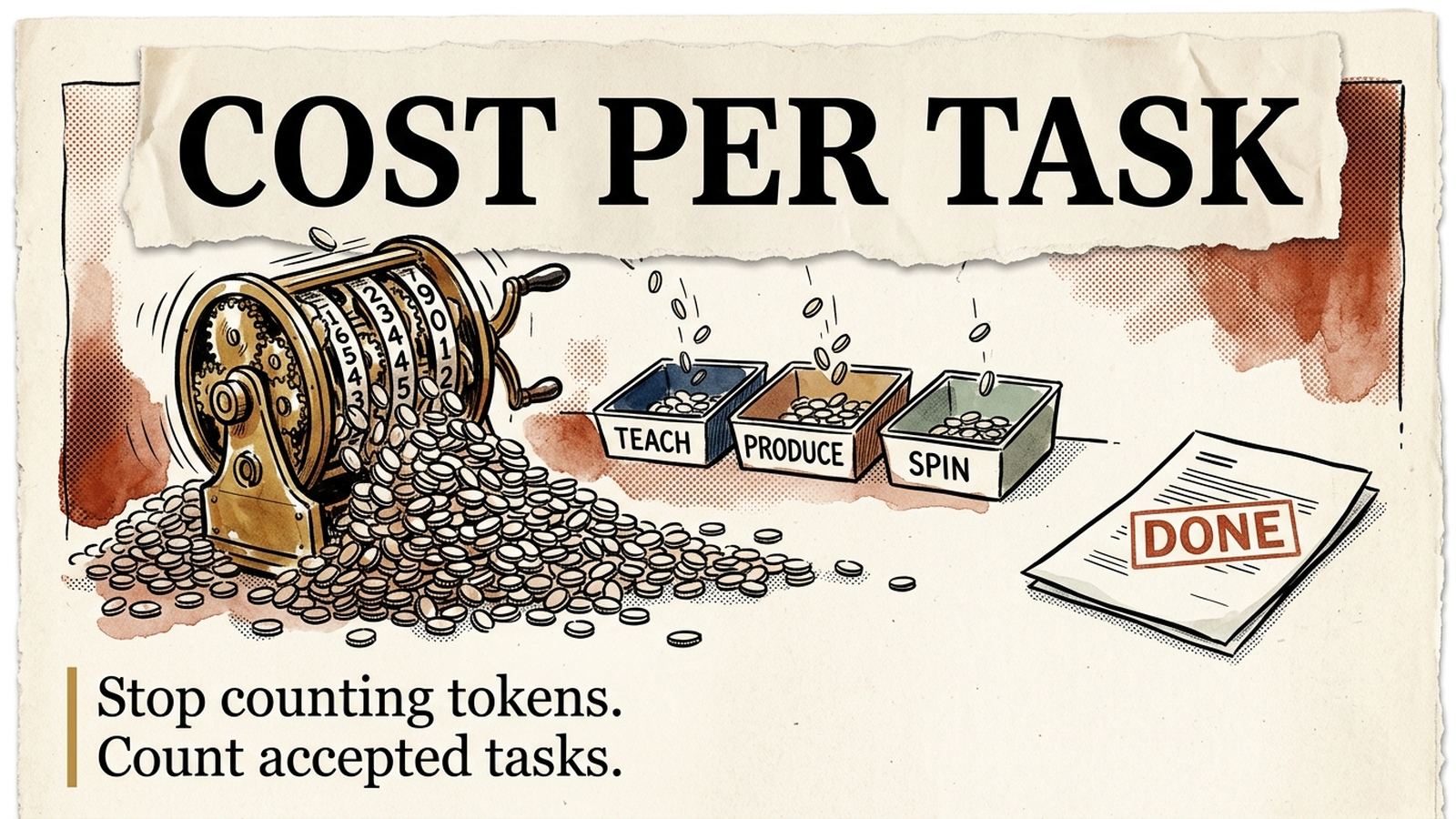
Part of the reason is that the cost model changed underneath everyone. In the agentic era you're not paying for seats at $30 a month. You're paying for tokens, and tokens scale with use. EY found 98% of C-suite leaders say token costs are already forcing them to reconsider their plans — while only 64% actually meter usage. Most companies are worried about a bill they aren't reading.
The spend gap is the whole story
Ramp watches real card data from more than 70,000 businesses. The median AI-buying company spends $11.38 per employee per month. The top 1% spend about $7,500 a month. Ramp's customers skew tech-forward, so the real gap across the economy is almost certainly wider.
That is not a rounding difference in maturity. It's two different worlds of work, drifting apart.
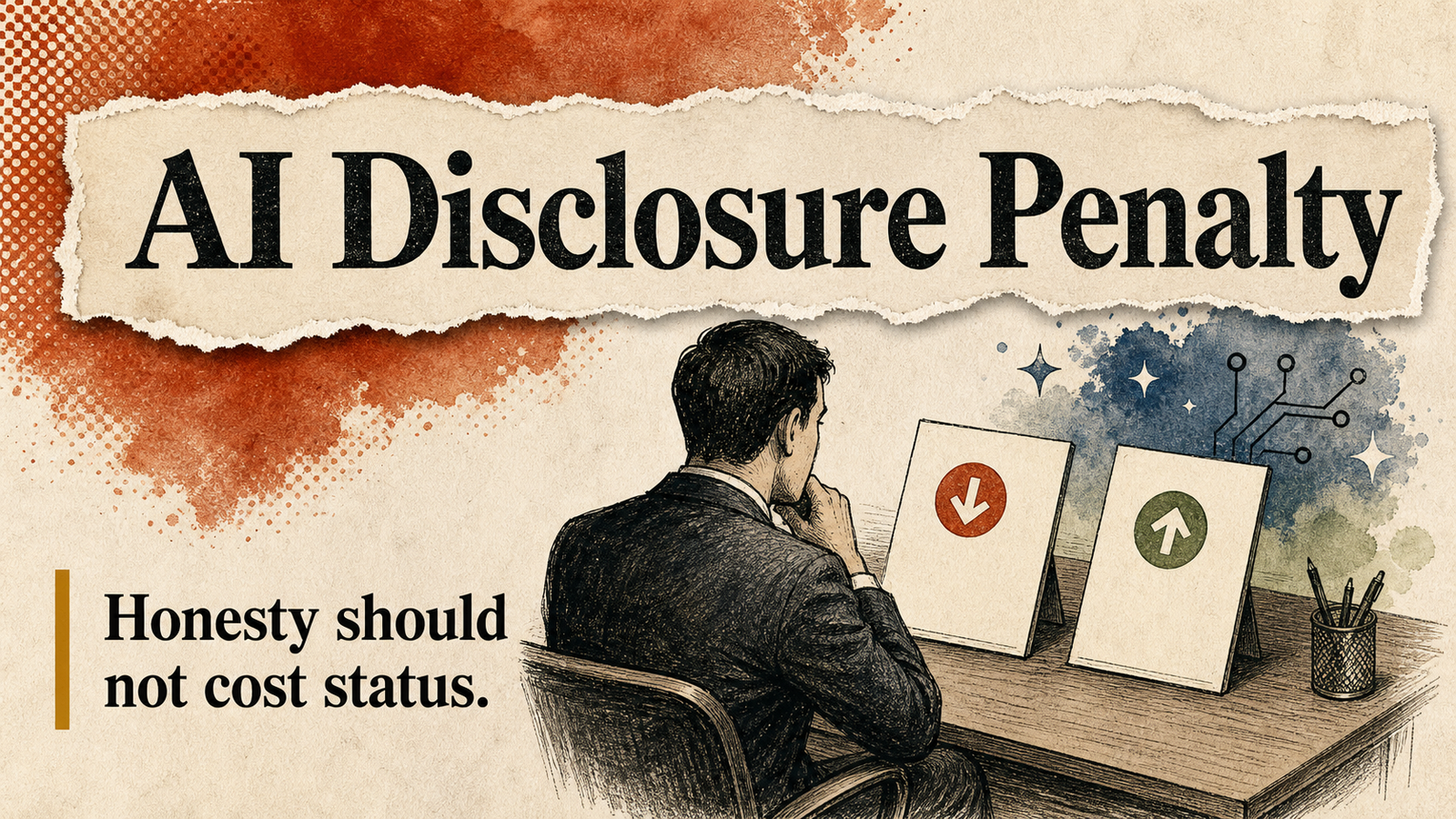
You can see the same split inside teams. OpenAI says more than 25% of Codex users have handed the agent a task estimated at 8-plus hours of human work. Meanwhile, in an Atlassian experiment, workers who disclosed their AI use were rated 10 times lazier than identical peers who kept quiet. So the heaviest users go underground — 66% of office professionals told PagerDuty they'd used AI tools they believed broke company policy. Adoption compounds in the dark.
The jobs panic isn't in the numbers
Here's where the story turns against the doom narrative. AI has been the number-one stated reason for US job cuts for five straight months. Yet as of this August, the Yale Budget Lab found "exactly zero" clear AI fingerprints in aggregate occupation data.
The layoffs are real. The attribution is convenient. AI is a politically palatable thing to blame.
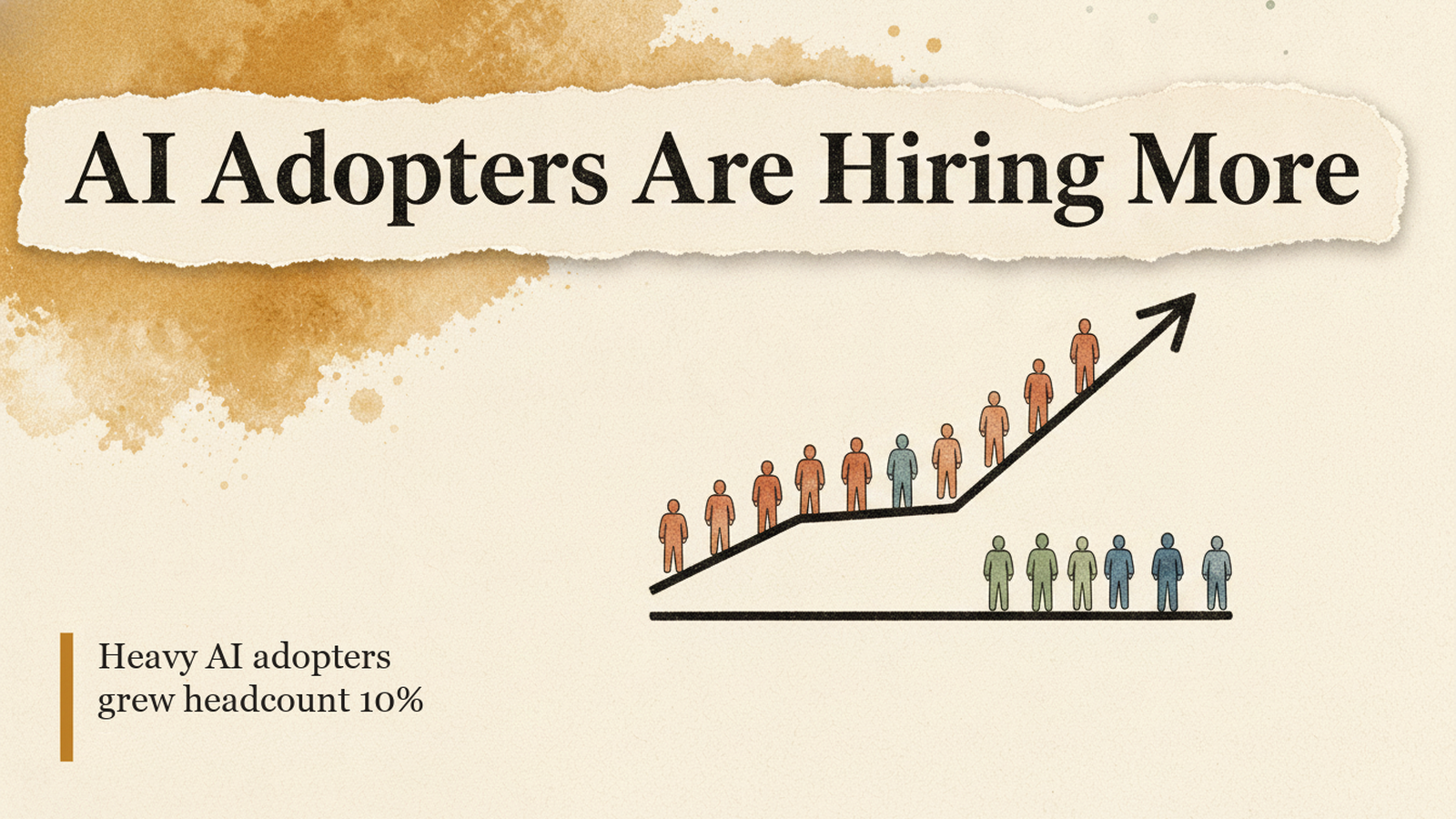
The hiring data cuts the other way, too. ZipRecruiter found 38% of employers shifting entry-level work to AI — but 35% expect AI to grow total headcount. Ramp, looking at payroll across 21,000 firms, found heavy AI adopters increased entry-level hiring 12% in the two years after adoption. And software developer postings are up 15% since February 2025, even as overall postings fell 7%. The companies cutting juniors to save money on AI may simply be doing it wrong.
What this means if you're operating
The bottleneck isn't models. It's enablement. An ECB survey found about 50% of firms plan to train current staff for AI, versus 12% planning to hire specialists — and there's almost no good training to buy. Most teams that get good at this build it themselves.
Whittemore ends with a challenge worth keeping. The people who translate AI to the mainstream won't be full-time AI people. They'll be normal workers using it inside normal jobs.
My conversation is with you all, but your conversations are with everyone else.
Nathaniel Whittemore, The AI Daily Brief