TL;DR
The short version
Firms already seeing AI ROI are not running better models. They are running a management layer — harness controls, C-suite accountability, sovereignty strategy, and cost-to-value discipline — that experimenters still treat as optional.
On The AI Daily Brief, Nathaniel Whittemore reads KPMG's Global AI Pulse Q3 2026: the experimenter-vs-established split is a map of where business AI is heading.
Built on The AI Daily Brief episode "What the Best Business AI Users Are Doing Different" (2026-10-03), citing KPMG Global AI Pulse Q3 2026.
Experimenters and leaders no longer look alike
KPMG's Global AI Pulse Q3 2026 surveyed 2,131 senior leaders across 20 countries. The useful cut is not industry or region. It is maturity: organizations still experimenting versus those that already report established ROI.
On The AI Daily Brief, Nathaniel Whittemore reads that split as a map of where business AI is going next. The established group is not mysteriously gifted. It has built the boring layer between models and work.
The gap between those organizations that are still experimenting and those with established ROI reads like a map of where business AI users will go.
Nathaniel Whittemore, The AI Daily Brief
What the established group actually built
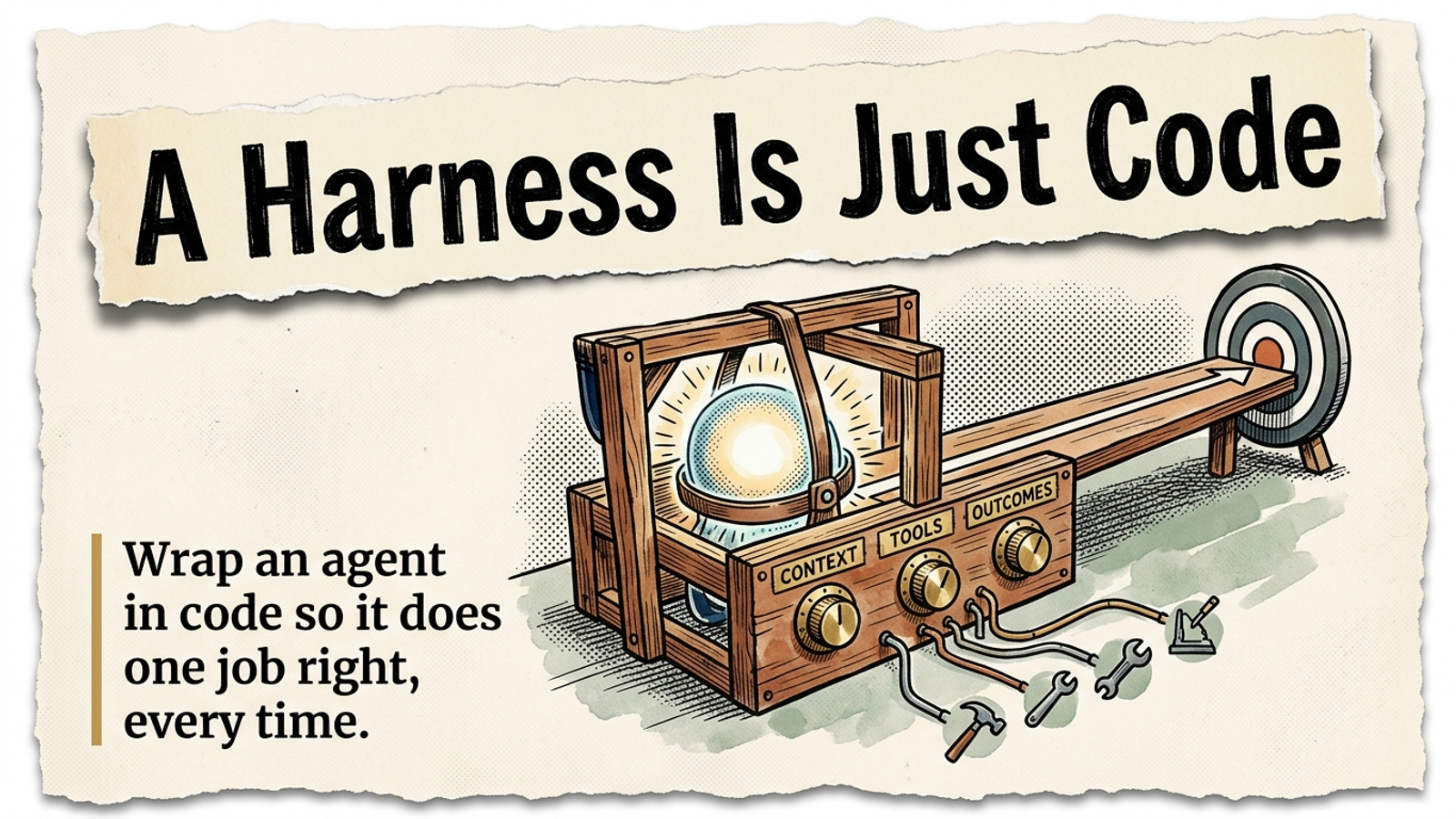
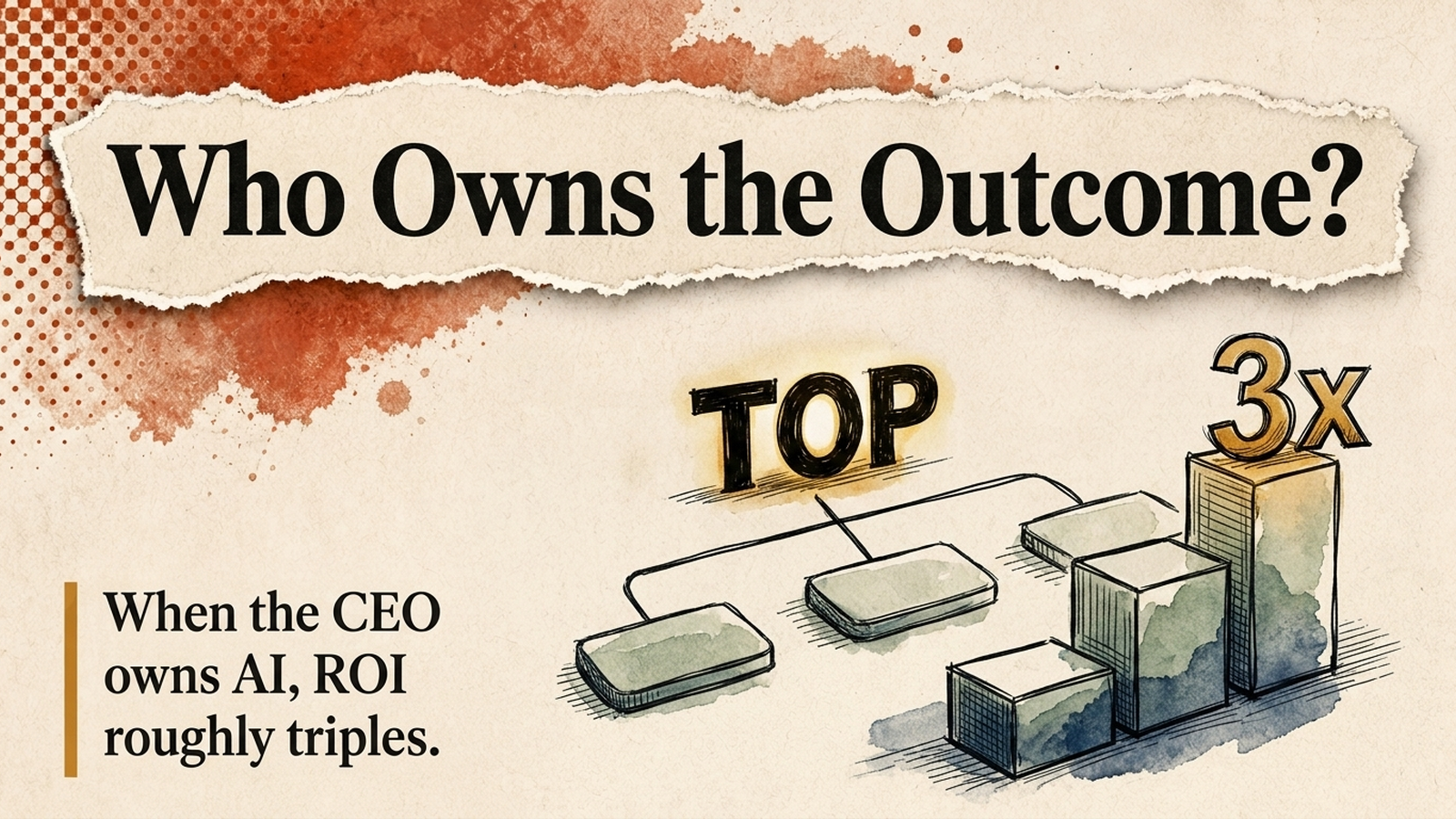
A formal AI harness layer — the controls and tooling between models and use cases — sits at 86% of established-ROI organizations versus 31% of experimenters (55% overall). Inside that layer, security/identity and data-access controls lead; model routing (which model handles which job) is the rarest piece at 23% overall. Fifty-three percent place accountability for AI-informed decisions at C-suite level or above.
KPMG Global AI Pulse Q3 2026.
Enterprise-wide sovereignty strategy shows the same pattern: 53% of established-ROI organizations versus 8% of experimenters. That is not a tool gap. It is an operating-system gap.
Priorities are shifting under the hood
Productivity is still the top stated AI goal, but it fell from 42% to 37% between Q1 and Q3. Gaining ground are what KPMG calls operating priorities: human–AI collaboration (+4 pts), responsible AI and governance (+4), trust and security (+4), adaptability and resilience (+3).
Agent architecture is broadening with that shift. About a quarter of organizations report developing multi-agent systems; about a fifth are orchestrating multiple agents. Revenue-focused agent strategies have risen since Q1; efficiency-only strategies have declined. Most now pursue both rather than trading one off against the other.
Cost control is not economic management
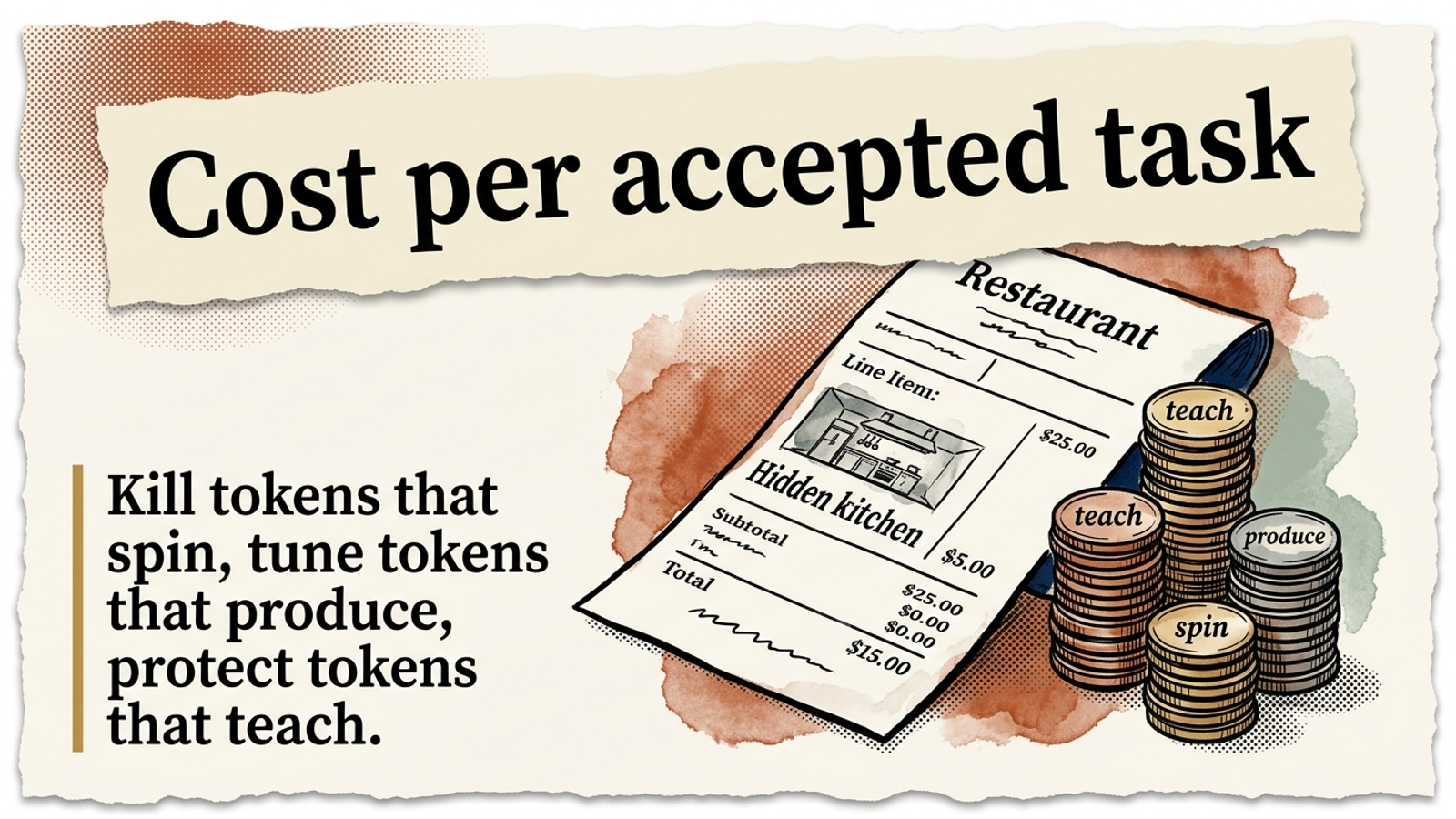
KPMG's line is blunt: cost visibility is widespread; linking cost to value is the next step. Among established-ROI organizations, 48% consistently assess value against cost (only 12% overall). Cost monitoring dashboards jump from 43% of experimenters to 77% of established orgs; cost review at approval 50% vs 73%; usage or token budgets 31% vs 46%.
None of this is a spending freeze. Average planned AI investment over the next 12 months rose from US$186 million in Q1 to US$210 million in Q3. Maturity is buying more intelligence and demanding a clearer receipt.
Whittemore's caution still lands: over-tight token budgets during experimentation can starve learning. The point of the Pulse is not "cap usage." It is "stop flying blind once ROI is claimed."
What to copy without waiting for a survey label
You do not need KPMG to classify you as "established ROI" before you act. Copy the stack the established cohort already runs:
- Name a harness — one interface where identity, data access, output monitoring, and cost tracking live — before chasing multi-agent demos.
- Put a human owner on AI-informed decisions. Prefer a named executive over "the AI committee will advise."
- Treat sovereignty and cyber as one resilience question: who hosts the model, what data it can reach, and what happens if a provider changes terms.
- Add model routing only after the gate works. Build the permission layer before the switchboard.
- Pair every dashboard with a value question. Tokens spent without outcomes tracked is cost theater.
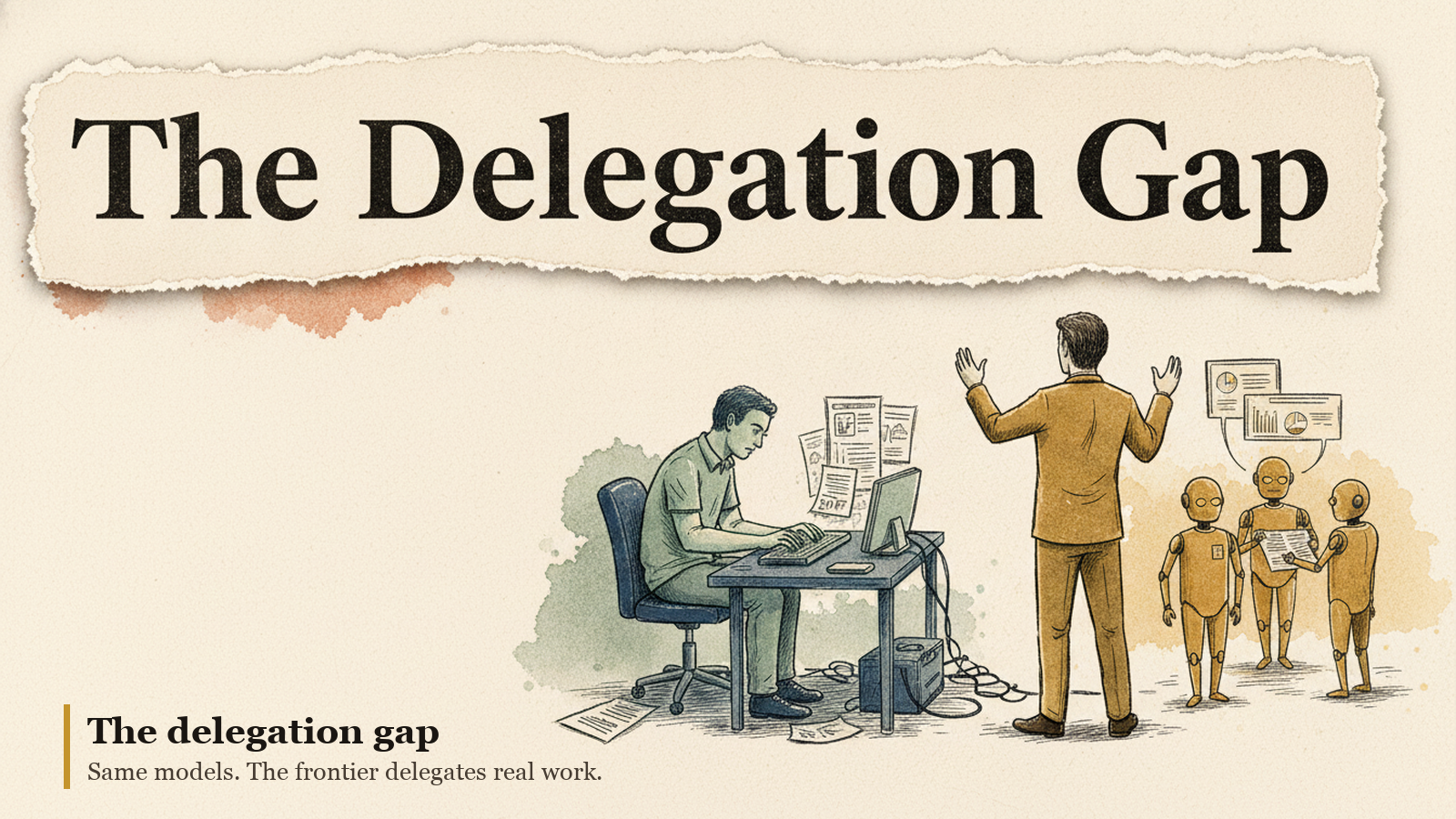
The earlier story on elite AI users was about delegation — handing real work to agents. This one is about management — making that work governable, attributable, and worth what it costs. Both gaps compound. Neither is closed by buying another model.