TL;DR
The short version
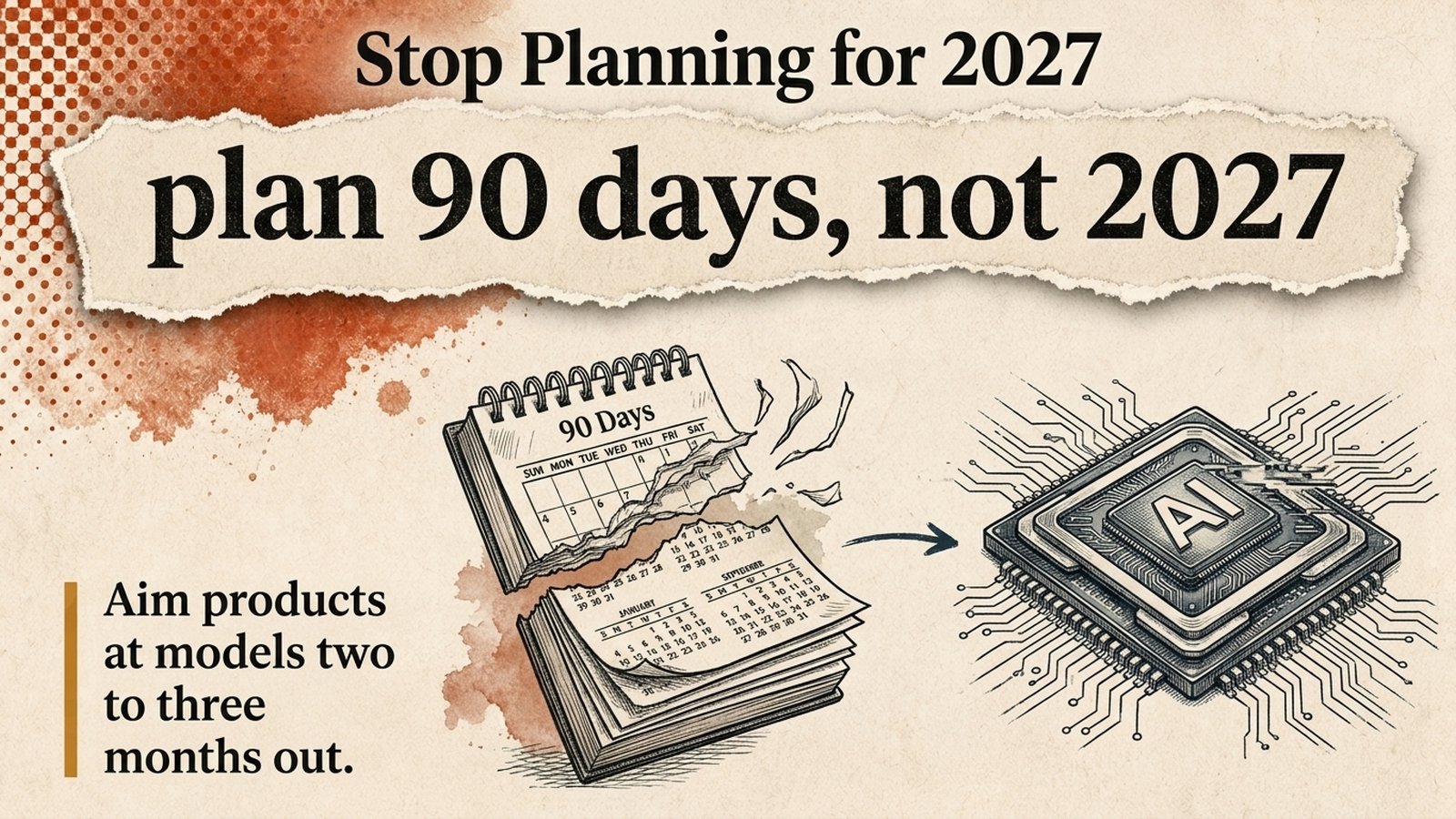
When what AI can do changes every few months, every company needs a small team living at the frontier. That team should judge ideas by people's reactions, kill them fast and plan in 100-day steps. And it only pays off if its experiments make it back into the main business.
On Lenny's Podcast, Lenny Rachitsky argues everyone now has to work like a labs team. Josh Woodward, who runs Google Labs, the Gemini app and AI Studio, agrees, then explains what it takes: an almost-possible list, eyes-not-dashboards product-market fit, tiny teams, and a bridge back to the business.
Built on Lenny Rachitsky's interview with Josh Woodward (11 October 2026). Gemini's user figure checked against Google; team sizes and cadences are Woodward's own account.
Keep a list of what's almost possible
Labs doesn't wait for inspiration. The team keeps a running list of capabilities that are close to working, organised around questions like the future of entertainment or of creative work. When one crosses the line, Woodward says, it feels like a phase shift, and a team forms around it.
They also keep a doc of 82 predictions that start "we believe the future is". He expects most to be wrong. The point is having a view to test.
The ideas themselves rarely come from scheduled sessions. "They very rarely... have come from design sprints," Woodward says. "You can't microwave good ideas." They come from small, obsessed groups and weekend side projects. NotebookLM's audio podcasts started with two people walking over on a Tuesday evening saying "you got to listen to this."
Read the room, then kill fast
Early product-market fit, Woodward says, is a human signal, not a dashboard.
When you're showing people early prototypes... you're looking at people's eyes and like that is the metric.
Josh Woodward on Lenny's Podcast
Not daily or monthly actives, not seven-day retention. Do people lean in? He also tells teams to fall in love with the problem, not the product, because it usually takes three, four or five pivots to find something or give up.
On killing ideas, his line is that "the team usually knows before the leader knows." Passion runs out; nothing you try works. His job is to make it safe to say so. The day before recording, a Gemini PM recommended not launching a feature after early tests. He replied-all to thank her.
Smaller teams, shorter plans
A new labs project used to get five to seven people. Now it gets two or three, maybe four, often a PM who can also code and design.
Labs plans in rolling six-month windows, roughly the gap between major model releases, and its best teams go from idea to a meaningful milestone in 50 to 100 days. Asked for Gemini's two-year roadmap, Woodward answered: "We have a six-month roadmap on this thing," alongside a multi-year vision.
The skills he looks for follow from that:
- Unlearning rate. "How fast can they learn something and then walk away from it?"
- Explosive endurance. A phrase from a book about Roger Federer: go hard, but for years. Labs names its all-out seasons and its exploratory ones, like the hacking month after Google I/O.
- Building trust fast. Cheaper building means more products and more ad-hoc teams, so working well with new people matters more, not less.
He also pushes back on "everybody's a builder." Strategy, ops, BD and marketing people are building in Labs, and PMs adapt fastest because the role is already horizontal. But people still have a major. Vibe-code in service of becoming an exceptional PM, he tells junior staff, not instead of it.
Most labs fail at the bridge
In Woodward's reading of history, most big-company labs fizzle out after three or four years, or produce things the company never commercialises.
Lenny brings up Dan Shipper's advice to have a frontier team whose job is to try everything new. Woodward agrees, and adds two conditions: an environment where those people can build, and someone who can say "that thing looks like a toy right now. That's going to be essential to our future in five years."
His three rules for setting one up:
- Give it independence. "You can't just nestle this like under an existing business unit." That may mean reporting to the CEO.
- Be clear what game it plays. Graduating features into existing products and inventing new categories are different jobs. Labs' mantra: users first, Google second, Labs third.
- Use it to make "good trouble." Labs was one of the first teams to argue for a builder job ladder, and piloted it there first, with the plan to roll it out across Google.