TL;DR
The short version
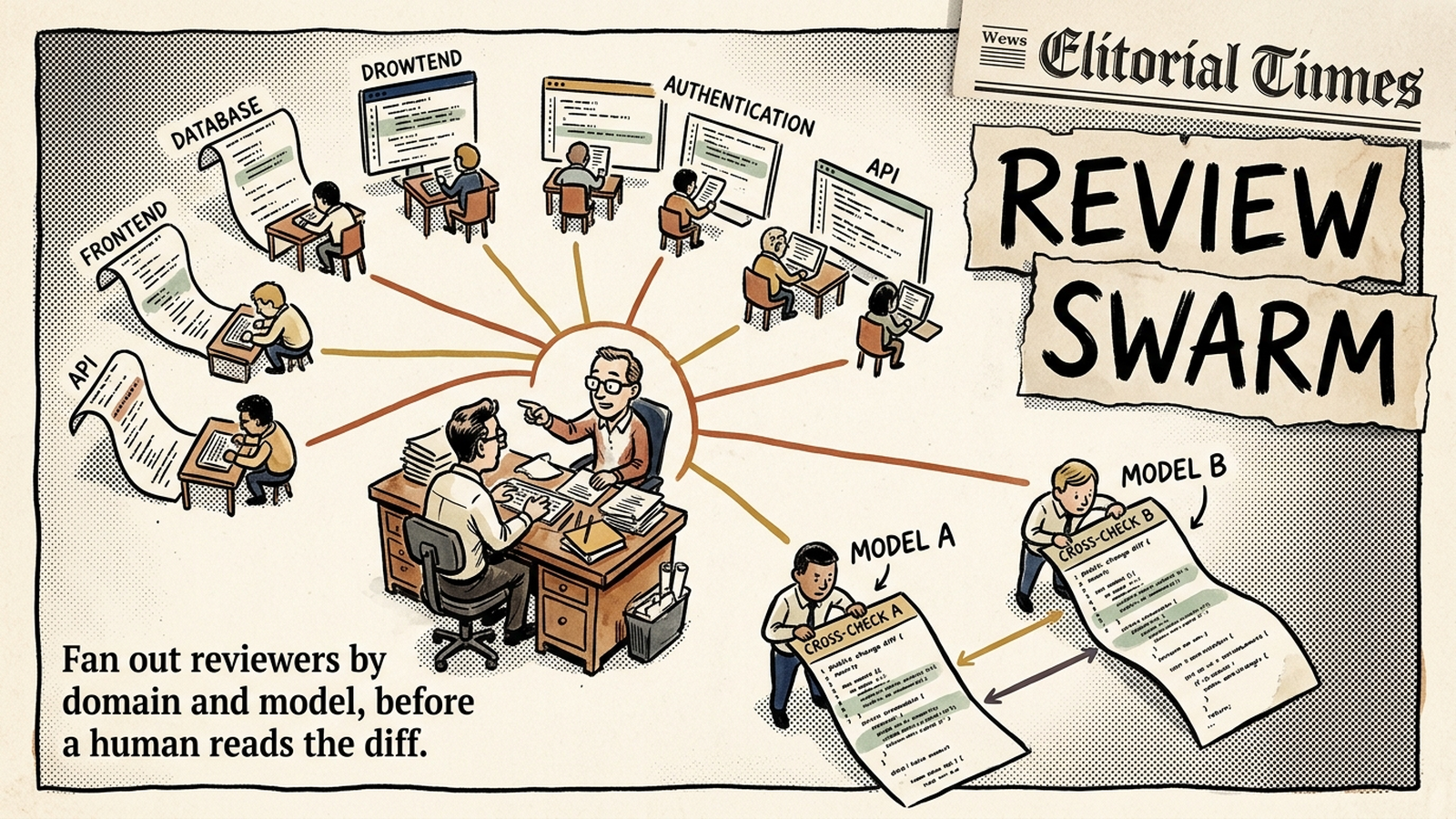
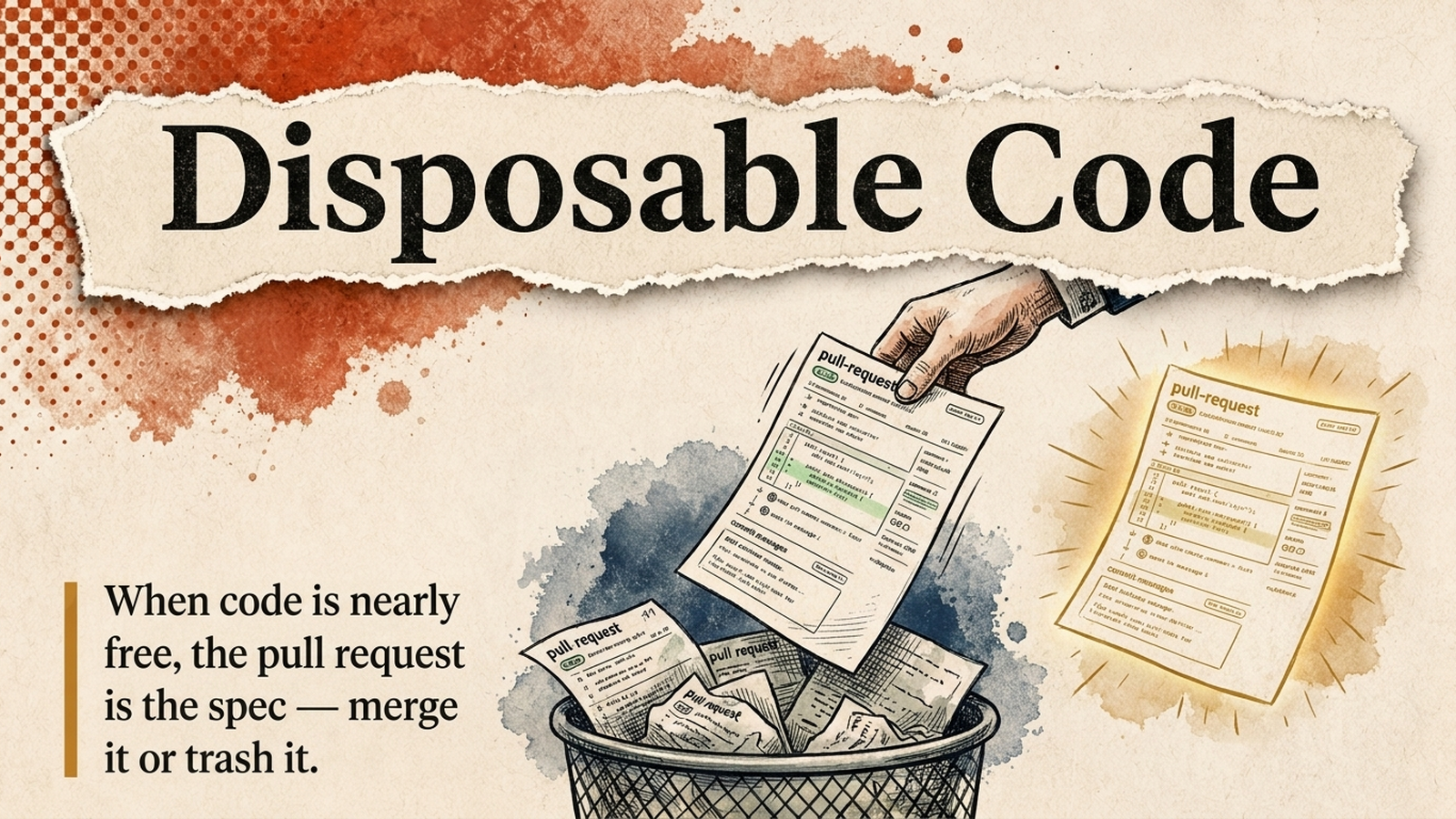
When anyone can vibe-code straight to GitHub, coding stops being the constraint and review becomes it. The fix isn't reviewing everything by hand — it's putting AI in the review loop for the low-risk tail, with a human still on merge.
Warp's factory dashboard makes the same bottleneck numeric: kickoff→PR ≈ 35 minutes vs PR→first human review ≈ 3.5 hours. They still human-review every PR; the policy change is that the prompt author may self-review agent code. Same diagnosis as Eve/Merge Mommy — different policy choice.
Built on Claire Vo / How I AI (Warp + earlier Eve/Merge Mommy coverage).
Review is the new bottleneck
Once AI writes most PRs, the review queue — not the coding — is what backs up. Agent-authored PRs pile up faster than humans can read them, and the instinct to review every one by hand is exactly what jams the pipe.
The move is to put AI in the review loop. Intercom did it org-wide: their AI reviewer became the sole reviewer for a bounded set of low-risk PRs, approving them roughly five times faster than human review. Today 93% of their PRs are agent-driven and about 19% are auto-approved with no human reviewer.
You do not actually have to review one-on-one by a human all those PRs.
Claire Vo, How I AI
Risk is factors, not diff size
The agent scores each PR against about six factors — blast radius, reversibility, data-security exposure, operational impact, and a verification gap (are tests and CI complete?) — and converts them to a number. Risk is repo-specific: docs are low, feature logic is medium, auth and billing are high.
The key correction: diff size does not set risk. A big documentation change is safer than a three-line change to authentication. Score the surface area of consequences, not the line count.
A human still clicks merge — by design
A bot can't satisfy GitHub's required-human-approval rule, so the agent's job isn't to remove the human — it's to make that human's click safe and near-zero-effort. The agent publishes its risk evidence; a person approves-and-merges the low-risk tail in two clicks without re-reviewing.
The whole agent is about a page of instructions plus a skill and two tools — proof that this is a design problem, not a framework adoption. Close the loop by logging every review and having an engineer judge whether the agent scored it right, then improve it like any customer-facing AI product.
Two founders now run this shape in production, arrived at independently. Ryan Carson's "Land PR" fires a fresh Devin review, then records a narrated video walkthrough he signs off before merge — verification as watch-and-approve, not a diff read. Claire Vo's "Merge Mommy," a Vercel-hosted agent, scores each PR on five risk axes, auto-approves the low-risk tail, and pings Slack for human review on the rest — the same SOC 2 human-on-merge gate, productized. Carson even runs hiring as the identical loop: no interview, just a recorded screen-share building a feature, scored on how well the candidate manages the agents.
Warp: the bottleneck, measured
Zach Lloyd's Warp Factories demo puts numbers on the queue everyone feels. Agent work from kickoff to PR is fast; waiting on a human to look at it is not.
Can I give you a hard time that humans really are the bottleneck? Because if you look at kickoff to PR time, it's 35 minutes, but if you look at PR to first human review, it's three and a half hours.
Claire Vo, How I AI
Warp's current policy: 100% human review on every PR; the second-reviewer rule softened so the prompt author may review agent code. Claire's line: code review becomes an exercise in risk management.