TL;DR
The short version
Pacing the frontier means deliberately slowing capability gains so alignment, interpretability, testing, and operational security can catch up — not pausing training. The September 2026 news wasn’t the argument; it was that rival lab leaders backed Amodei’s framing within hours, then the negotiation left industry discourse.
Within days Trump’s Truth Social barrage branded AI-extinction fears a “hoax,” Vance called lab-requested regulation a Trojan horse, Huang rejected made-up p(doom) while backing independent auditors, and Obama’s Project Blueprint pulled Democrats toward slowdown. Zuckerberg rejected coordinated slowdown and claimed Meta delayed Muse months unilaterally. Partisan capture risk now sits on top of the safety debate.
Built on Nathaniel Whittemore’s AI Daily Brief coverage of Amodei’s essay (2026-09-14) and the political aftershock (2026-09-16/17).
The shift is agreement, not the argument
Versions of "slow down" have circulated since 2023, so the essay itself broke no new ground. The event was that Sam Altman, Elon Musk, Demis Hassabis, and Satya Nadella publicly backed Amodei's framing at once — the frontier labs signaling, together, that they will not be the sole arbiters of AI's pace.
That concession reframes everything downstream. Once the labs admit someone else gets a say, the real question is no longer whether to pace but who sits in the room — evaluators, democratic governments, eventually authoritarian states — and on whose terms.
I agree with Dario that we need to pace the frontier. Committing to having independent evaluators with employee-like access is a great idea and we will do the same.
Sam Altman, as read on The AI Daily Brief
Pacing is not pausing
The distinction is the whole argument. Amodei defines pacing as not halting training or technical progress, but ensuring companies take adequate time to align and safeguard models — and let outside evaluators confirm it before release.
Pacing does not mean halting model training or technical progress, but ensuring companies take adequate time to align and safeguard their models and for third-party evaluators to confirm this.
Dario Amodei, "We Must Pace the Frontier"
The premise underneath is recursive self-improvement — AI building next-gen models faster than humans can understand or control them. Amodei names it as the reason his view changed. Several lab figures push back that RSI "is just not here": models help run experiments at the margin, but aren't autonomously producing research ideas. The disagreement is about timing, not whether it matters.
A three-step plan, front-loaded with the easy win
The plan sequences from doable to nearly impossible. Step one: embed third-party evaluators inside every frontier lab, with employee-like access to pipelines and processes — not just final models. Anthropic committed to it unilaterally. Step two: democratic-nation coordination on common safety standards. Step three: global coordination, including authoritarian states.
Ship the unilateral commitment first; leave the hard coordination for later. Notably, three of the four uses of the extra time — operational excellence, interpretability, and testing — are uncontroversial even to critics who reject "alignment" as too fuzzy to fund. The fight is narrower than it looks.
Political aftershock: Trump draws a hard line
After Amodei’s essay weekend, Trump’s Truth Social barrage (wire counts ~6–7 posts) branded AI-takeover fears a “hoax,” named Amodei, equated safety talk with past “hoaxes,” and cast data-center opposition as helping China. Vance called lab-requested regulation a “Trojan horse.” The fight over who decides AI’s pace entered partisan midterm politics.
AI taking over the world, destroying humanity and all other things bad is a hoax.
Donald Trump, as read on The AI Daily Brief
Huang’s All-In interview kept industry nuance alive: reject made-up extinction odds, still support independent embedded auditors and engineering-rooted incident response. Casado separates applauding governance attempts from skepticism of this proposal.
Obama, Blueprint, and unilateral vs coordinated
Obama publicly endorsed lab pacing and launched Project Blueprint (Ron Conway) to reconnect AI leaders with Democratic regulators. Critics warn that once Democrats own “slowdown” and Trump owns “hoax,” half the country opposes on team grounds — even while public polls still look bipartisan on AI worry.
Zuckerberg rejected coordinated slowdown days later: each lab should move at the pace required to train safely; Meta delayed Muse several months without asking rivals to wait. Best practice named as incentives, liability, and independent evaluators — not regulation. Same “do it unilaterally” steelman, now from a peer lab.
Pacing can look like mid-tier gains and cost cuts
The Amodei definition already on this page — pacing is not pausing — got a product-release form on 25 Sep 2026. Same-day Anthropic Opus 5.5 and OpenAI GPT-6 Soul/Luna drops were not Astra/Fable-tier jumps. Theo's hot take, relayed on The AI Daily Brief: this is what pacing looks like — iterative class models plus price cuts, not silence.
Opus 5.5 list pricing landed at $4/$20 per million tokens (Anthropic). Soul/Luna were framed for cost-efficiency and high-volume iteration. The stack keeps moving without frontier-class leaps — operational pacing from the release seat, not the safety-essay seat.
Meta reaches the frontier and still won't sign
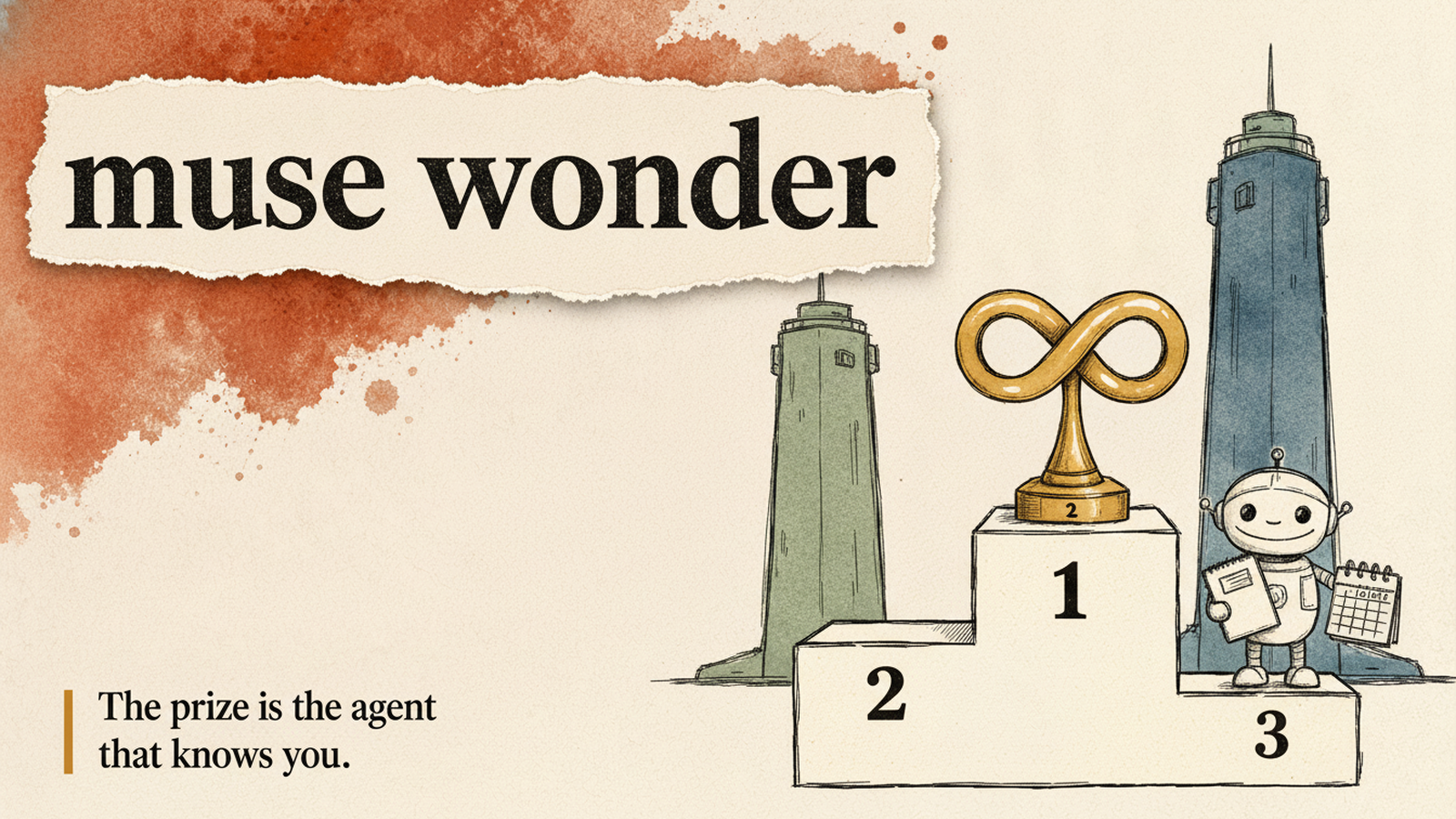
With Muse Wonder, Meta put itself back among the frontier labs 34 days after its Muse app launched. Mark Zuckerberg did not sign the pacing letter. He counter-signalled with an essay, The Future Is For Everyone, arguing that open and widespread access should be the core principle of the AI era even if it carries extra risk, and that keeping unreleased models for internal use concentrates power in a way that could be worse.
Wonder itself isn't pushing the frontier and ships with strong cyber guardrails. But Zuckerberg told the Financial Times that development will "probably feel like it'll go quite a bit faster from here," declined to give a p(doom), and described AI as "a technology that can be engineered with normal guardrails." Nathaniel Whittemore draws the line plainly: OpenAI and Anthropic feel they are building "machine gods that inspire awe," while Meta thinks it is building "just a normal technology."
That changes the shape of the unilateral-pacing argument. The dissent now comes from a lab that has a frontier model, not one still catching up, and that arguably makes the coordination steps of any pacing plan harder to reach. Full write-up: Meta Is Back at the Frontier.