TL;DR
The short version
Jev is not a chatbot. John Lindquist shows voice-driven todos, English-to-function routing, scale dedupe, tool routers, chess-speed demos, and multi-agent collision avoidance — all because unstructured input becomes structured choices nearly free.
From the How I AI tutorial: constrained inputs (DOM clicks, APIs, controller buttons) → decision model; open critique and invention → LLM. Weak first passes mean add another layer.
John Lindquist (Typesafe AI) with Claire Vo on How I AI, 30 Sep 2026.
Why builders won't shut up about it
LLMs are unstructured to unstructured. Jev is unstructured to structured — scores, yes/no, function picks. Fast and near-free change ROI: hundreds of demos for pocket change, multi-gigabyte JSON passes you'd never send to a frontier model. That is discovery, not Twitter demos.
Whenever you have constrained inputs that are interacting with apps, Jev is a good thing to reach for.
John Lindquist
Patterns that transfer
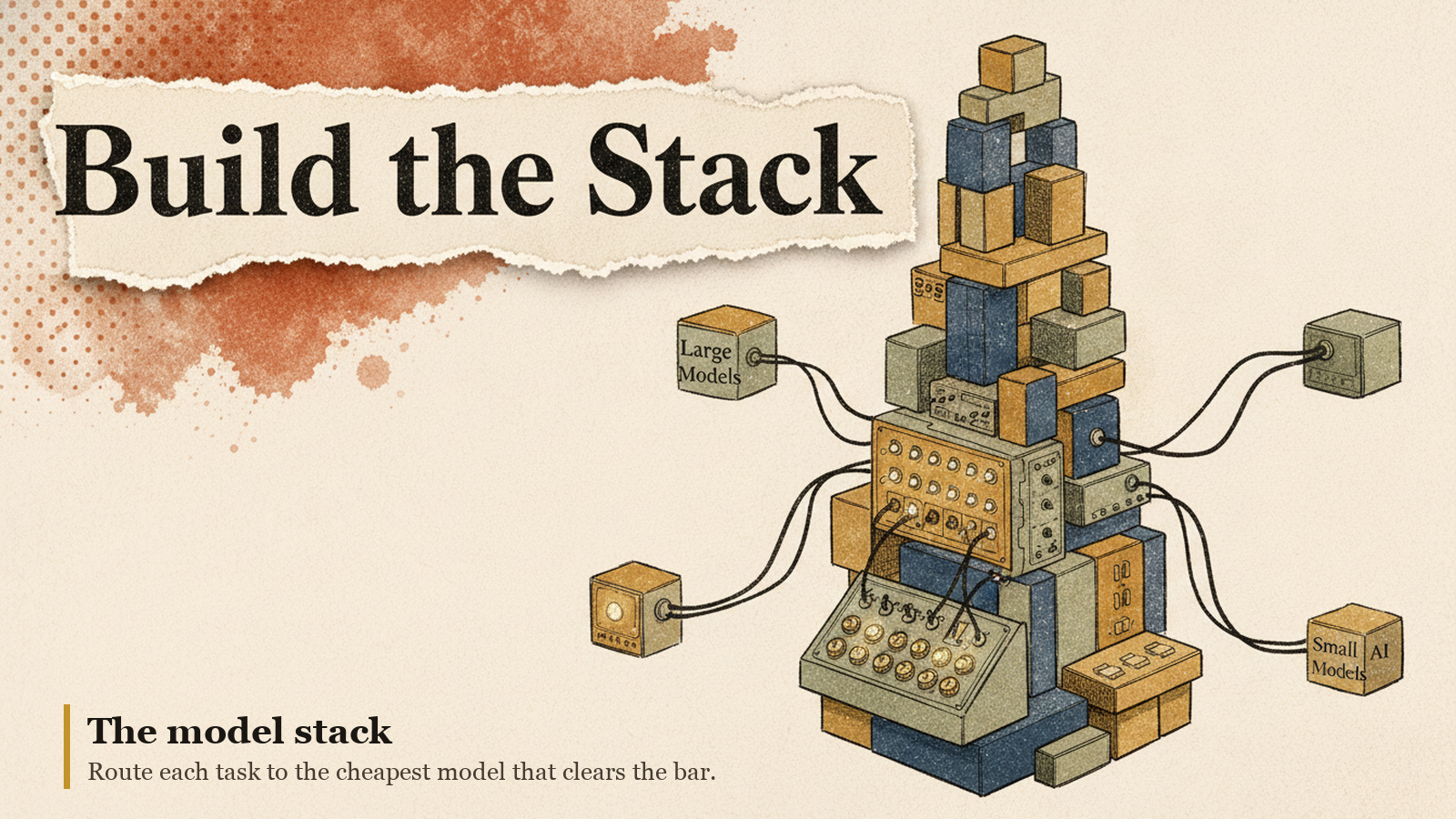
Voice todos: classify readiness, match task, match operation, fire — while the speaker never pauses. Mental model: find every if/else and put a decision model there. Dedupe at scale with confidence thresholds and optional LLM audit. Router layers pick app, then tool, then action. Browser use looks infinite as pixels; the DOM is usually a short menu.
Efficient inefficiency and multipass
Claire's phrase: Jev unlocks efficient inefficiency. Ranking many routes every step used to feel wasteful; when evaluation is nearly free, just-in-time multi-agent scoring beats one expensive plan. When a single classification pass disappoints, add another layer — then compress once you know the flows.