TL;DR
The short version
Matt Hartman wrote Betaworks' first check into Hugging Face. He picks founders by finding what just became possible, assuming the company will pivot, and judging what it would pivot toward. As AI shrinks build cycles, he argues, turning user behaviour into product insight becomes the most valuable skill a company has.
On Every's AI & I, Matt Hartman of Factorial Capital talks with host Natalia Quintero about Hugging Face's pivot, his founder-partner fund, and what building his own tools taught him about SaaS.
Built on How Hugging Face's Investor Spots Winners (14 Oct 2026) from Every, with fund details checked against TechCrunch.
Find the newly possible
Hugging Face started as a chatbot for teenagers. Last month Nvidia agreed to buy it for $12.9 billion (NVIDIA). Hartman's method behind that first check is unglamorous: read the paper, tinker with the new tool, then ask smart people questions until a thesis forms.
My goal is to find the newly technically possible.
Matt Hartman on Every's AI & I
For Hugging Face the trigger was word2vec — embedding words as vectors so king-to-queen points the same way as prince-to-princess (published 2013). He expects the thesis to land "20 degrees off" the company that results: Hugging Face did not become a better chatbot, and Anchor went from audio social network to podcast-creation tool.
Assume the pivot, judge the pivot foot
He borrows from basketball: you can pivot as long as one foot stays planted. Real-estate executives building AI for real estate will probably pivot within real estate. A technical team chasing a particular shape of data can carry it to cars, or every industry, and go horizontal. So he backs founders whose planted foot is the technology.
The pivots came from honesty about retention. Hugging Face's app had users but weak retention, and the team admitted it; when their PyTorch port of the transformers paper went viral with researchers, they followed that demand to the open-source hub. Anchor noticed creators were far more engaged than listeners, and built for supply.
Insight is the job that gets more valuable
If a feedback cycle that took two months now takes two days, the bottleneck moves to whoever can watch users, read the data and decide what to build next — whether they are called an engineer or a product manager. He suspects that is part of why Modal and Factory grew so much faster than Hugging Face did.
His fund is built the same way. Factorial Capital is a solo-GP fund whose venture partners are technical founders — Hugging Face's Clem Delangue, Venmo's co-founder, Hilary Mason and others (TechCrunch) — and the portfolio became its own referral chain: Nomic, then Patronus, then Causal Labs.
What vibe coding taught him about SaaS
Hartman's Ghost Pepper, a local speech-to-text app for macOS, has over 3,000 GitHub stars (GitHub). The lesson he took from it was not that SaaS is dead.
When you just vibe code something for yourself, you have to maintain it.
Matt Hartman on Every's AI & I
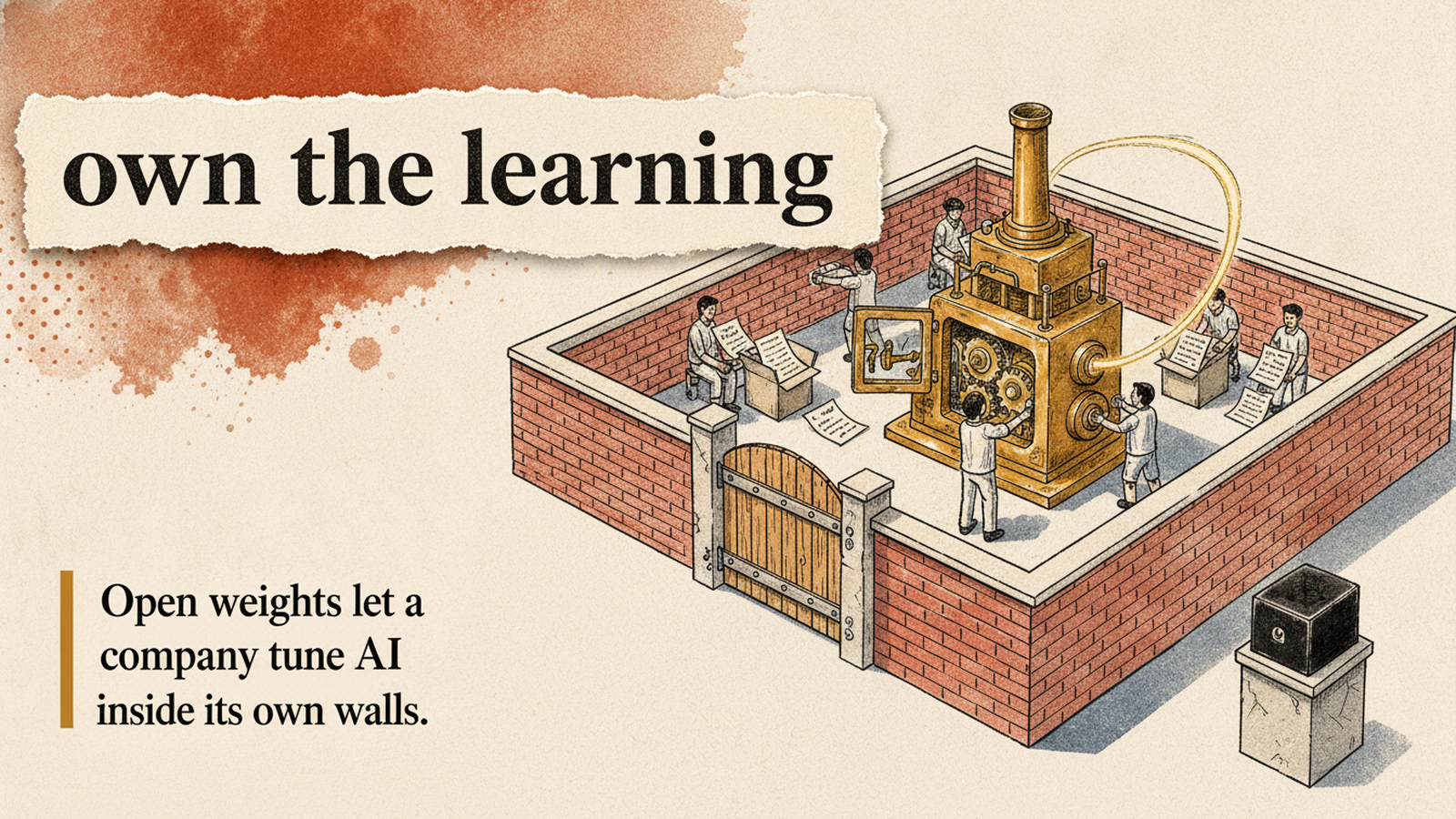
What you pay a SaaS company for is keeping the product at the edge. Quintero had the same experience and moved Every's vibe-coded CRM to Attio. His next bets follow: developer tools for new kinds of developers, transformers beyond language in robotics and science, and AI-native apps built by teams who can work all the way down the stack.
This is an investor describing his own method and portfolio; the retention stories are his recollection, not the founders' accounts.