TL;DR
The short version
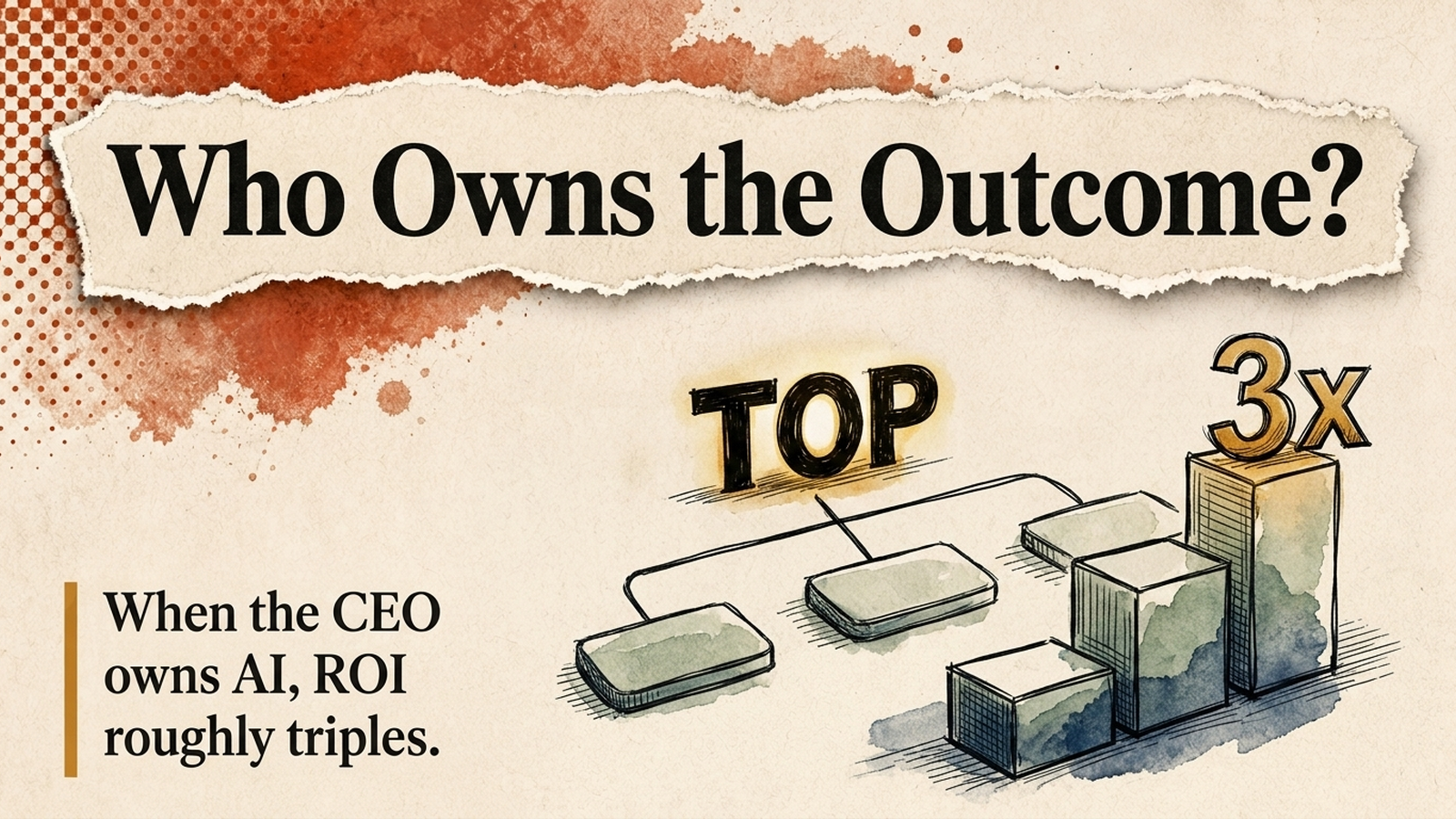
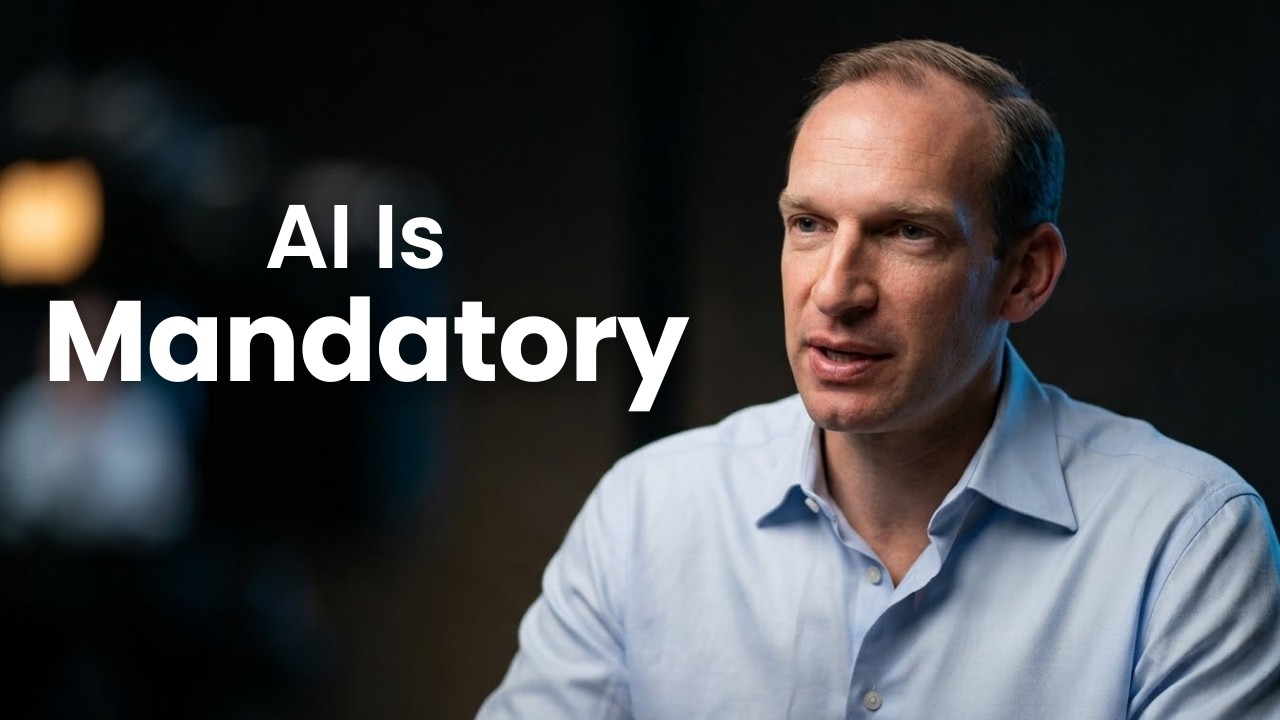
Will England owns and runs Walleye Capital, a ~$10B hedge fund, and made AI proficiency mandatory for all ~400 employees. The move that mattered wasn't the tools. It was treating adoption as a leadership job: a blunt written mandate, going first in public, and measuring who actually uses it.
Most rollouts fail quietly — leadership buys licenses, sends an encouraging note, and waits for a culture shift that never comes. England did the opposite, on the AI & I podcast with Dan Shipper, and the mechanics are ordinary enough to copy.
Built on the AI & I (Every) episode with Will England of Walleye Capital, re-aired 2026-08-26.
Make the mandate explicit, in writing
England's memo doesn't hedge. "Not using these tools is like refusing to use the internet in 1995 because it wasn't perfect. That's just dumb." Every employee, technical or not, has to reach what he calls "a base case level proficiency in AI tools."
This is not optional for anyone at Walleye. Managers, this is now part of your job.
Will England, Walleye Capital
The clarity is the point. A soft "we encourage everyone to explore AI" gives every hesitant employee permission to wait. A written mandate removes the ambiguity about whether this is real, and names the new baseline: if you write, research, analyze, or build for a living, daily use is the expectation, not the extra credit.
Go first, publicly
England calls himself the firm's chief AI evangelist and means it literally. He writes his own memos with AI and says so at the top of the email. He runs firm-wide demos where a third of the company shows up — including the ones that break. "If that demo screws up, who cares?"
This is the part most executives skip: they mandate a behavior they don't model. His read — "You have to lead from the front. No one can set that tone besides a leader." Being the owner-operator helps; he can point the organization fast because, in his words, he doesn't worry about getting fired. Most leaders lack that latitude, but they can still borrow the mechanism: visible use from the top, mistakes included.
Kill the two fears directly
England names the two things blocking adoption and answers both.
The first is guilt. People were quietly using ChatGPT to draft emails, then "dusting it up" to hide it. His response: "Using ChatGPT is not cheating. That's a non-applicable idea from academia." If a task took three hours and now takes thirty minutes, hiding that is the mistake, not the tool.
The second is fear of replacement. He reframes it as a job change, not a job loss: using AI is now part of the role, and even individual contributors will end up managing work done by machines. The risk he wants people to feel is inverted — not fear of a mistake with AI, but fear of being left behind without it.
Engineer the culture, measure the right thing
England doesn't wait for adoption to happen; he builds for it. Weekly emails with leaderboards of who uses the tools most. A bounty, modeled on employee referrals, for anyone who suggests a tool the firm ends up adopting. Informal weekly meetups to trade prompts and use cases — when staff asked for a podcast-summarizing tool at one, five versions were in beta that day and one shipped firm-wide the next.
On measurement he's deliberately unfussy. Staged productivity benchmarks are "kind of nonsense in a real company." He watches adoption instead, on the principle that "you can't manage what you can't measure": who's using the tools, how often, and whether people are building things nobody asked for.
The boundary
Two honest caveats. First, almost every impressive number here is self-reported — 75% of the firm using ChatGPT daily, a third using AI coding tools, hours of writing cut to minutes — and England himself admits there's no clean metric. An independent MIT study in 2025 found roughly 95% of enterprise generative-AI pilots produced no measurable financial return, so treat internal enthusiasm as a starting hypothesis, not proof.
Second, this episode aired on a show whose parent company is Walleye's AI-consulting vendor. That doesn't invalidate the playbook, but it means the framing is a case study, not neutral reporting. Strip both away and the transferable lesson still holds.