TL;DR
The short version
AI has split the tech workforce almost exactly in half. Roughly 49% feel amplified and energized; the other half fragments into redefined, destabilized, and diminished — the people telling the survey 'my brain is rotting, my work feels worse.' This AI-identity divide is the single largest effect in a ~6,000-person survey — about 3× the size of the manager or founder effects — and it predicts how you feel about your job better than your role, level, or employer does.
The dominant fear isn't being replaced. 'Losing my job to AI' ranks near the bottom (22%). What rose to the top is the squeeze: expected to do more for the same pay (51%) at an unsustainable pace (46%). Productivity is up and felt quality and sharpness are down at the same time. Two findings repeat from last year: founders are the happiest people in tech, and manager quality is the biggest lever on burnout — yet only a quarter rate their manager highly effective.
Built on Noam Segal & Lenny Rachitsky's second annual tech-worker sentiment survey (~6,000 respondents, published 2026-07-07). Every figure is self-reported — feelings, not an image of reality — and the sample skews toward Lenny's AI-forward, PM/design-heavy audience. Read as directional, not authoritative.
The split is the biggest thing in the data
The survey's headline isn't a number, it's a fault line. Ask tech workers how AI has changed their relationship to their work and they sort into two camps of almost equal size — and which camp you land in explains your job sentiment better than anything on your résumé does.
Half of the people in tech are feeling incredible. And the other half told us, 'My brain is rotting. My work feels worse.'
Noam Segal, Lenny's Podcast
Segal is careful about method: with ~6,000 respondents, statistical significance is cheap, so the survey reports effect sizes (Cohen's d) — the practical magnitude of a difference. The AI-identity divide is the largest effect they've measured, roughly 3× the manager or founder effects. It's not that AI is good or bad for morale; it's that AI has become the axis morale organizes around.
Self-reported — Segal & Rachitsky 2026 tech-sentiment survey (~6,000 workers). Remainder feel unchanged.
The real fear is the squeeze, not replacement
The popular story is that workers are terrified AI will take their jobs. The data says otherwise: 'losing my job to AI' sits near the bottom of the worry list at 22%, and feeling that AI is taking over parts of your job barely correlates with layoff fear (r ≈ +0.05). What actually tops the list is being asked to do more for the same pay (51%) at an unsustainable pace (46%).
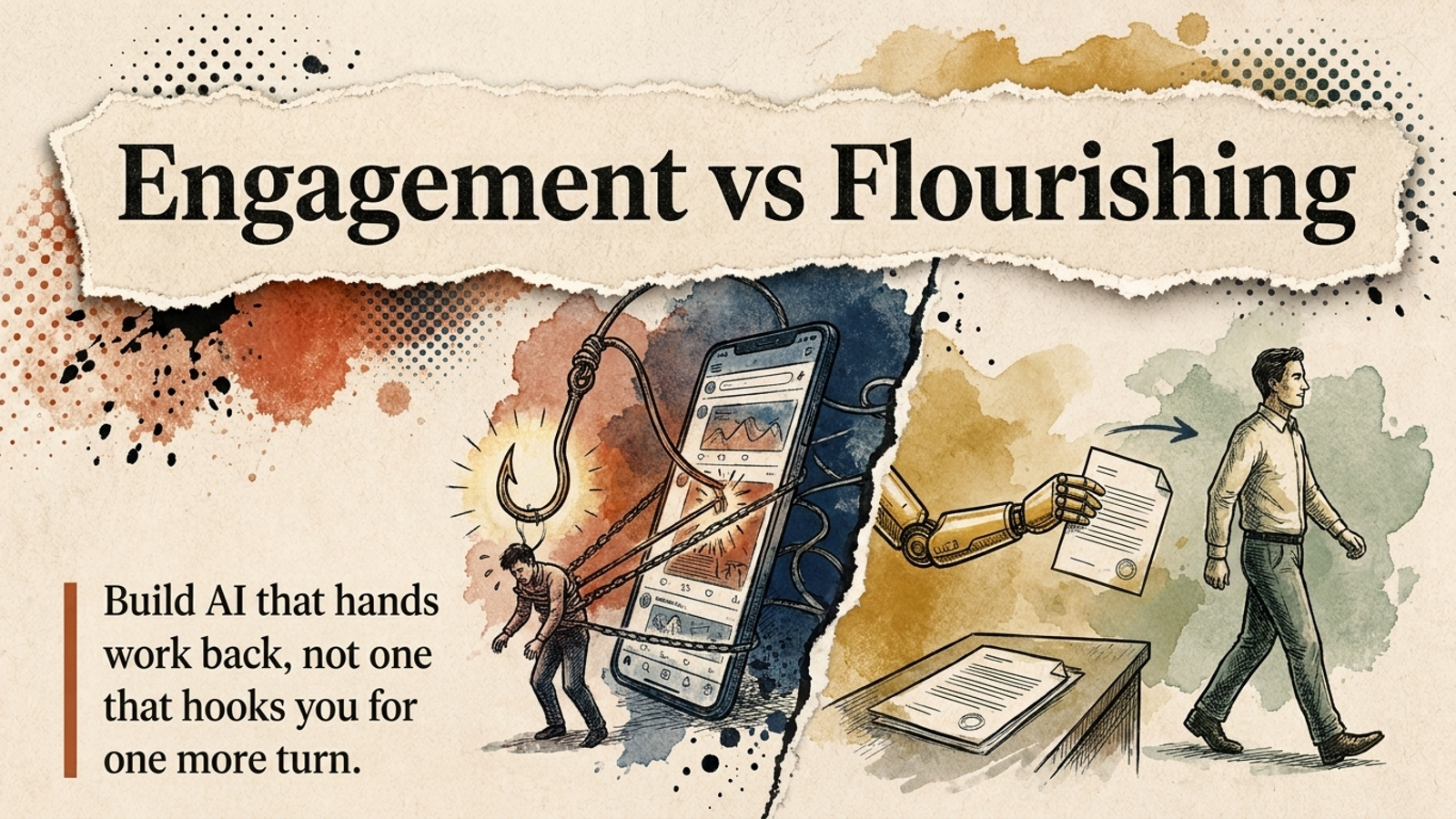
The mechanism is that every speedup gets banked. The time AI frees up doesn't become slack — it becomes the new baseline you're measured against. Burnout is now the majority experience: significant burnout rose from 44.7% to 55.7% in a year, and it's driven not by stagnation but by shipping more of everything at once — more PRs, more PRDs, more prototypes, more agents. The output went up; the room to breathe went down.
It shows up in a strange contradiction: 53% would steer a newcomer away from their own field, even while feeling okay about their own position. The water's fine, but don't get in.
"Better" means faster, not sharper
82% say AI makes them better at their job — a number that sounds like unambiguous good news until you unpack what 'better' means. On inspection it means more output at equal or lower quality, plus a felt erosion of the worker's own judgment and skill.
The productivity gains are real, but the person producing the work is paying for them. Segal describes a self-efficacy loop running in reverse: every time you accept the model's first answer without applying your own judgment, you lower your own baseline a little, and your thinking atrophies from disuse. Workers feel it directly — the 'brain is rotting' language is theirs, not the researchers'. This is the labor-side symptom of a mechanism worth understanding on its own terms.
The uncomfortable read for leaders: a workforce that ships more while getting duller is a compounding liability, not a durable win. Speed you can't sustain and skill you're quietly spending down both come due later.
The two levers a leader actually controls
The AI-identity split is the biggest effect, but it's diffuse. The two levers a leader can actually pull are the second and the most neglected findings in the survey — and they repeat from last year, which is the strongest signal a survey can give.
Managers first. An extremely effective manager buys about 65% higher job enjoyment and far lower burnout — yet only 25.5% of workers rate their manager highly effective, and 36.5% call theirs ineffective. It's the cheapest available intervention for a burnout problem, and most of it is left on the table. Ownership second. Founders are the happiest people in tech — 71% optimistic, least burned out, least worried about layoffs — and burnout climbs almost linearly with company size. The likely buffer is agency: real decision rights, not just more tasks.