TL;DR
The short version
Most teams run a "funnel of doom": reach 100 people, 20 reply, hire from the remainder. That doesn't select for talent — it selects for who was available and answered on a bad day, and at volume it regresses to the mean.
The fix is to treat every hire like a top-1% executive search. Objectively scope what "great" means before you talk to anyone, map the specific handful of people who match, then pursue them for weeks. The recruiter is a confidence engine, not the decider; the hiring manager owns the call. And in an AI talent war the binding constraint is time, not money.
Drawn from Adam Ward, Head of Talent at Cursor (ex-Facebook, Pinterest; founder of Growth by Design), on Lenny's Podcast.
The funnel of doom selects for availability, not talent
The default recruiting motion is a funnel: source 100 candidates, 20 reply, interview them, hire the ones left standing. Ward's objection is structural. The 20 who replied aren't your top 20% — they're the people who happened to be reachable and open the week you called.
By definition, that is not the top 20%. That is just the 20 people who you caught on a bad day.
Adam Ward, Head of Talent at Cursor
You start from a sub-optimal set and weed down to the remainder. Run that at volume and you regress to the mean — a process optimized for throughput, not for the person you actually want.
Run every hire like an executive search
Executive search inverts the funnel. Instead of casting wide and filtering, you name the target first and pursue it. Ward's move is to apply that to every role, not just the C-suite:
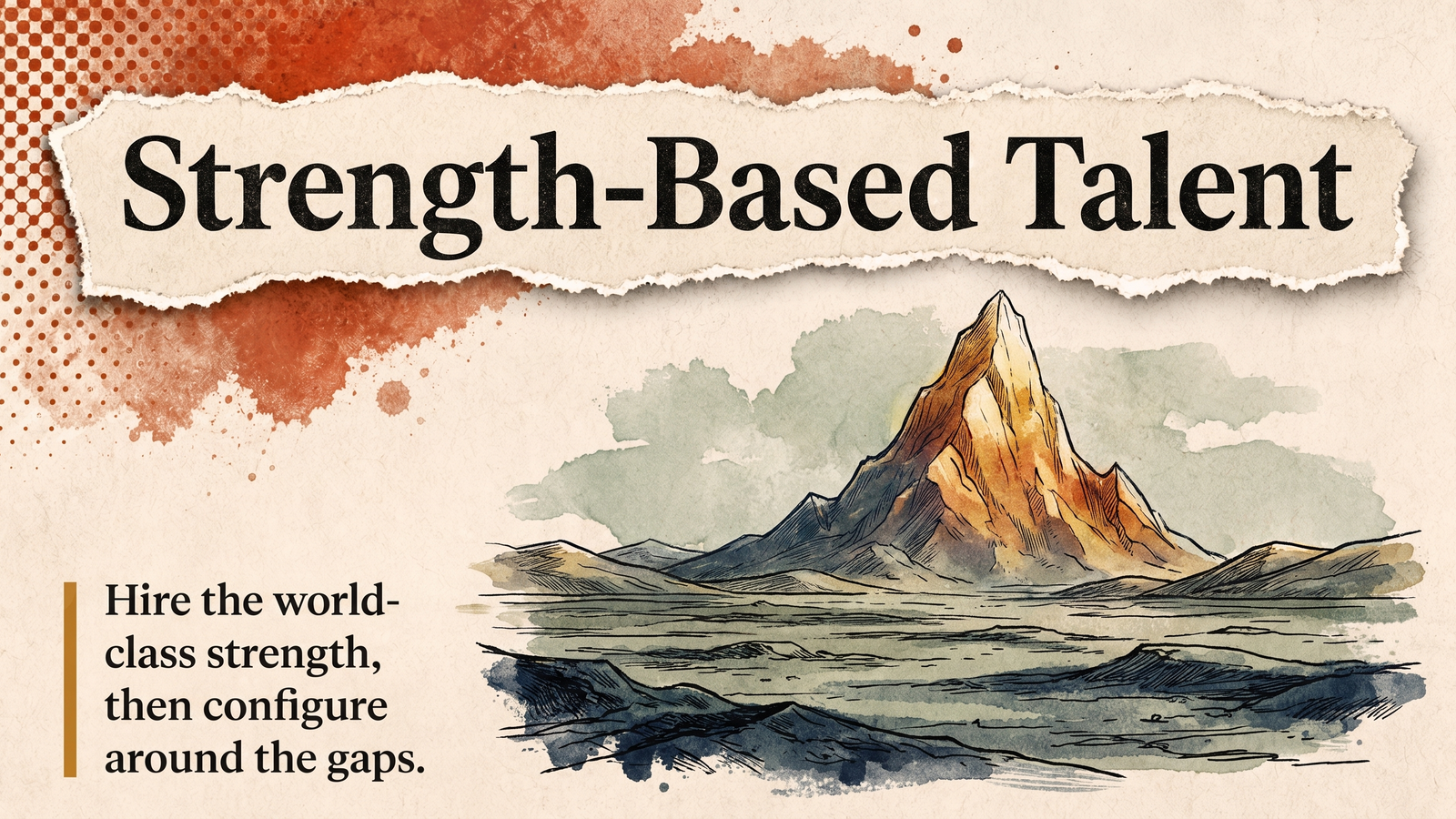
- Scope. Stack-rank the skills and experiences that define your top 1% for this role — objectively, before you talk to anyone. That decision sets your sourcing, your pitch, and your assessment bar.
- Map. Identify the specific people who match. The atomic unit is the person, not the role: "we're trying to hire one person for this role, not 10 — get focused on the one."
- Pursue. Recruit those named people over weeks or months, the way you would a single executive hire.
Mapping depends on asking the right question. "Who's the best product engineer you know?" is the worst one — everybody names someone different. Ask for a specific trait — "who's the most collaborative with designers?" — and trusted sources triangulate to the same few names.
The recruiter is a confidence engine, and caring is free
Ward is blunt about what recruiting is for: it builds the hiring manager's conviction; it doesn't make the decision. "They're a confidence engine. They're not a decision-making engine." Ownership stays with the manager who will feel the joy or pain of the hire — which is why the most undervalued step is the first hiring-manager conversation, not the on-site.
The pursuit itself costs intent, not budget. Candidate satisfaction is driven most by feeling genuinely wanted, and out-caring a competitor is nearly free: shared meals, home-court office visits, a per-candidate Slack channel, a daily close stand-up. "Caring is free" is one of the few advantages a smaller team can actually match.
Time is the constraint — and the honest read
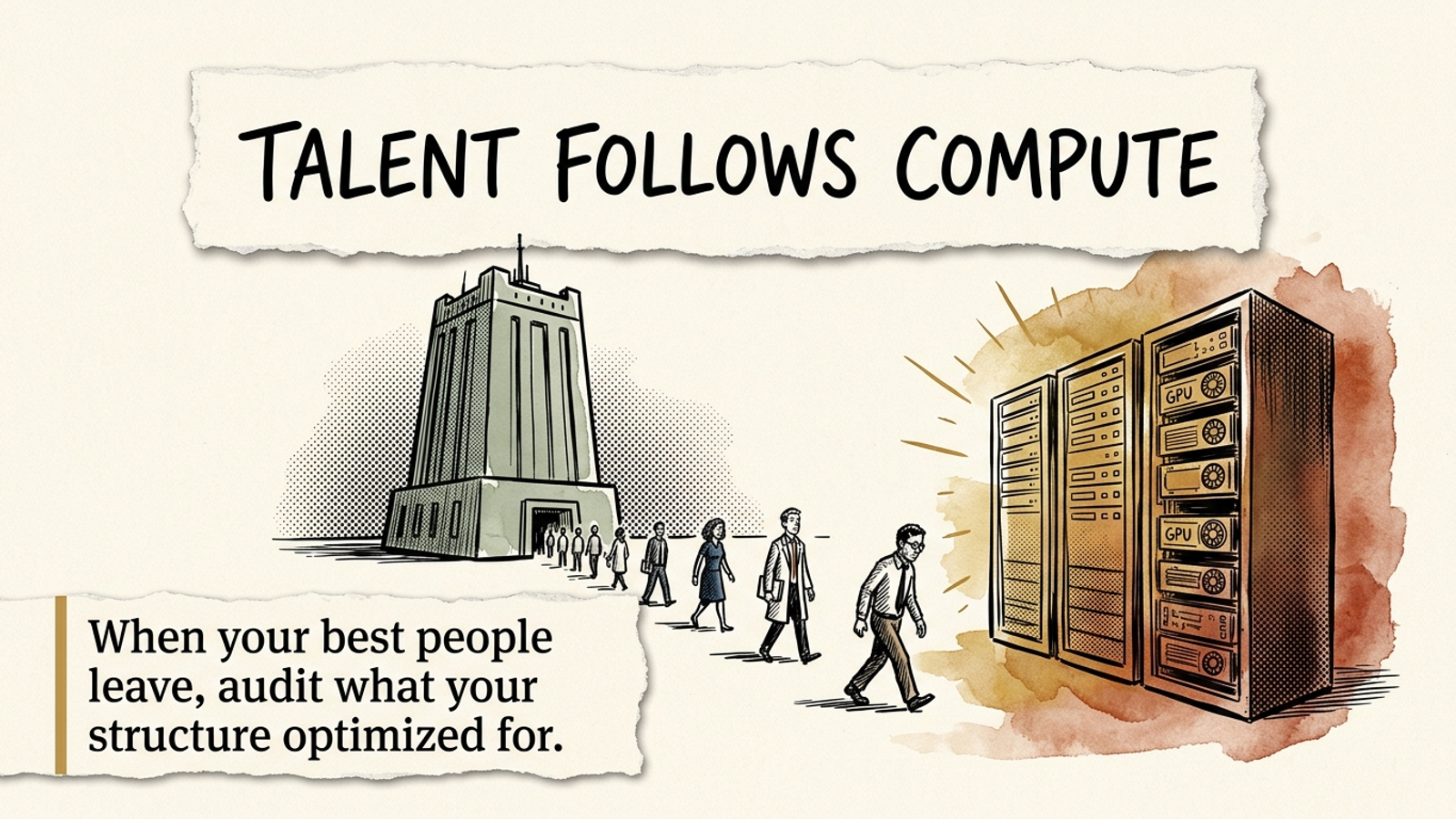
In an AI talent race, Ward argues the scarce resource isn't money. "The unit of measure that matters the most is the most fixed and finite, which is time." Compensation is elastic; the weeks a top candidate stays on the market are not. Density compounds the stakes: "I don't think you can have a 10X person on a bad team — it just doesn't exist." Talent density is a property of the team a manager assembles, not a headcount of stars.
Two honest caveats. Ward justifies Cursor's long work trials by calling work samples "the highest predictor of success"; the meta-analytic record puts them among the strongest methods, clustered with general mental ability and structured interviews, not uniquely first. And this is a recruiting leader at a $60B hot-brand company on a founder-audience podcast — the caring and home-court tactics are easier to fund there than at a no-name startup. The transferable core is the sequence: scope objectively, map precisely, pursue relentlessly. That costs attention, not a budget.