TL;DR
The short version
The fight over whether you used AI to write is ending; the fight over how good the writing is is intensifying. Cheaper inputs raise the burden on outputs — when a draft costs nothing, a bad draft is inexcusable.
In The AI Daily Brief's read, the operative rule for a leader isn't 'can AI write this?' but 'how much AI does this format tolerate?' Emails and meeting notes are safe; strategy memos, marketing copy, and op-eds are traps. The one danger that never changes format is outsourcing the thinking, not the typing.
Built on Nathaniel Whittemore's 'rules for AI writing,' prompted by Stanley Druckenmiller's flagged-as-AI WSJ op-ed and his unapologetic 'of course I used AI' response.
The purity test is dying; the quality test isn't
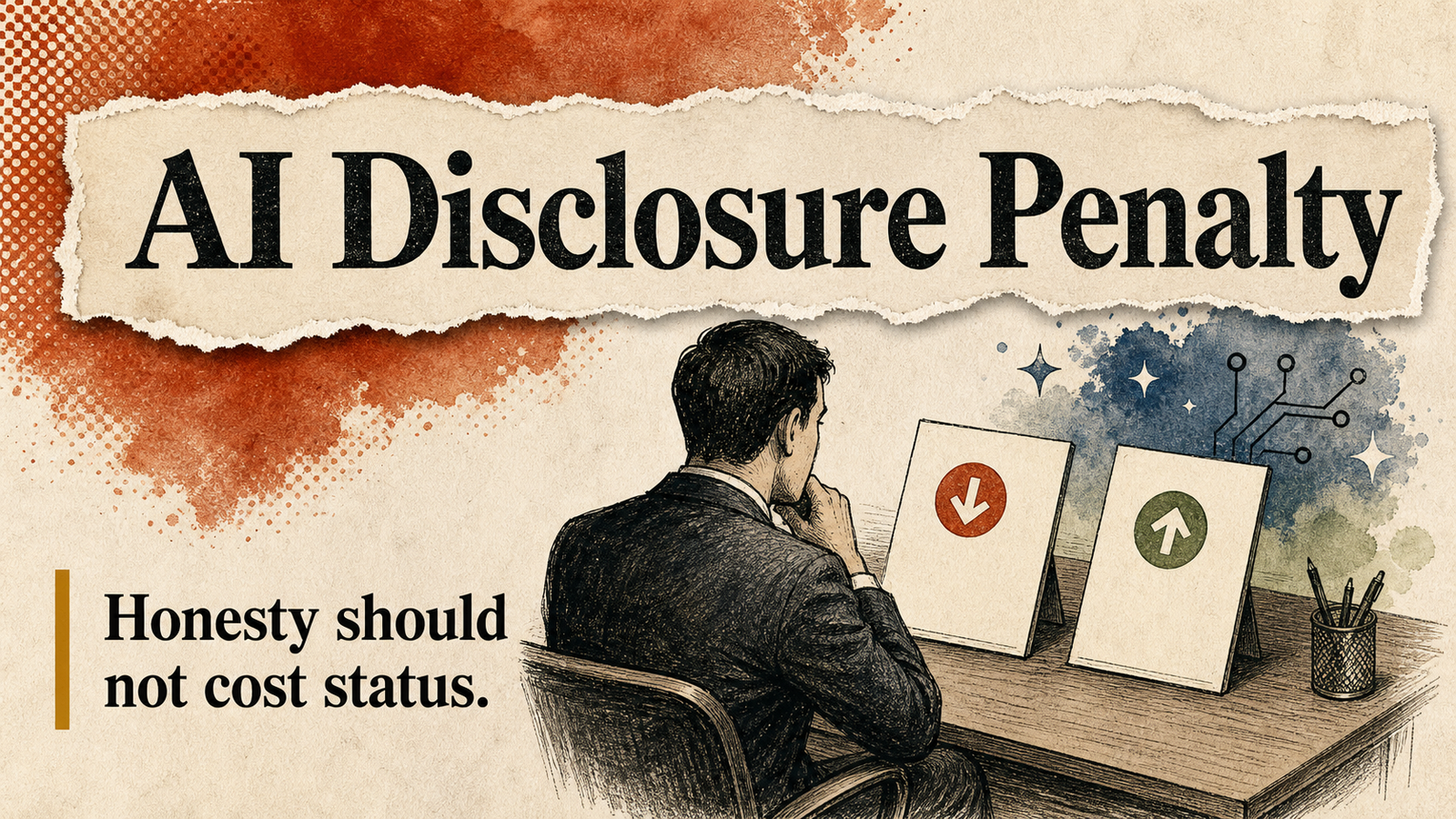
Stanley Druckenmiller's WSJ op-ed attacking the Treasury Secretary was flagged 100% AI-written. Instead of apologizing, he leaned in — and that moment ends the AI-writing purity test.
Of course I used AI. I write everything using AI now for the same reason I use a calculator when I do math problems.
Stanley Druckenmiller (as read on The AI Daily Brief)
But the quality bar rises as the disclosure taboo falls. The easier the inputs of writing get, the heavier the burden on the outputs. Society will accept AI-written work; no one will accept bad writing as the consequence. Disclosure stops being the scandal — visible low effort takes its place.
Different formats, different rules
"Can AI write this?" is usually the wrong question. An email, a strategy memo, a LinkedIn post, and an op-ed each carry different risk and tolerate a different level of AI involvement. Match leverage to what the format demands instead of applying one blanket policy.
- Safe to lean on AI: emails, meeting notes, summaries, first-pass boilerplate — formats where the reader wants information, not a display of judgment.
- Handle with care: strategy memos, marketing copy, and op-eds — formats where the writing is the argument, and visible AI use reads as contempt for the reader.
The higher the format's stakes for judgment and voice, the more the human has to own the words.
Effort is legible
Druckenmiller's op-ed was mocked not because it used AI but because the AI-isms were so glaring and fixable that the laziness in the prose implied laziness in the reasoning. One critic called it an expression of contempt for the format of an op-ed and for its audience.
Longer is not better, either. First-wave AI writing was defined by endlessly long documents; the value is saying the right thing succinctly. Pascal's line — 'I have not had time to make it shorter' — is the standard. Compression is the visible tell of effort.
Writing is thinking — outsource the typing, not the thinking
The point of writing is the argument underneath the words. Reach for AI too early and you risk outsourcing the reasoning itself. The discipline is simple: do the thinking first, then let AI draft.
Balaji Srinivasan's frame maps the same shift — AI doesn't do end to end, it does middle to middle, and the new bottlenecks are prompting and verifying. Human effort moves to the ends: deciding what to say, and confirming it's right. That's where a leader's edge now lives — not in the typing the model absorbs, but in the judgment it can't.
The model you draft with moves the bar
Clearing the bar isn't only a human-effort problem — model choice sets your floor. Claude's own writing regressed before it recovered: Sonnet 5 and Opus 5 pushed Anthropic's writers away ("Opus 5 is just so dark"), and Fable 5.1 is the first Claude model in a year Every's team reached for again, reading about a grade-level simpler than its predecessor and competing with the best rivals on prose.
The takeaway compounds the page's thesis: cheaper, better drafting raises the bar and moves the human's job to the ends — choosing the model, setting the standard, and checking the output — not the typing in between.